Daud Olatunji
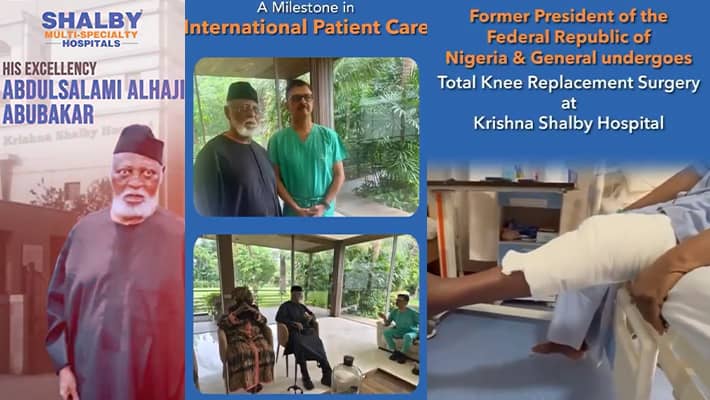
An Indian hospital has featured former Nigerian military Head of State, General Abdulsalami Abubakar, in promotional materials showcasing its orthopaedic and knee-replacement services.
Krishna Shalby Hospital, based in Ahmedabad, India, shared videos and photographs of the former Nigerian leader undergoing treatment and rehabilitation at the facility as part of an online publicity campaign for its medical services.
The promotional montage, tagged “A milestone in international care” and “Clinical Excellence Beyond Borders,” shows Abubakar during his recovery from knee replacement surgery, including clips of him undergoing physiotherapy and exercises with medical personnel.
The development has triggered renewed discussions among Nigerians over medical tourism, particularly the continued reliance by prominent Nigerians on healthcare facilities abroad for specialised treatment.
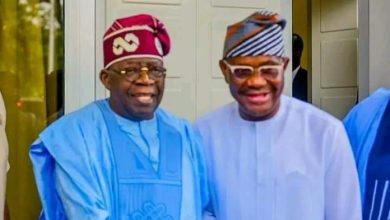
The hospital’s promotional material also featured photographs of Abubakar alongside some of his associates, including Vice-President Kashim Shettima, who reportedly visited the hospital while the former military leader was receiving treatment.
In another video published by Shalby Hospitals, the facility said Shettima met one of its doctors, Vikram Shah, to discuss Abubakar’s health.
According to the hospital, the visit reflected what it described as growing confidence in India’s healthcare system and its commitment to treating patients from different parts of the world.
Shettima also reportedly signed the hospital’s register, thanking Shah for taking care of Abubakar and helping restore the former leader’s vitality.
However, it remains unclear from the material reviewed whether Abubakar gave consent for the publication of details of his treatment and recovery as part of the hospital’s promotional campaign.
Abubakar’s knee problem became public in 2022 when he cancelled activities planned to mark his 80th birthday after suffering a swollen knee that affected his mobility.
Explaining the cancellation at the time, the former Head of State said he had been unable to walk for days and that his doctors had advised him to seek specialised treatment abroad.
“I had a swollen knee and was unable to walk for days in the last week of May,” he was quoted as saying.
“After initial care by my doctors, they advised that I should seek further expert care abroad. That was why I had to cancel my birthday programme.”
The latest hospital publicity has since generated reactions on social media, with some Nigerians questioning why prominent political figures continue to seek medical care outside the country despite successive government promises to improve Nigeria’s healthcare infrastructure.
Some commentators also used the development to renew calls for greater investment in specialist hospitals, medical equipment and healthcare personnel in Nigeria.
One social media user, Hungbeme Wenayon, criticised the reliance on foreign medical facilities by former Nigerian leaders, while Adesoji Ojediran described the situation as a failure of leadership.
Another commenter, Ade Ogidan, argued that public officials should be encouraged or required to patronise government-owned institutions, while Val Eze noted that knee-replacement procedures can also be performed by Nigerian medical professionals.
The reactions, however, represent individual views expressed online and do not by themselves establish the quality or capacity of Nigeria’s healthcare system.
Nigeria has for years grappled with concerns over inadequate medical infrastructure, shortages of specialised equipment and the migration of healthcare professionals, while medical tourism by affluent Nigerians has remained a subject of public debate.