Nigeria Needs Decade Of Pipeline Infrastructure To Unlock Gas Potential, Experts Say

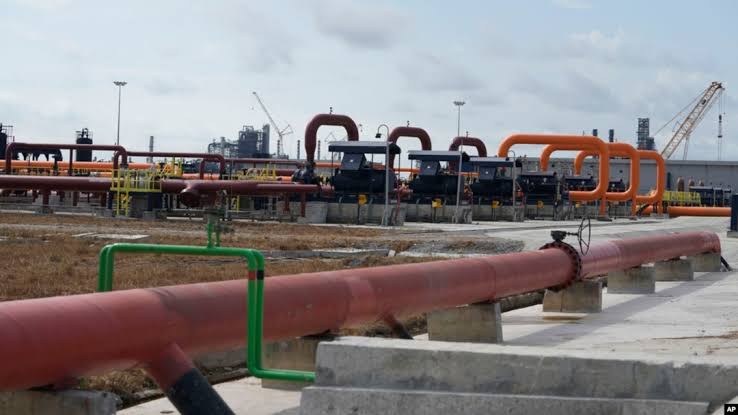
The experts, Dr. Eloho Innocent Amagada, Chief Executive Officer, Amelin Projects Ltd., and Engr. Reuben Temerigha, Managing Director, Westend Diamond Energy Ltd., made the call at the 2026 International Pipeline Conference and Expo (IPCE) in Canada.
Amagada said Nigeria’s challenge was no longer the availability of gas resources but the development of a reliable, intelligent and secure infrastructure network capable of transporting the resources to where they are needed.
He spoke in a presentation titled, ‘Robust Pipeline Network Systems: Critical Assets for Economic Development’, delivered during a Canadian Trade Commissioner Service Business-to-Business matchmaking programme.
According to him, Nigeria has about 215.19 trillion cubic feet (TCF) of proven natural gas reserves, while its existing gas pipeline infrastructure spans more than 2,500 kilometres.
He said substantial investment was required to expand the network and support growing domestic and export demand for natural gas.
Amagada stressed that reliable pipeline infrastructure was critical to power generation, fertiliser production, petrochemicals, manufacturing, compressed natural gas (CNG), liquefied petroleum gas (LPG) and liquefied natural gas (LNG).
He identified ageing infrastructure, insecurity, third-party interference, environmental concerns, difficult terrain, right-of-way challenges and community-related issues as major constraints to pipeline development and operations in the country.
He therefore urged pipeline operators to move away from reactive management towards predictive integrity systems capable of identifying and addressing risks before they result in failures.
According to him, intelligent in-line inspection, corrosion monitoring, Geographic Information Systems (GIS), artificial intelligence (AI) and risk-based inspection should become integral components of Nigeria’s pipeline management system.
He also advocated the deployment of real-time leak detection systems, fibre-optic monitoring, integrated Supervisory Control and Data Acquisition (SCADA) systems, drones, satellite imagery and AI-enabled video analytics to improve pipeline surveillance and security.
Amagada said technologies such as Horizontal Directional Drilling (HDD), microtunnelling, LiDAR, satellite mapping and remote sensing could also help overcome some of the difficult terrain, river crossings and right-of-way challenges associated with pipeline construction.
He cited the River Niger crossing for the 130-kilometre Obiafu-Obrikom-Oben (OB3) gas pipeline as an example of how advanced technology could be deployed to overcome complex geographical challenges.
According to him, HDD technology was used to cross beneath the River Niger, while the pipeline was designed to transport up to two billion cubic feet of gas daily.
Amagada said Nigeria’s gas development strategy should therefore combine the expansion of pipeline infrastructure with the digitalisation of existing assets, continuous integrity monitoring, integrated security measures and stronger engagement with host communities.
He also called for greater investment in local expertise in pipeline inspection, non-destructive testing, corrosion management, robotics, data analytics, digital twins and pipeline cybersecurity.
He declared, “No decade of gas without a decade of pipeline infrastructure.”
The expert further noted that opportunities in Nigeria’s pipeline sector extended beyond the construction of new pipelines, stressing that significant opportunities existed in engineering, inspection, corrosion protection, cybersecurity, remote monitoring, rehabilitation, data analysis and maintenance.
Amagada disclosed that his company recently inspected a 55-kilometre pipeline and identified more than 3,000 defects, including significant wall loss in some sections.