PETAN: Nigeria’s Oil Output Can Rise If NUPRC Gives Assets To Capable Operators

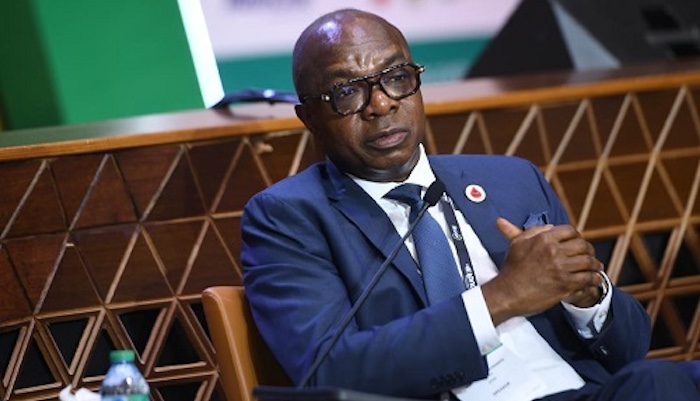
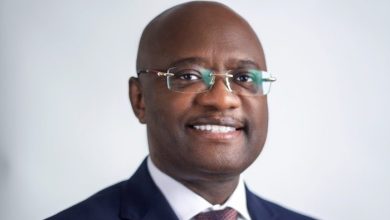
Mr. Wole Ogunsanya, made the call in Lagos at the Nigeria Energy Leaders Summit 2026 organised by The Energy Year, a London-based business intelligence company.
Speaking on what Nigeria must do to raise oil and gas production from the current 1.7-1.8 million barrels per day to the federal government’s 3 million barrels target by 2030, Ogunsanya said Nigeria is uniquely positioned to extract value across upstream, midstream and downstream.
In midstream alone, he said, Dangote Refinery’s 650,000 barrels per day capacity ramping to 1.4 million, BUA’s 300,000-350,000 barrels under construction, a cluster of modular refineries, and NNPC’s 450,000 barrels, put the country on track to refine close to 2 million barrels per day.
That volume, he noted, is outside the Organisation of Petroleum Exporting Countries (OPEC) quota, leaving room to sell 1.5 million barrels of crude while refining another 1.5 million domestically.
But he said the upstream sector is held back by poor asset stewardship.
According to him, many assets with huge potential were awarded to companies without the needed expertise, funding or equipment to operate them, and years after acquisition they still produce below the level at which they were bought.
“We’ve got assets that have huge potential awarded to people that were not prepared or did not have the expertise to do the work. And that’s why we are behind in some of the production today. Even where we are today, are the assets that were producing two to three times what they are producing”, Ogunsanya said.
“And for years, even when they bought these assets, they were producing less than the volume that they bought it at.
“If we truly want to increase oil and gas production in Nigeria, let’s give those assets to people that have the capacity to do it,” he stressed.
Ogunsanya argued that the problem is not lack of Nigerian expertise but misallocation of opportunity.
He said Nigerian professionals are sought globally, from Qatar to Aberdeen to the United States, and the industry must match the Petroleum Industry Act (PIA) and regulations with that expertise.
He described the current practice as asking someone who knows how to ride a bicycle to fly an airplane, questioning how many investors would board such aircraft.
He pointed to cases where NNPC as joint venture partner intervened to set up asset management teams with its upstream arm, NEPL, lifting production from about 20,000 barrels to 50,000 barrels per day, with Oil Mining Lease (OML) 30 now performing strongly compared to three or four years ago.
He said regulators must enforce the policy that non-performing assets will be retrieved, especially as another bid round is coming after one dogged by controversies.
“We just did a bid round with a lot of stories around it. Another one is coming,” he said. “We are going to rely on NNPC. We are going to rely on the regulators. There are policies coming up now. If you cannot produce the asset, they are going to take it from you.”
On immediate levers to grow production, Ogunsanya said equipment capacity is critical. “We need more rigs in the swamp. I think we’re covering enough of the land. For the shallow waters and the deepwater, those projects are in front of us.
“They’re all starting before the end of this year. ExxonMobil’s Esso is starting drilling before the end of the year in deepwater. TotalEnergies is doing before the end of the year. I think Chevron is also on track to make sure that the deepwater space is active again,” he said.
He also flagged funding as a major constraint for the new indigenous giants that acquired international oil companies (IOCs) divested assets.