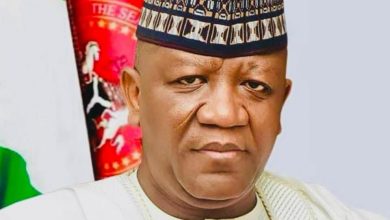
A Senior Advocate of Nigeria (SAN), Dr Omogbai Omo-Eboh, has called on the Federal Government to reposition insurance as more than a private-sector product, urging its integration into government regulation and fiscal planning.
Omo-Eboh said compulsory insurance should be incorporated into public services, licensing, permits, registrations and public procurement processes to help protect government assets and reduce unexpected financial liabilities.
He made the call on Tuesday during the second edition of the “All-Inclusive Mass Media Training for Journalists”, organised by Insurance Publication Limited and sponsored by the African Reinsurance Corporation (Africa Re).
The two-day seminar, themed “The Universe of Insurance and Journalism: Risk Everywhere, in Everything,” brought together journalists and insurance industry stakeholders to discuss the role of insurance, risk management and public awareness.
Speaking on “Legal Integrative Framework for a National Insurance Policy: How to Make Insurance Work for Individuals, Government, and the Economy,” Omo-Eboh said Nigeria’s low insurance penetration required a change in the government’s approach to insurance.
He proposed that vehicle licence renewals should include real-time verification of compulsory motor third-party insurance.
The SAN also suggested that imported goods should not be cleared without evidence of marine cargo insurance issued in Nigeria.
He further recommended that building approvals and certificates of completion should be tied to evidence of builders’ liability and public building insurance.
According to him, employers should also be required to provide proof of group life insurance for their workers before obtaining tax clearance, workplace inspection clearance or renewing industrial licences.
Omo-Eboh advocated the use of digital government platforms to verify insurance policies before licences, permits and other approvals are granted.
He said such systems could allow government portals to verify policy numbers electronically, thereby reducing fraud, delays and the burden of manual checks.
The SAN also proposed that insurance premiums could be collected through tax offices, licensing agencies and sector regulators during registration and renewal processes.
He said integrating insurance into government systems would make compliance easier for individuals and businesses while improving enforcement.
Omo-Eboh further described insurance as a potential instrument for fiscal planning and risk management, noting that adequate coverage of public assets, infrastructure and government employees could protect the State from unexpected expenditure arising from fire, accidents, liability and other unforeseen events.
He said effective insurance coverage could improve budget discipline by allowing government to devote more resources to development rather than emergency spending caused by avoidable losses.
He called for stronger public-private partnerships, comprehensive insurance coverage for public assets and infrastructure, and greater use of insurance data in national economic planning.
The SAN also recommended compulsory insurance registers containing data on vehicle density, workplace risks, building exposure, cargo movement and sector-specific vulnerabilities.
He proposed a secure inter-agency compliance platform involving the National Insurance Commission (NAICOM), Federal Road Safety Corps (FRSC) and National Health Insurance Authority (NHIA).
According to him, closer coordination among the agencies would strengthen enforcement and provide government with reliable data for policy formulation.
Omo-Eboh noted that Nigeria’s insurance penetration remained below one per cent despite the country’s large population and exposure to risks such as death, health emergencies, unemployment, crop failure, livestock losses, fire, flooding and drought.
He said poor insurance penetration affected individuals and businesses while also limiting economic development, putting pressure on public finances and weakening national resilience.
Meanwhile, the President of the Healthcare Providers Association of Nigeria, Dr Augustine Aipoh, urged journalists to go beyond creating awareness and investigate whether government health policies were producing meaningful improvements in patients’ experiences.
Speaking on “Beyond Awareness: The Journalist as a Catalyst for Better Healthcare Delivery in Nigeria,” Aipoh urged journalists to examine the entire patient journey, from policy formulation and enrolment to financing, accreditation, treatment, claims and outcomes.
He said reporters should investigate whether Nigerians could afford health insurance, whether healthcare facilities were available in their communities and whether insured patients could access quality care when needed.
Aipoh also urged journalists to examine whether healthcare providers were reimbursed promptly and how insured patients were treated at healthcare facilities.
He warned against spreading health misinformation, including fake cures, unverified herbal remedies, misleading medical advertisements, vaccine misinformation and dangerous self-medication advice.
The healthcare expert stressed the need for journalists to verify health-related claims before publication, noting that misinformation could have serious consequences.
He also encouraged the media to scrutinise the gap between government announcements and actual implementation by examining programme coverage, the use of allocated funds and whether accredited healthcare facilities deliver the services promised.
READ ALSO: