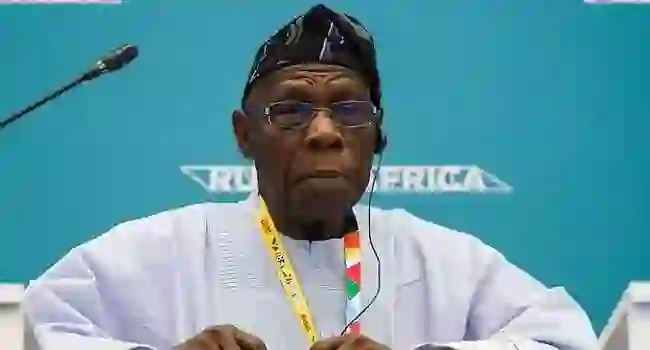
The United Nations and African Union have called on former Nigerian President Olusegun Obasanjo to intensify efforts to prevent renewed conflict in Ethiopia as tensions threaten the peace agreement reached in 2022.
The two organisations reaffirmed their strong support for Obasanjo’s renewed mediation efforts and urged the parties involved in the Ethiopian crisis to immediately return to direct negotiations under the Permanent Cessation of Hostilities Agreement.
They warned that any miscalculation in northern Ethiopia could lead to further escalation and create wider security concerns across the Horn of Africa.
The position was contained in the outcome of the 27th Consultative Meeting of the UN-AU Joint Task Force on Peace and Security held in New York.
Obasanjo, who serves as the African Union High Representative for the Horn of Africa, played a key role in the negotiations that resulted in the Pretoria peace agreement between Ethiopia’s Federal Government and Tigrayan forces in November 2022.
The agreement brought an end to a devastating conflict in the Tigray region after years of fighting.
However, renewed tensions have raised concerns over the durability of the agreement, prompting the UN and AU to call for fresh diplomatic engagement.
The organisations are now relying on Obasanjo to re-engage the parties, encourage the resumption of direct dialogue and help prevent the peace process from collapsing.
The UN and AU also agreed to strengthen coordination in support of his mediation efforts, while urging all sides to resolve outstanding issues through good-faith negotiations rather than resorting to violence.
The AU delegation at the meeting was led by its Commissioner for Political Affairs, Peace and Security, Ambassador Bankole Adeoye.
Representing the United Nations were Under-Secretaries-General Rosemary DiCarlo, Jean-Pierre Lacroix and Atul Khare, alongside the UN Special Representative to the AU, Parfait Onanga-Anyanga, and Assistant Secretary-General for Africa, Martin Kimani.
Sudan
The meeting also considered conflicts and political developments in Sudan, Somalia, South Sudan and the eastern Democratic Republic of the Congo.
On Sudan, the UN and AU maintained that there was no sustainable military solution to the conflict and called for an immediate cessation of hostilities.
They also rejected efforts to establish a parallel government and called for an inclusive Sudanese political dialogue that would pave the way for civilian-led governance.
The organisations further condemned external interference and the provision of military support that continues to fuel the conflict.
Somalia
On Somalia, the task force reaffirmed its support for the African Union Support and Stabilisation Mission and stressed the importance of continued international assistance to the country.
Somali stakeholders were also encouraged to sustain dialogue and work towards an inclusive political agreement on the country’s electoral process.
Democratic Republic of Congo
In the eastern Democratic Republic of the Congo, the UN and AU welcomed ongoing African, regional and international efforts aimed at resolving the conflict.
They called for an effective and permanent ceasefire and backed plans for an inclusive national dialogue that could provide a framework for lasting peace.
South Sudan
The task force also discussed the situation in South Sudan, calling on stakeholders to build national consensus ahead of the planned December elections.
The organisations urged the authorities to address outstanding gaps in preparations for the polls and work towards creating conditions for a peaceful political process.
The meeting further reviewed broader cooperation between the UN and AU on conflict prevention, mediation, early warning, human rights and support for African-led peace operations.
It highlighted the implementation of UN Security Council Resolution 2719, which provides a framework for predictable financing of eligible African Union-led peace support operations on a case-by-case basis.
The meeting also welcomed new agreements on operational support and knowledge exchange signed during the 81st session of the United Nations General Assembly.
The next statutory meeting of the UN-AU Joint Task Force is expected to be hosted by the African Union Commission.
READ ALSO: