66th Independence: PDP Labels Tinubu ‘Pharaoh’, Obi Laments Poverty, Hunger, Insecurity

Daud Olatunji
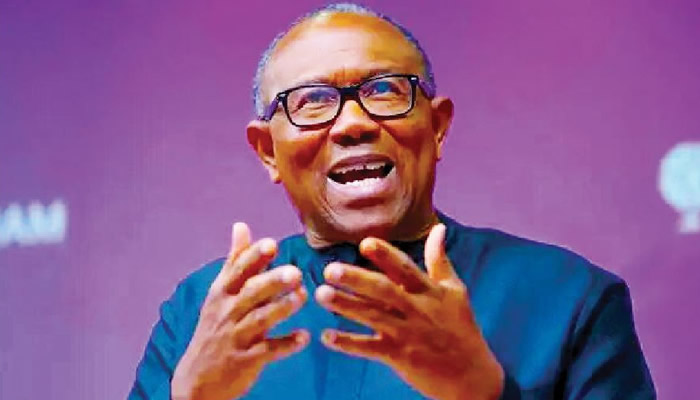
The 66th Independence anniversary of Nigeria on Thursday triggered fresh criticism of the Federal Government’s economic record, with the Tanimu Turaki-led faction of the Peoples Democratic Party describing President Bola Tinubu as a “Pharaoh” while former Anambra State governor, Peter Obi, lamented persistent poverty, hunger and insecurity across the country.
The two opposition voices spoke separately as President Tinubu, in his Independence Day address, declared that Nigeria had passed through its own “Red Sea” of economic reforms and was entering what he described as an “age of prosperity.”
Tinubu acknowledged that millions of Nigerians were still struggling with food, school fees, medical bills and transportation, but maintained that the hardship predated his administration and was the cumulative result of decades of low productivity, inadequate infrastructure and institutional weaknesses.
However, the Turaki-led PDP rejected the President’s assessment, arguing that the economic realities confronting households contradicted the administration’s narrative of a country moving from hardship to prosperity.
In a statement signed by its National Publicity Secretary of the Interim National Working Committee, Ini Ememobong, the party said the biblical analogy used by the Presidency was inappropriate given the conditions faced by Nigerians.
According to the opposition party, the President’s message appeared to cast Tinubu and his administration as “Moses” leading Nigerians from economic hardship to prosperity.
But the PDP said Nigerians were instead “travelling through a Red Sea of economic pain,” which it attributed to the policies of the APC-led government.
The party further argued that Nigerians were worse off than they were when Tinubu assumed office on May 29, 2023.
The PDP acknowledged the Presidency’s admission that poverty was rising and hope was low before Tinubu took office, but said many citizens now felt that their circumstances had deteriorated further.
The party pointed to the cost of food, rent, transportation and education as evidence of the pressure confronting households.
It also cited the National Bureau of Statistics’ August 2026 food inflation figure of 19.57 per cent, arguing that a slowdown in the rate of price increases did not mean that food had become affordable.
The opposition party said the economic figures had to be considered alongside the lived experiences of families struggling to provide basic necessities.
The PDP also challenged the administration’s claim of supporting businesses and enterprise, saying the cost of credit remained a major obstacle despite the recent reduction in the Central Bank of Nigeria’s Monetary Policy Rate.
The CBN reduced the benchmark rate from 26.5 per cent to 23 per cent at its September 21–22, 2026 Monetary Policy Committee meeting.
The party maintained that the reduction had not eliminated the difficulty businesses faced in accessing affordable credit.
It accused the government of presenting what it described as “skewed narratives” instead of confronting the economic challenges experienced by households and businesses.
The PDP consequently turned Tinubu’s biblical analogy against him, saying the President and the APC were “the Pharaoh who is chasing Nigerians.”
It also linked its criticism to the 2027 general election, arguing that Nigerians would have an opportunity to determine the political direction of the country.
The party accused the administration of worsening economic hardship, political polarisation, insecurity and concerns over democratic consolidation.