The Federal Government has announced plans to lift five million young Nigerians out of poverty through skills acquisition, technical training and entrepreneurship programmes aimed at creating sustainable livelihoods.
The initiative is being implemented under the National Poverty Reduction with Growth Strategy (NPRGS) and is designed to equip young Nigerians with practical and market-relevant skills that can improve their employability and economic independence.
Dr Abiola Arogundade, Senior Special Assistant to the President on Technical, Vocational and Entrepreneurship Education (OSSAP-TVEE) and coordinator of the programme, disclosed this on Monday in Ibadan, Oyo State.
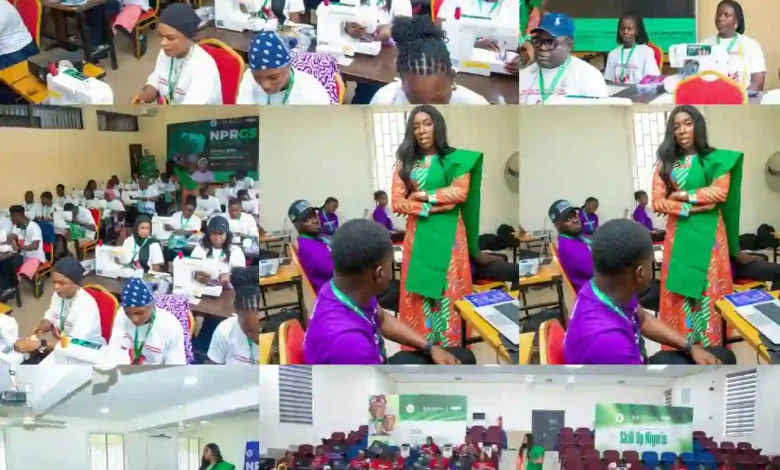
She spoke during the commencement of the Oyo State phase of the programme, which is scheduled to run from September 28 to October 9, 2026.
Arogundade said the programme was part of President Bola Tinubu’s administration’s efforts to empower Nigerians through technical, vocational and entrepreneurship education.
According to her, the initiative started in the Federal Capital Territory before moving to Oyo State and would subsequently be extended to other states and geopolitical zones across the country.
Under the Oyo State phase, 200 young Nigerians are undergoing training in graphics and artificial intelligence (AI), makeup artistry and fashion designing.
She explained that 30 participants were selected for the Graphics/AI training, while 85 participants each were enrolled in makeup artistry and fashion designing.
Arogundade said the programme was designed to go beyond training by connecting beneficiaries with organisations and business opportunities that could help them establish sustainable livelihoods.
“So with this programme, we are training 200 people. We will also be distributing 500 tablets during the grand finale of the programme as part of the Federal Government’s digital empowerment drive.
“We are directly empowering 700 people in this programme and there will be multiplier effect.
“We are not just training them for themselves but we are training them for their communities, for the population, and for all the states in Nigeria,” she said.
She urged the beneficiaries to take advantage of the training and use the skills acquired to create opportunities for themselves and others in their communities.
The presidential aide said the Federal Government remained committed to creating opportunities for young Nigerians to become economically self-reliant through practical training and entrepreneurship development.
She also said the initiative reflected the administration’s focus on addressing the challenges faced by young people by providing them with relevant skills and opportunities.
Speaking during the event, the keynote speaker for the Graphics/AI training, Mrs Oluronke Shonubi, highlighted the growing role of artificial intelligence in the global economy.
Shonubi said the increasing adoption of AI presented Nigeria with opportunities to accelerate development, improve employability and prepare young people for emerging jobs.
One of the beneficiaries, Idowu Olalere, a 400-level student of the Federal University Oye-Ekiti (FUOYE), commended the Federal Government for creating opportunities for young Nigerians to acquire emerging digital skills.
Olalere said the training would help participants bridge the gap between their existing skills and the changing demands of the labour market.
Two other beneficiaries, Iyabo Ajayi, a makeup trainee, and Fatunbi Joshua, a fashion designing trainee, also expressed appreciation for the opportunity.
They said the programme could help reduce unemployment by giving young Nigerians practical skills with which they could establish businesses and become self-employed.
At the end of the training, beneficiaries are expected to receive laptops, sewing machines and fully equipped makeup kits to support their entrepreneurial activities.
The Federal Government said the programme forms part of its broader efforts to promote inclusive economic growth, reduce poverty and expand economic opportunities for young Nigerians through technical and vocational education.
READ ALSO: