Victoria Ikhedie
The Nigerian Air Force (NAF) has commenced efforts to recover the flight data recorder and cockpit voice recorder of its ATR-42 aircraft that crashed in Igbokoda, Ilaje Local Government Area of Ondo State, as investigators intensify efforts to establish the circumstances surrounding the incident.
The search for the two critical recording devices began three days after the crash, with recovery operations complicated by the swampy terrain and poor underwater visibility at the crash site.
The flight data recorder (FDR), commonly known as the black box, captures key aircraft performance and system parameters, while the cockpit voice recorder (CVR) preserves cockpit audio that could help investigators reconstruct events leading up to the crash.
Speaking at the crash site in Igbokoda on Friday, the NAF Superintendent of Standards and Evaluation, Ebimobo Ebiowe, said investigators were searching for crucial aircraft components that could provide evidence about what happened before the aircraft went down.
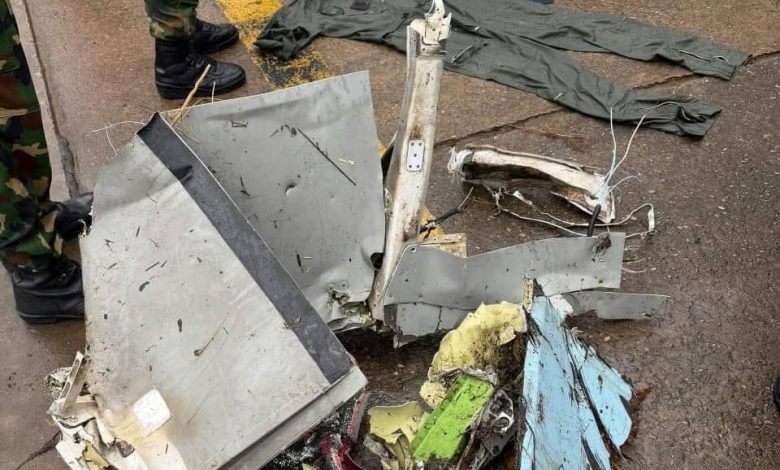
He explained that the wreckage itself could provide important clues, stressing that locating the recording devices was central to the investigation.
“We hope to be able to find critical components of the aircraft that will speak to the investigators because the aircraft wreckage actually speaks to the investigators,” Ebiowe said.
He identified the flight data recorder and cockpit voice recorder as two of the key components the recovery team was seeking.
“One of them is what the ordinary man (civilian) calls the black box. We call it the flight data recorder (FDR), and another component close to it, the cockpit voice recorder (CVR),” he added.
The recovery operation has also received support from the Nigerian Navy, which deployed specialised sonar equipment on Wednesday to help locate the submerged aircraft.
The Chief of the Naval Staff, Idi Abbas, had directed the Navy Hydrographic Department to deploy personnel and advanced sonar-scanning equipment to obtain an underwater picture of the crash location.
The deployment was considered necessary because of the high turbidity of the swamp, which has made underwater visibility extremely difficult for recovery personnel.
The sonar equipment is expected to assist the teams in locating submerged sections of the aircraft and identifying areas where critical components may be recovered.
Recovering the FDR and CVR could provide investigators with vital evidence for determining the sequence of events before the crash. Depending on their condition and the availability of usable data, the recorders may help establish the aircraft’s operational parameters and capture cockpit communications before the incident.
However, the commencement of the search does not, in itself, establish the cause of the crash. Investigators would need to examine the recovered components, analyse available recordings and correlate their findings with physical evidence from the wreckage.
.....
Subscribe To Papers Nigeria HERE