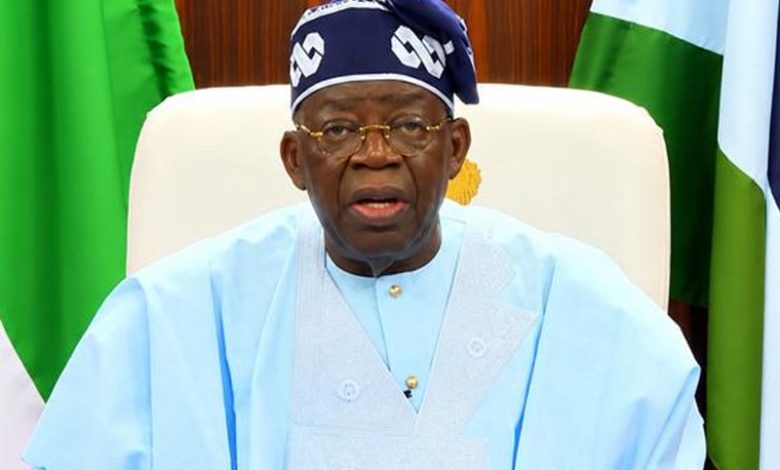
President Bola Tinubu on Tuesday declared that Nigeria would deploy its vast oil and gas resources to build a modern, diversified economy, challenging operators to reciprocate the incentives and regulatory reforms introduced by his administration with higher investment, increased production, local content development and compliance with work programmes.
Speaking at the 5th anniversary of the Nigerian Upstream Petroleum Regulatory Commission (NUPRC) in Abuja, Tinubu emphasised that the government had been listening to investors’ complaints about high operating costs, lengthy contracting processes and uncertainty surrounding fiscal terms, leading to a series of measures designed to make Nigeria more competitive for long-term capital.
The event, which marked five years of the Petroleum Industry Act (PIA) and the establishment of NUPRC, brought together government officials, regulators, operators, unions, host communities and industry groups under the theme, “From Uncertainty to Stability: Unlocking the Next Phase of Investment.”
Tinubu specifically cited the 2024 tax incentives and directives on local content and petroleum contracting costs and timelines, the 2025 upstream petroleum operations cost-efficiency incentive order, Executive Order 9 on oil and gas revenue remittances and the Deep Offshore Oil and Gas Projects Incentive Tax Remission Order 2026.
According to Tinubu, who was represented by the Vice President, KashimShettima, the latest deep offshore incentive framework was designed to unlock up to $50 billion in new investment, beginning with the Bonga Southwest project, while providing published criteria for qualifying projects.
“Five years ago, the PIA brought to an end two decades of waiting. It gave this industry clear routes, gave investors a predictable framework, and gave our host communities, for the first time, a legal stake in the resources beneath their land. NUPRC was created to give life to that law.
“We are here today to recognise how well it has done so and to look honestly at the work that remains. There is much to recognise. Only a few years ago, our oil and gas fields were losing a large share of their output to theft and vandalism. Today, through the joint effort of our security agencies, operators, host communities and the Commission, protection is steadier and stronger.
“Investors who once looked elsewhere are returning, and for two years running, Nigeria has been ranked Africa’s leading destination for upstream investment. Acreage is now awarded through open and competitive processes. More than 170 host communities are funding schools, health centres and other projects chosen by the communities themselves.
“Of all these achievements, that last one gives me the greatest satisfaction, because peace in our oil-producing communities is being built on fairness, and that is the most lasting kind of peace,” he stated.
The Nigerian leader pointed out that the administration’s objective was not to perpetuate Nigeria’s dependence on petroleum, but to use the sector to provide the energy, foreign exchange and investment required to build other areas of the economy.
“These gains matter well beyond the oil and gas industry. Under the Renewed Hope Agenda, we are building a diversified economy in which agriculture, manufacturing, the digital and creative industries all play their parts. We have already reduced our dependence on oil revenue and we intend to go further.
“A diversified economy still needs energy, foreign exchange and investment, and that is why this sector serves the nation. Our gas can power homes and factories. Petroleum mining supports a stable environment and helps fund the federation. A well-run upstream industry creates hope for Nigerian engineers and service companies.
“Our aim is to use our petroleum resources to build this wider economy rather than to depend on them. The PIA is a strong foundation, but the foundation is only the beginning,” the president stressed.
The president, however, warned that government incentives must translate into actual investment and production, charging operators that benefit from the new policy environment to deliver on their commitments.
He explained.“Laws set the rules. Investors decide on commercial terms. This is a listening government. And investors told us clearly that good rules were not enough while costs remained high. Contracting took too long and fiscal terms for complex projects were uncertain. We listened and we acted.
“Our message to the world is simple: Nigeria is open for long-term investment, and the terms are clear. Policy, however sound, achieves little until it is implemented, and that responsibility weighs in large part with the Commission. NUPRC is a bridge between government policy and investment on the ground.”
He charged the Commission to maintain clear processes and reliable timelines while working with sister agencies to eliminate overlapping requirements, stressing that the government would uphold the rule of law and sanctity of contracts.
Tinubu also called on operators enjoying incentives to fulfil their work programmes, local content, environmental and host-community obligations, while requiring the regulator itself to account publicly for its performance.