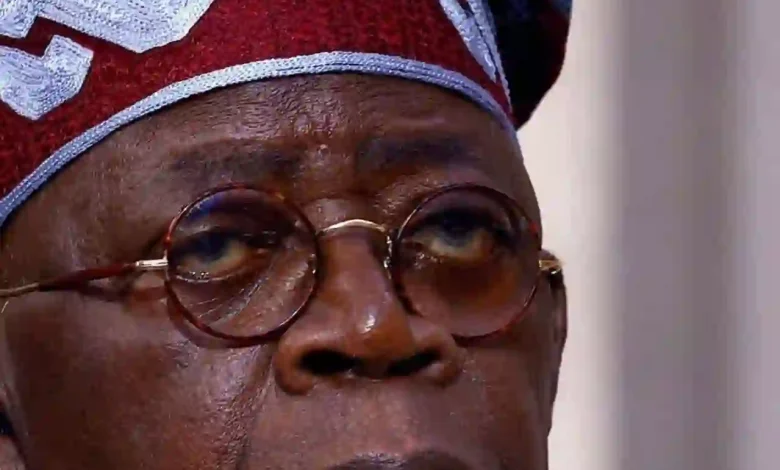
President Bola Tinubu has said Nigeria’s recent economic performance, as highlighted in a World Bank report, shows that his administration’s economic reforms are beginning to produce results.
The president cited improvements in economic growth, foreign reserves, government revenues and allocations to states, insisting that the removal of the petrol subsidy and the unification of the foreign exchange market have helped stabilise the economy.
Tinubu also disclosed that the Federal Government had waived more than ₦3.3 trillion in fuel taxes and duties to reduce the impact of rising petrol prices on Nigerians.
The president’s position comes as Nigeria was listed among the top 10 recipients of private capital mobilised by the World Bank Group, which attracted a record $112 billion in private investment for developing economies in the year ended June 2026.
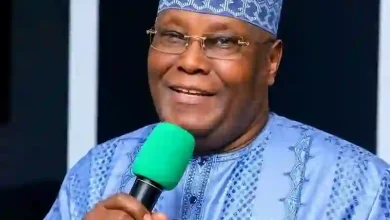
In addition, the Presidency has renewed its criticism of the fuel production subsidy proposed by former Vice President Atiku Abubakar, describing the proposal as unrealistic because of Nigeria’s limited access to crude oil volumes that could be allocated to such a programme.
World Bank Report Highlights Economic Growth
In a statement issued by his Adviser on Information and Strategy, Bayo Onanuga, Tinubu welcomed the World Bank’s October 2026 Nigeria Development Update titled, “Beyond the Federal Purse: How Higher Revenues Reshaped State Priorities.”
According to the president, the report confirms that the difficult economic decisions introduced by his administration since 2023 are beginning to generate results.
He said the removal of the petrol subsidy, the unification of the foreign exchange market and measures to strengthen fiscal discipline had increased government revenues and created additional funds for federal and state governments to invest in infrastructure and public services.
Tinubu, however, acknowledged that more work was needed to ensure that the gains translated into improved living conditions for ordinary Nigerians.
He said his administration would continue implementing its economic policies, with greater attention to reducing food prices, creating jobs and promoting inclusive growth.
The president stated that the government remained committed to its Renewed Hope Agenda, adding that the objective was to ensure that the benefits of economic reforms reached households across the country.
What the World Bank Report Revealed
The World Bank report indicated that Nigeria’s economy grew by 4.2 per cent in the first half of 2026, compared with 3.9 per cent during the corresponding period of 2025.
The growth was recorded despite economic pressures associated with the conflict in the Middle East.
The bank projected that Nigeria’s economy would grow by an average of at least 4.4 per cent between 2026 and 2028.
The report also showed that federation revenues increased by 69 per cent in real terms between 2023 and 2025, with state governments emerging as the biggest beneficiaries of the additional revenue.
According to the World Bank, the increase enabled state governments to raise capital expenditure by 151 per cent in real terms during the period.
Much of the additional spending went into roads, transportation infrastructure, agriculture, energy and housing.
The report stated that 29 out of 33 states reviewed redirected more of their spending towards economic infrastructure, while real social spending per person increased in all but one state.
It also found that internally generated revenue increased in real terms in 31 out of 35 states. Meanwhile, 21 states reduced their debt-to-GDP ratios between 2021 and 2025.
Nigeria’s overall public debt was projected to decline from 40 per cent of gross domestic product in 2025 to 38.1 per cent in 2026.
On inflation, the report noted that the rate fell from 27.6 per cent in January 2025 to 15.2 per cent in December 2025.
However, higher global fuel prices linked to the Middle East conflict have slowed the pace of further reductions. The World Bank expects inflation to ease to approximately 12 per cent by 2028.
Nigeria’s external position also improved, with the current account surplus rising to $12 billion, representing seven per cent of GDP, in the first half of 2026. This compared with $8.6 billion recorded during the same period in 2025.
The country’s gross external reserves also increased from $45.5 billion at the end of 2025 to $53.8 billion at the end of August 2026.
The World Bank further reported that poverty had stabilised for the first time since 2019. It projected a gradual decline in poverty if economic growth continued to outpace population growth.
Tinubu Calls for Better Use of Increased Revenue
Reacting to the report, Tinubu urged state governments to manage their increased revenues responsibly and prioritise projects that would improve the welfare of their residents.
He specifically called for greater investment in healthcare, education, infrastructure and other essential public services.
The president also disclosed that the Federal Government’s targeted cash transfer programme had reached more than 10 million households.
He said the administration would expand the programme while intensifying efforts to improve agricultural productivity and make transportation more affordable through compressed natural gas, also known as CNG.
Tinubu commended the Economic Management Team, led by the Minister of Finance and Coordinating Minister of the Economy, Taiwo Oyedele, as well as state governors and other stakeholders involved in implementing the reforms.
He expressed confidence that the government’s Renewed Hope Agenda 2.0 would accelerate economic development and improve living standards.
Tinubu Highlights Benefits of CNG Transportation
Beyond the World Bank report, the president highlighted the Federal Government’s efforts to reduce transportation costs through the introduction of CNG-powered buses and other alternative-fuel vehicles.
In a message posted on X, Tinubu referred to a documentary featuring commuters and commercial drivers who said the initiative had reduced their transportation expenses.
One of the commuters, identified as Blessing, reportedly said her journey from Masaka to Berger in the Federal Capital Territory now cost ₦500, compared with ₦1,500 previously.
The change represents a reported saving of ₦1,000 per trip.
The president also cited Ada and Abigail, who reportedly paid ₦1,600 for a journey from Enugu to Nsukka instead of the previous fare of ₦4,000, saving ₦2,400 per journey.
A taxi driver identified as Kabir said ₦10,000 worth of CNG enabled him to complete three additional return trips compared with drivers using petrol.
Tinubu also said he had received reports from Borno State indicating that some commuters paid as little as ₦50 per trip on CNG-powered and electric vehicles.
According to the president, the initiative was designed to ensure that lower operating costs for transport operators translated into more affordable fares for passengers.
He acknowledged that the removal of the petrol subsidy had created difficulties for many households but maintained that the government had a responsibility to provide alternatives that would ease the burden.
Tinubu said the Federal Government was working with state governments through the Nigeria Governors’ Forum and private investors to expand the National Affordable CNG Transportation Programme.
States Receive CNG Buses and Electric Vehicles
The president disclosed that several states had received buses and other vehicles under the programme.
According to him, Ekiti State received 15 buses in recent weeks, while Lagos State received 20. Akwa Ibom State, he added, had 50 buses ready for service.
Katsina State had introduced 30 CNG hybrid buses and 200 electric tricycles, while Kano State had received 30 CNG buses and five electric buses.
He also announced that another rollout was scheduled for Edo State.
Tinubu said Kaduna State’s 100 CNG buses had transported more than three million passengers.
He further disclosed that over 400 certified conversion centres had converted more than 120,000 vehicles from petrol to CNG.
The Federal Government, he said, was also expanding refuelling infrastructure to improve access to alternative fuel across the country.
FG Waives ₦3.3 Trillion in Fuel Taxes and Duties
Addressing the pressure caused by rising petrol prices, Tinubu said the Federal Government had waived more than ₦3.3 trillion in fuel taxes and duties as part of measures to cushion the effects on households and businesses.
He also announced that NNPC Retail would forgo its profit margin for 30 days, with priority given to public transportation operators.
The president said the government was working towards an interim ceiling of ₦1,350 per litre on wholesale petrol supply costs to reduce sudden price increases.
According to him, the measures were intended to provide temporary relief while the government continued expanding affordable transportation alternatives.
Tinubu maintained that the government would continue to balance immediate economic challenges with policies designed to improve long-term stability.
Tinubu Challenges Opposition Over Economic Promises
The president also challenged opposition politicians seeking to lead Nigeria to explain how they intended to finance their policy proposals and whether the plans would be sustainable.
He argued that political promises should be supported by clear funding arrangements rather than commitments that could create additional financial burdens for the country in the future.
Tinubu said any presidential candidate proposing major economic interventions should explain their costs, implementation plans and long-term implications.
His comments came amid disagreements between the administration and opposition figures over the best approach to managing fuel prices and addressing the rising cost of living.
Nigeria Among Top 10 Recipients of $112 Billion in Private Capital
Nigeria’s inclusion among the top 10 recipients of private capital mobilised by the World Bank Group also featured prominently in the discussion surrounding the country’s economic outlook.
World Bank Group President Ajay Banga disclosed that the institution mobilised a record $112 billion in private capital in the year ended June 2026, compared with $69 billion in the preceding year.
Nigeria was listed alongside Brazil, India, Turkey, Romania, Argentina, South Africa, Bangladesh, Mexico and Chile among the leading recipients.
The private capital was in addition to $123 billion invested from the World Bank Group’s own resources, bringing its combined financing to $235 billion during the period.
Africa attracted $22 billion in private capital, while Latin America and the Caribbean received $36.3 billion. Europe and Central Asia attracted $21.3 billion, while South Asia received $19.2 billion.
Banga said the World Bank was also discussing possible crisis assistance with between 30 and 40 countries facing economic pressures arising from higher energy and fertiliser prices linked to the Middle East conflict.
He explained that the bank initially made $25 billion available to countries when the conflict began in late February. It also identified another $35 billion that could be made available by redirecting resources from previously approved projects.
Banga said the World Bank could make as much as $100 billion available if the situation worsened, potentially exceeding the $70 billion it disbursed during the COVID-19 pandemic.
Presidency Rejects Atiku’s Proposed Fuel Production Subsidy
Meanwhile, the Presidency has again criticised Atiku Abubakar’s proposal to introduce a fuel production subsidy as part of efforts to reduce petrol prices.
Presidential spokesperson Sunday Dare described the proposal as unrealistic, arguing that Nigeria lacked sufficient unencumbered crude oil volumes to support the arrangement.
In a statement titled “Atiku’s Demagoguery in the Face of Tinubu’s Logical Policies,” Dare criticised comments made by the former vice president during a news conference in Abuja.
Atiku had described the 30-day petrol discount offered by NNPC Retail and the proposed price modulation framework as a panic-driven measure. He also argued that the Tinubu administration had adopted aspects of his economic proposals without implementing the production subsidy he considered necessary.
Dare, however, argued that Nigeria’s daily crude oil production did not mean that the government had unrestricted access to all the barrels produced.
Citing figures attributed to Finance Minister Taiwo Oyedele, the Presidency said Nigeria produced approximately 1.8 million barrels of crude oil daily for a population of more than 200 million.
However, it argued that production costs, royalties and contractual arrangements under joint ventures and production-sharing contracts reduced the quantity of crude oil available for the government to allocate freely.
According to Dare, fewer than 700,000 barrels per day were available as unencumbered crude after accounting for these obligations.
He maintained that introducing a broad production subsidy without sufficient crude oil volumes could expose the country to financial losses, irregularities and problems associated with the previous petrol subsidy system.
The Presidency also argued that domestic refineries, including the Dangote Petroleum Refinery, required substantial volumes of crude oil and that Nigeria could not meet all their needs through government-controlled supplies without considering existing contractual commitments.
It rejected comparisons between crude oil allocation and agricultural products, arguing that petroleum markets operate under different commercial and contractual conditions.
Dare also cited the United States and Qatar as examples of countries that have adjusted energy pricing policies despite their substantial production capacities or energy resources.
Presidency Defends NNPC Retail Discount
The Presidency further rejected Atiku’s claim that NNPC Retail’s decision to forgo its profit margin amounted to a return to fuel subsidy payments.
According to Dare, the discount was initially introduced to mark Nigeria’s 66th Independence anniversary before the company agreed to extend it for another 30 days.
He described the arrangement as a temporary price modulation framework intended to absorb some of the immediate effects of rising international crude oil prices.
The Presidency argued that the arrangement differed from the former subsidy system, under which the government incurred substantial expenditure to maintain regulated petrol prices.
It also defended the proposed ₦1,350-per-litre ceiling on wholesale petrol supply costs, describing it as a temporary measure designed to reduce the impact of sudden increases in global oil prices.
Under the proposed framework, Dare said, refiners and importers would absorb some short-term cost increases above the ceiling and recover the costs later when global crude oil prices declined or exchange-rate conditions improved.
He maintained that the removal of the petrol subsidy and the unification of the foreign exchange market had ended what the government described as a significant drain on public finances.
The Presidency also argued that increased revenues were now available for distribution to state and local governments through statutory allocations.
It further maintained that the reforms had eliminated prolonged fuel queues and reduced the gap between the official and parallel foreign exchange markets.
However, the debate over petrol pricing remains part of the wider disagreement between the Tinubu administration and opposition figures over how best to manage fuel costs, protect household incomes and sustain Nigeria’s economic recovery.
READ ALSO: