Daud Olatunji
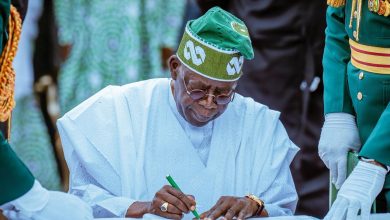
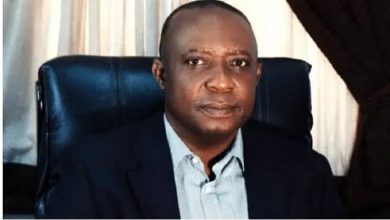
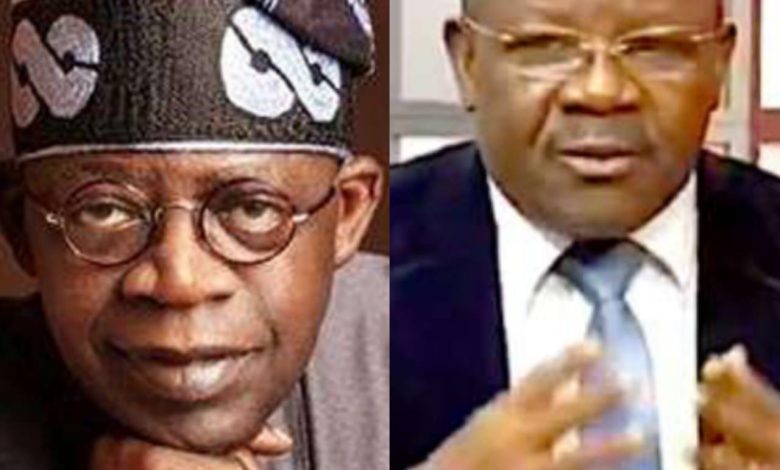
A professor and retired naval officer, Commodore Kunle Olawunmi, has warned that the Yoruba people must not tie their political future and security to the outcome of the 2027 presidential election or the political fortunes of President Bola Tinubu.
Olawunmi in a statemrnt made available to PLATFORM TIMES on Monday, argued that whether Tinubu wins or loses the 2027 presidential election, the outcome must not be interpreted as a victory or defeat for the Yoruba people.
He maintained that Tinubu’s administration should be judged as a government of the Federal Republic of Nigeria and not as a collective political project of the Yoruba.
The professor, who made the submission while reflecting on Nigeria’s political future, warned that the increasing tendency to ethnicise the Tinubu presidency could expose millions of Yoruba to collective blame for decisions they neither made nor controlled.
According to him, if Tinubu wins re-election, his administration’s policies and shortcomings could increasingly be portrayed as the collective actions of the Yoruba, while his defeat could equally trigger resentment from political interests that perceive his presidency as an ethnic conquest.
“Tinubu is a Yoruba man, but he is not the Yoruba nation,” Olawunmi declared.
He said the Yoruba must neither defend policies they considered detrimental simply because the President shared their ancestry nor accept responsibility for decisions over which ordinary Yoruba citizens had no control.
Olawunmi identified federal appointments as one of the issues capable of further deepening the ethnicisation of the administration.
He acknowledged that the Presidency had rejected allegations that its appointments violated the constitutional principle of federal character but said the political consequences of the controversy went beyond the legality of individual appointments.
According to him, the danger is that benefits perceived to be accruing to a small political network could eventually be interpreted as benefits accruing to the entire Yoruba race.
“Private advantage for a few can therefore become public danger for millions,” he warned.
He similarly argued that economic policies such as petrol subsidy removal and foreign exchange reforms should not be regarded as Yoruba policies merely because the President is Yoruba.
While acknowledging that the reforms were presented as measures to address structural weaknesses in the economy, Olawunmi said their implementation had subjected households and businesses to considerable economic pressure.
Whatever the merits or shortcomings of the policies, he said, they remained decisions of the Federal Government and should be assessed on their impact rather than ethnic identity.
Olawunmi warned against turning the 2027 presidential election into a referendum on whether the Yoruba are safe or politically secure only when a Yoruba occupies the Presidency.
He said such a situation would expose the weakness of Nigeria’s federal structure and deepen ethnic divisions.
“If the political safety of the Yoruba rises when one Yoruba candidate wins and falls when he loses, then the federation has failed to create equal citizenship,” he said.
“Presidency is temporary. Nationhood is intergenerational.”
The retired naval officer also criticised aspects of Nigeria’s federal arrangement, arguing that the structure often makes it difficult to establish clear lines of accountability.