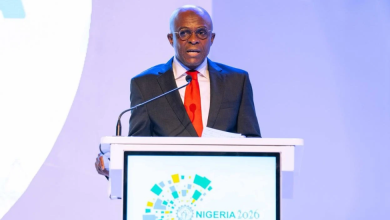
The Lagos Chamber of Commerce and Industry (LCCI) has urged the Federal Government to urgently reduce the cost of production and create a more competitive business environment to enable manufacturers and other private-sector operators to expand investment, create jobs and drive sustainable economic growth.
The Chamber said the next phase of the Federal Government’s economic programme should focus on translating recent improvements in macroeconomic stability into tangible gains for businesses and households, particularly through lower production costs, improved infrastructure, affordable financing and predictable government policies.
Reacting to President Bola Ahmed Tinubu in his Independence Day address, its President, Engr. Leye Kupoluyi said the country had reached a point where economic reforms must increasingly be measured by their impact on enterprise competitiveness, productive capacity, employment and household purchasing power.
The Chamber acknowledged the economic direction outlined by Tinubu particularly his position that Nigeria had moved beyond economic stabilisation and should now enter an era of shared and widespread prosperity.
However, it said achieving that objective would require a stronger focus on the operating conditions confronting businesses across the country.
According to the LCCI, manufacturers, farmers, logistics operators, retailers and small and medium-sized enterprises continue to face elevated operating costs arising from energy, transportation, taxation, infrastructure deficiencies, financing, regulatory charges, insecurity and logistics inefficiencies.
It therefore called on the Federal Government to place enterprise competitiveness at the centre of economic management and ensure that improvements in key macroeconomic indicators translate into lower costs for businesses and increased purchasing power for households.
The Chamber said sustained moderation in inflation must eventually be reflected in the prices of food, transportation, energy and other essential goods, while economic growth should translate into productive employment and stronger household incomes.
It also called for greater stability in the foreign exchange market, arguing that businesses require predictable access to foreign exchange at costs that would enable them to remain competitive.
The LCCI identified manufacturing as a critical driver of broad-based economic prosperity and welcomed the Federal Government’s commitment to reviving factories, utilising Nigeria’s gas resources to power industries, improving access to infrastructure and finance, and promoting locally manufactured products.
It urged the government to move quickly from policy announcements to implementation by reducing industrial energy costs, improving electricity supply to productive enterprises, accelerating gas-to-industry projects and expanding access to affordable, long-term financing for manufacturers.
The Chamber also called for improved infrastructure in industrial clusters, increased access to working capital for SMEs, lower regulatory and administrative costs, stronger local supply chains and measures to promote exports of manufactured and processed Nigerian products.
It warned against policy measures that could inadvertently increase production costs, stressing that a competitive manufacturing sector would help Nigeria tackle unemployment, raise productivity, reduce import dependence, diversify exports, promote technology transfer and expand government revenue.
On the cost-of-living crisis, the LCCI said the government should complement efforts to support households with supply-side measures capable of increasing the availability of affordable goods and services.
It called for improved transportation and logistics systems to reduce the cost of moving agricultural produce from farms to urban centres, while urging greater investment in storage infrastructure, irrigation and mechanisation.
The Chamber also called for stronger security in farming communities, consideration of import duty waivers for critical production inputs and the removal of bottlenecks along key supply chains.
The LCCI further stressed the need for deeper and more structured engagement between the government and private sector, saying businesses require greater certainty about the implementation and impact of major economic policies.
It identified regulatory predictability as a major requirement for investment, urging government agencies to ensure that taxes, levies, tariffs, regulations and administrative procedures remain clear, stable and transparent.
The Chamber also called for regulatory efficiency, arguing that the objective should not be to increase the volume of regulation but to ensure that regulations deliver meaningful public value without imposing unnecessary costs on businesses.
On infrastructure, it said roads, ports, power, rail, broadband and logistics facilities should be treated as productive assets capable of lowering transaction costs and improving the competitiveness of Nigerian businesses.
The LCCI also advocated improved access to affordable finance, particularly for SMEs and manufacturers, stressing that businesses require longer-tenor funding at interest rates compatible with productive investment.
It said monetary stability should ultimately translate into improved credit conditions for businesses and increased capacity for private-sector investment.
The Chamber equally called for a level playing field in the Nigerian economy, saying businesses should compete on the basis of productivity, innovation and efficiency rather than access to administrative privileges.
On investment, the LCCI urged the government to make Nigeria a more attractive destination for domestic and foreign capital by making it easier, faster and more predictable to establish and operate businesses.
It warned that Nigeria must not only attract new investors but also retain existing ones by addressing the structural challenges that raise the cost and uncertainty of doing business.
The Chamber also raised concerns about the dumping of foreign products into the Nigerian market and called for closer attention to expatriate privileges to prevent foreign interests from displacing local businesses, particularly in the retail sector.
On exports, the LCCI said the Federal Government should build on Nigeria’s more than $6 billion in non-oil export earnings recorded in 2025 by shifting from the export of primary commodities towards higher-value manufactured and processed products.
It said Nigeria had the population, natural resources, entrepreneurial capacity and market size required to become a major production and export hub in Africa, but would need greater investment in standards, certification, trade logistics, industrial clusters, trade finance, export infrastructure and market access.
The Chamber identified the African Continental Free Trade Area as an important opportunity for Nigerian businesses, urging policymakers to position the country not merely as a market for African products but as a major production base for the continent.
The LCCI also called for greater investment in digital infrastructure, technical and vocational education, science, technology, engineering and mathematics, entrepreneurship and industry-relevant skills.
It said Nigeria’s youthful population could become a major economic advantage if the country succeeded in converting demographic growth into productive human capital.
The Chamber urged government to work more closely with businesses in designing skills-development programmes so that training responds to actual labour-market requirements rather than focusing primarily on the production of certificates.
The LCCI said recent improvements in economic growth, foreign exchange stability, foreign reserves, inflation and non-oil exports provided important foundations for restoring investor confidence.
It, however, maintained that the ultimate measure of the Federal Government’s economic reforms would be whether Nigerian businesses could produce more at lower costs, invest with greater confidence, employ more people and compete effectively in domestic and international markets.
As Nigeria enters its 67th year as an independent nation, the Chamber said a stronger partnership between government and the private sector would be critical to building a more productive, competitive and prosperous economy.