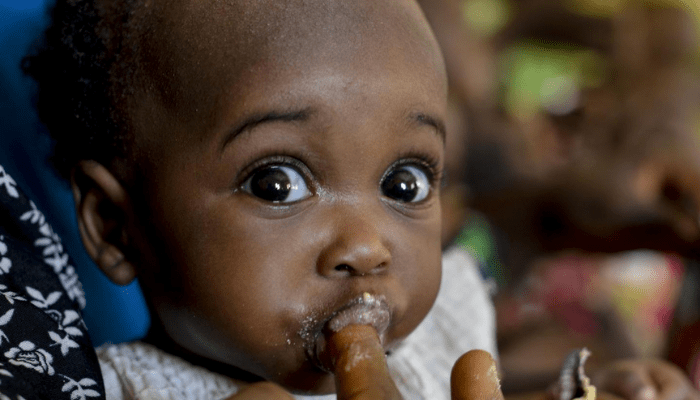
…amid $36.8m nutrition funding gap
An estimated 2.3 million children under the age of five in Northeast Nigeria are projected to suffer acute malnutrition in 2027, while the region’s humanitarian nutrition response faces a $36.8 million funding shortfall.
Additionally, 977,000 children are expected to suffer severe acute malnutrition in 2027, compared with 918,000 in 2026.
The figures were presented at the October 2026 Northeast Nigeria Nutrition Sector Coordination Meeting, where humanitarian organisations and government representatives reviewed the region’s nutrition situation and response.
Details of the meeting published by Action Against Hunger, Nutrition Cluster, and the United Nations Children’s Fund (UNICEF),on Thursday showed that the projection for Borno, Adamawa and Yobe states represents a nine percent decline from the estimated 2.6 million children affected in 2026. However, the number of children expected to suffer severe acute malnutrition is projected to increase by three percent, while the number facing moderate acute malnutrition is projected to decline by nine percent to approximately 1.4 million.
An estimated 196,000 pregnant and breastfeeding women are also projected to require nutrition assistance.
The meeting noted that the increase in projected severe cases points to a continuing burden on nutrition services across the region, while the funding position adds to the concern.
The preliminary Integrated Food Security
(IPC) projection also showed that the number of local government areas facing serious or worse food insecurity is expected to increase during the 2027 lean season. Across 63 local government areas assessed, 22 were classified in IPC Phase 3 or worse for October to December 2026, compared with 31 to 32 during the same period in 2025.
For January to April 2027, the projection is 23 local government areas, comprising 17 in Phase 3 and six in Phase 4. The number is expected to rise to 37 during the May to August 2027 lean season, although this is an improvement on the 51 local government areas projected for the 2026 lean season.
The report said the improvements reflected humanitarian scale-up, localisation efforts and recovery from the 2024 floods. However, it warned that insecurity, below-average rainfall and harvests, and shrinking donor funding could worsen conditions, particularly in Borno and inaccessible areas, if support is withdrawn too early.
IPC Phase 3 represents a serious level of food insecurity, while Phase 4 indicates an emergency. The 2027 projections remain preliminary and are subject to validation by the IPC Global Support Unit before the final report is released.
The findings indicate that, despite a projected decline in the overall number of children affected by acute malnutrition, the Northeast will continue to face a substantial nutrition burden in 2027, with severe cases expected to increase and humanitarian funding remaining inadequate.
Malnutrition in Northeast Nigeria is driven by persistent insecurity, displacement, food inflation and poor access to healthcare, which have weakened household food security and livelihoods. The Food and Agriculture Organisation (FAO) estimated that 6.4 million people across Borno, Adamawa and Yobe faced food insecurity in 2026, including more than 1.1 million in the Emergency phase.
UNICEF’s 2025 nutrition survey found that about two-thirds of children aged six to 23 months in the three states faced some level of food poverty, reflecting inadequate access to diverse and nutritious diets. Poor sanitation and childhood illnesses, particularly diarrhoea, further worsen children’s nutritional vulnerability, while inadequate breastfeeding and complementary feeding practices compound the problem.
Funding shortages have also disrupted treatment, with the World Food Programme reporting the closure of 150 nutrition clinics in Borno and Yobe, putting an estimated 300,000 children at risk of wasting.
The 2026 Humanitarian Response Plan sought $94.4 million for nutrition interventions, including $45.3 million for the lean season. By September, only 61 percent of the appeal had been funded, leaving a 39 percent shortfall of approximately $36.8 million with two months remaining in the year.
The nutrition sector identified 4.11 million people in need of assistance across Borno, Adamawa and Yobe, including 3.01 million children under five and 1.1 million pregnant and breastfeeding women.
The meeting also highlited deterioration in some infant and young child feeding indicators.
Minimum dietary diversity improved in Borno, rising from 35.4 percent to 39.6 percent, and in Adamawa, where it increased from 40 percent to 42 percent. In Yobe, however, the proportion fell sharply from 31.8 percent to 12.3 percent.
The minimum acceptable diet indicator also declined significantly in Yobe, reaching 11.8 percent.
Early initiation of breastfeeding and exclusive breastfeeding declined across all three states. In Borno, exclusive breastfeeding fell from 48.1 percent to 37.6 percent, a decline of 10.5 percentage points. Adamawa recorded a 15 percentage-point decline, while Yobe’s rate fell by 20.4 percentage points.
The meeting report said partners recommended moving from mass group discussions to more targeted individual counselling. They also proposed a dedicated knowledge, attitudes and practices survey to examine the declining infant and young child feeding indicators despite the number of women reached through nutrition counselling.
The survey also showed high levels of acute malnutrition among pregnant and breastfeeding women. The prevalence stood at 23.2 percent in Borno, 14.6 percent in Adamawa and approximately 33.3 percent in Yobe, where about one in three women in the group was affected.
Stunting exceeded the very high threshold in seven of the 10 surveyed domains. Central Yobe recorded a prevalence of 44.6 percent, while Central Borno recorded 43 percent.
Among children aged six to 59 months, global acute malnutrition in Borno stood at 12.6 percent, compared with 12.1 percent in 2025 and 15.7 percent in 2024. Central Borno recorded an increase to 19.4 percent from 15.4 percent in 2025.
Yobe’s rate declined to 10.3 percent from 10.8 percent, while Adamawa recorded six percent, down from 7.4 percent and its lowest level since 2023.