Daud Olatunji
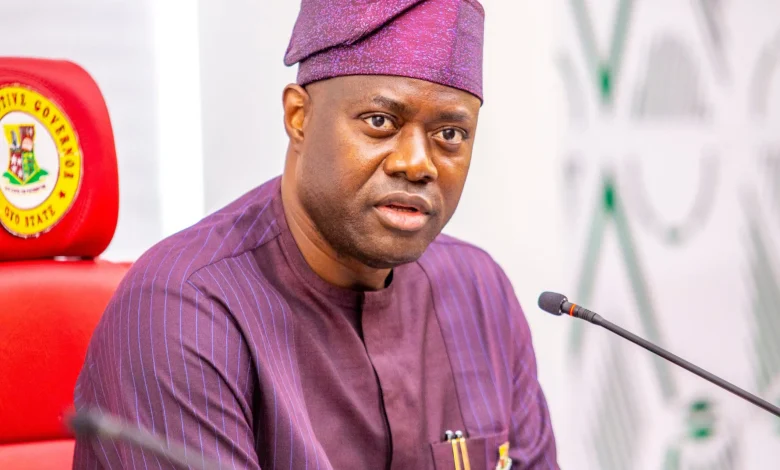
Oyo State Governor, Seyi Makinde, has explained why he is seeking to unseat President Bola Tinubu in the 2027 presidential election, despite supporting the President’s candidacy during the 2023 general election.
Makinde, who has indicated his intention to contest the presidency on the platform of the Allied Peoples Movement, said his decision to challenge Tinubu was driven by concerns over Nigeria’s direction and the dwindling opportunities available to ordinary citizens, rather than any personal disagreement with the President.
The governor made his position known in his latest newsletter, titled RESET NIGERIA, where he addressed questions surrounding his political realignment and decision to seek the country’s highest political office.
“I supported President Bola Ahmed Tinubu in 2023. Today, I am running against him in the 2027 presidential election,” Makinde stated.
He said while some Nigerians had speculated that his decision might have followed a personal disagreement with Tinubu, his presidential ambition was rooted in what he described as the need to redirect the country towards a more promising future.
“Some people have asked what changed. Others believe there must have been a personal disagreement between us.
“I understand why they would think that. But my decision is not about a personal disagreement or an ambition to occupy Aso Rock. It is about the future of Nigeria and the opportunities available to Nigerians,” he said.
Explaining his support for Tinubu in 2023, Makinde said he had believed the President possessed the capacity to unite the country, build a government anchored on national unity and competence, and tackle Nigeria’s economic challenges.
However, he said his assessment of the administration had changed after three years in office, adding that the current direction of the government no longer reflected the expectations that informed his earlier support.
“Three years later, I no longer believe his administration is taking us in that direction,” the governor said.
To illustrate his concerns about Nigeria’s declining opportunities, Makinde offered a personal account of his upbringing, educational background and journey into entrepreneurship.
He said he was raised in a lower-middle-class family, with his father initially working as a teacher before retraining as an accountant, while his mother was a civil servant and telephone operator.
According to him, although his family was not wealthy, the Nigeria of his childhood offered ordinary families the opportunity to improve their circumstances through education, hard work and determination.
“We were not wealthy. But we lived in a Nigeria where an ordinary family could reasonably believe that education, hard work and determination would give their children a better life,” he recalled.
Makinde said he attended Bishop Phillips Academy, Ibadan, before proceeding to the University of Lagos, where he studied Electrical Engineering.
He subsequently built a career in engineering, specialising in industrial measurement and safety systems, before establishing Makon Engineering and Technical Services at the age of 29.
The governor said the company, which started as a small business, eventually expanded beyond Nigeria, stressing that his achievements were products of education, acquired skills and hard work rather than inherited wealth or political connections.
“I had an education, acquired useful skills, found opportunities and worked to make the most of them,” he said.
Makinde, however, expressed concern that the opportunities that enabled him to build a successful career were becoming increasingly inaccessible to young Nigerians.