“Judgment Reserved After 11 Years” — Court Concludes Hearing In Suswam, Ex-Benue Finance Commissioner’s ₦3.1bn Money Laundering Trial

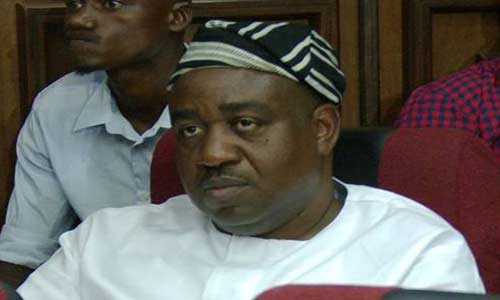
The Federal High Court in Abuja has reserved judgment in the alleged ₦3.1 billion money laundering case involving former Benue State Governor, Gabriel Suswam, and his former Commissioner for Finance, Omodachi Okolobia, following the adoption of final written addresses by the prosecution and defence.
Justice Peter Lifu reserved judgment on Friday, November 27, 2026, after lawyers representing the defendants and the Economic and Financial Crimes Commission (EFCC) adopted their respective submissions, bringing the 11-year-old trial to the stage of final determination.
The judge announced that the judgment date would be communicated to the parties.
During the proceedings, counsel to Suswam and Okolobia urged the court to discharge and acquit their clients, arguing that the prosecution had failed to establish the allegations contained in the amended charge.
However, the EFCC maintained that the evidence presented during the trial was sufficient to establish the defendants’ culpability and urged the court to convict them.
Suswam’s counsel, Chinelo Ogbozor, informed the court that the former governor’s final written address was filed in December 2025, while a reply on points of law was submitted in April 2026 following receipt of the prosecution’s final address.
Adopting the processes, Ogbozor urged Justice Lifu to discharge and acquit Suswam on counts one to seven of the 11-count amended charge, which specifically concern the former governor.
The charges relate to the alleged diversion of approximately ₦3.1 billion realised from the sale of shares belonging to the Benue State Government through the Benue Investment and Property Company Limited (BIPC).
Similarly, counsel to Okolobia, Paul Erokoro, SAN, adopted the second defendant’s final written address filed in January 2026 and a reply on points of law submitted in June.
Erokoro maintained that the prosecution had failed to prove the allegations against his client in counts eight to 11 of the amended charge.
“I adopt these two processes as our final address in urging your lordship to discharge and acquit the second defendant of all the counts in the amended charge,” the senior lawyer told the court.
He urged the judge to evaluate the prosecution’s evidence and find that it did not establish the criminal responsibility of his client.
On his part, EFCC counsel, Rotimi Jacobs, SAN, adopted the Commission’s final written address filed in March 2026 and asked the court to uphold the prosecution’s case.
Describing the matter as “a straightforward case,” Jacobs maintained that the evidence presented established the alleged diversion of funds belonging to the Benue State Government.
He urged the court to find that the prosecution had proved the charges against the defendants.
Following the adoption of the final addresses, Justice Lifu reserved judgment, bringing the proceedings closer to a conclusion more than a decade after the defendants were first arraigned.
The case arose from financial transactions allegedly carried out during Suswam’s second term as Governor of Benue State.
The EFCC accused Suswam and Okolobia of diverting approximately ₦3.1 billion from proceeds of the sale of shares owned by the state government through BIPC.
According to the prosecution, the shares were sold through Elixir Securities Limited and Elixir Investment Partners Limited, while part of the proceeds was allegedly diverted between August and October 2014.
The Commission alleged that the funds were subsequently converted into foreign currency and delivered to Suswam.
One of the prosecution witnesses, Abubakar Umar, a bureau de change operator who operated Fanffash Resources Limited, testified that he converted the money into approximately $15.8 million and delivered the dollars to the former governor.
However, Umar’s testimony became an issue during the proceedings after he changed his account concerning where the money was allegedly delivered.
In January 2018, the witness told the court that his earlier testimony about delivering the money to Suswam’s residence in Maitama, Abuja, was incorrect.
He also alleged that individuals close to the former governor had pressured him to change his account.
The prosecution relied on Umar’s testimony alongside documentary evidence and the accounts of other witnesses to establish its allegations.
The EFCC also accused Okolobia of conducting financial transactions amounting to ₦578 million in four tranches between December 2014 and January 2015.
According to the Commission, the transactions breached the cash transaction limits prescribed under the applicable money laundering legislation.
Both defendants denied the allegations and pleaded not guilty.
The EFCC first arraigned Suswam and Okolobia before the Federal High Court in November 2015.
The charges were subsequently amended to 11 counts, and the case passed through three judges before being reassigned to Justice Lifu in 2023.
The defendants were re-arraigned before him in March 2024 and again pleaded not guilty.
During the trial, the prosecution called nine witnesses and tendered documentary evidence in support of its allegations.
Among the witnesses was Junaidu Sa’id, an EFCC investigator, who testified about the investigation and the alleged movement of the disputed funds.
Brigid Shiedu, a former Managing Director of BIPC, also gave evidence concerning the sale of the state government’s shares and the authorisation attributed to Suswam.
Another witness, Adewale Agunbiade, a compliance officer with Guaranty Trust Bank, testified about transactions involving the former governor’s naira and dollar accounts.
Agunbiade told the court that more than $200,000 was deposited into Suswam’s dollar account in instalments between August 2014 and July 2015.
He also testified that the former governor personally deposited $175,000 in cash.
However, during cross-examination, the banker acknowledged that the inflows were not unusual and that he had not identified any breach of banking regulations in the transactions.
Appea Sunday, another EFCC investigator, also testified for the prosecution.
After the Commission closed its case, the defendants filed no-case submissions, arguing that the evidence presented was insufficient to require them to enter a defence.
Their lawyers maintained that the prosecution had failed to establish the essential elements of the offences charged.
The EFCC opposed the applications, insisting that the evidence linked the defendants to the alleged unlawful transactions.
In July 2025, Justice Lifu dismissed the no-case submissions and directed both defendants to open their defence.
The court held at that stage that the prosecution had presented sufficient evidence to require the defendants to respond to the allegations.
The ruling did not amount to a finding of guilt but required the case to proceed to the defence stage.
Following the ruling, Suswam testified as the sole defence witness, while Okolobia neither testified nor called any witness.
The defence concluded its case in November 2025, after which Justice Lifu directed the parties to file and exchange their final written addresses.
However, the adoption of the addresses suffered several delays.
Although the court initially scheduled the proceedings for January 2026, the matter was subsequently adjourned to different dates in May, July and September.
At the July proceedings, the court granted an adjournment following information presented about the indisposition of persons involved in the case.
The proceedings suffered another setback in October when Suswam’s lead counsel, Joseph Daudu, SAN, was absent.
The prosecution informed the court that Daudu had written to indicate that he would be travelling to Denmark for the International Bar Association’s annual conference.
EFCC counsel criticised the request, describing it as an attempt to frustrate the trial.
However, the prosecution agreed to the adjournment to avoid any suggestion that the defendants had been denied their constitutional right to a fair hearing.
Justice Lifu subsequently adjourned the case to November for the adoption of final written addresses.
With the parties having completed their submissions on Friday, the court will now determine whether the EFCC established the offences alleged against Suswam and Okolobia beyond reasonable doubt.
The forthcoming judgment will also resolve the defendants’ contention that the prosecution’s evidence was insufficient to sustain the charges.
Suswam, who served as Governor of Benue State between 2007 and 2015, previously represented Katsina-Ala/Ukum/Logo Federal Constituency in the House of Representatives from 1999 to 2007 and Benue North-East Senatorial District in the Senate from 2019 to 2023.
The allegations under consideration relate to transactions allegedly undertaken during his tenure as governor and remain subject to the court’s final determination.
Justice Lifu did not announce a specific date for judgment but said the parties would be notified when the decision was ready.
Until the judgment is delivered, the allegations against Suswam and Okolobia remain unproven, and both defendants continue to maintain their innocence.
Post Title: “Judgment Reserved After 11 Years” — Court Concludes Hearing In Suswam, Ex-Benue Finance Commissioner’s ₦3.1bn Money Laundering Trial By Papers Nigeria.