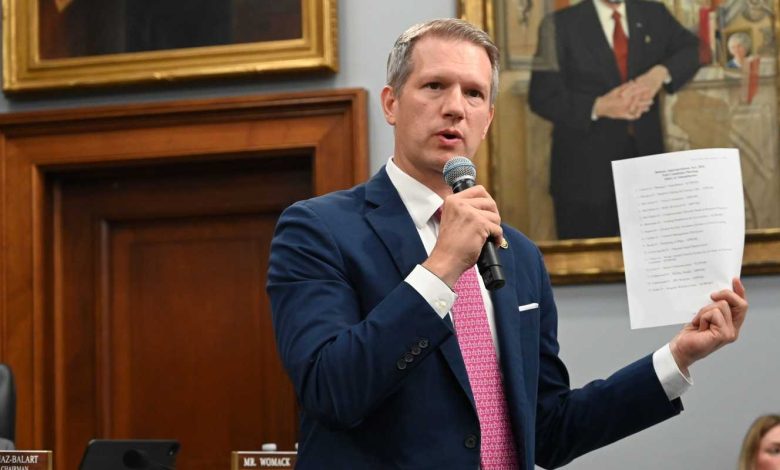
United States Congressman Riley Moore has made a fresh statement on the killings of Christians in Nigeria, saying religious communities in the country continue to face severe violence one year after President Donald Trump redesignated Nigeria as a Country of Particular Concern (CPC).
Moore said more efforts were needed to protect Christians in Nigeria and other parts of the world where religious persecution remained a concern.
The US lawmaker made the remarks in a post on his X account while reflecting on the anniversary of Trump’s decision to place Nigeria back on the US religious freedom watchlist.
He maintained that the situation facing Christians in Nigeria required continued attention from the American government, lawmakers and religious organisations.
“Christians in Nigeria, and around the world, continue to face unspeakable violence. On this anniversary, we must rededicate our efforts to defend Christians in Nigeria and anywhere they face persecution,” Moore wrote.
The congressman also highlighted what he described as progress recorded since the designation was announced.
He credited Trump’s leadership, legislative efforts by Republicans in the US House of Representatives and advocacy from religious organisations for contributing to the development.
According to Moore, the decision to redesignate Nigeria as a Country of Particular Concern was necessary, while efforts by members of the House Appropriations Committee had also helped place pressure on the Nigerian government to address attacks against Christian communities.
He specifically mentioned moves by House Appropriations Republicans to introduce conditions on American assistance to Nigeria.
The proposed measures are intended to ensure that the Nigerian government takes demonstrable steps to protect Christians and address religiously motivated violence.
Moore said the combined efforts of the American administration, lawmakers and faith-based organisations had begun producing results.
“The President’s steadfast and decisive leadership, @houseappropsgop’s work to condition aid to Nigeria and impose requirements to defend Christians, and the tireless work of advocacy and faith based organizations has started to make a difference.
“We saw the first Christmas without a massacre of Christians in recent memory. There is much more work to be done, but the government of Nigeria has shown signs of a willingness to address the violence against our brothers and sisters in Christ.”
His comments suggest that Washington’s engagement with Nigeria over religious freedom and attacks on Christian communities remains an important part of its relationship with Abuja.
The lawmaker, however, acknowledged that the situation was far from resolved. He maintained that more attention and concrete action were necessary to prevent further attacks and protect vulnerable religious communities.
Nigeria’s designation as a Country of Particular Concern has remained a subject of disagreement between some American lawmakers and the Nigerian government.
The country was first placed on the list in 2020 during Trump’s first administration. The decision followed concerns raised in the United States over religious freedom violations and attacks affecting Christian communities.
However, the administration of former US President Joe Biden removed Nigeria from the list in 2021.
The decision attracted criticism from some Republican lawmakers and Christian advocacy groups, who argued that the security situation and alleged religious persecution had not sufficiently improved.
Trump returned to the White House in January 2025 and announced Nigeria’s redesignation as a Country of Particular Concern in November of that year.
The decision renewed international attention on killings, attacks on religious communities and the wider security challenges confronting several parts of Nigeria.
Under the US International Religious Freedom Act, the CPC designation is reserved for countries whose governments are determined to have engaged in or tolerated particularly severe violations of religious freedom.
The designation gives Washington several policy options.
These may include diplomatic pressure, restrictions on certain forms of assistance and other measures intended to encourage governments to address religious freedom violations.
Following the latest designation, Republican lawmakers in the US House of Representatives also pushed for conditions to be attached to American assistance to Nigeria.
Their position centred on the need for the Nigerian government to demonstrate measurable progress in protecting vulnerable Christian communities, investigating attacks and ensuring that those responsible are brought to justice.
However, the Nigerian government has repeatedly rejected the description of the country’s security crisis as a systematic campaign of religious persecution.
The Federal Government has maintained that insecurity affects both Christians and Muslims and should not be viewed exclusively through a religious lens.
It has attributed the violence to several security threats, including terrorism, banditry, communal clashes and conflicts between farmers and herders.
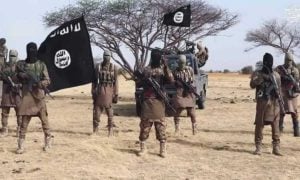
Boko Haram and the Islamic State West Africa Province (ISWAP) have also continued to pose security challenges, particularly in the North-East, where attacks on civilians and security formations have resulted in casualties and displacement.
The government has insisted that it remains committed to protecting citizens regardless of their religious affiliations.
It has also pointed to ongoing security operations, reforms and engagements with American officials as part of efforts to address the concerns raised by Washington.