A Capital Under Watch: Inside The U.S. Advisory And Nigeria’s Security Reality

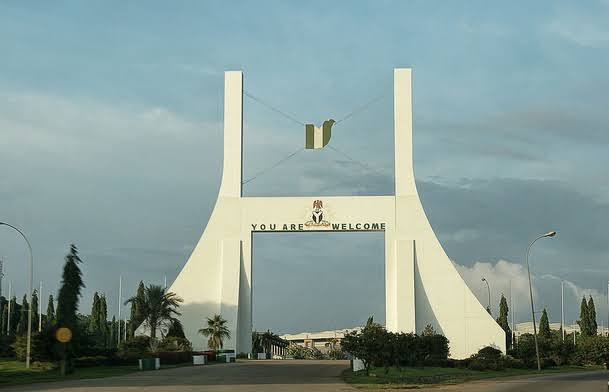
A few weeks back, the United States Department of State authorised non-emergency U.S. government employees and their family members to leave the U.S. Embassy in Abuja.
The embassy stated that the directive was due to the deteriorating security situation across Nigeria.
In an updated travel advisory issued on April 8, 2026, Americans were advised to reconsider travel to Nigeria due to crime, terrorism, kidnapping, and civil unrest.
The advisory classified the overall travel advisory for Nigeria as “Level 3: Reconsider Travel,” while some states are at “Level 4: Do Not Travel.”
The department also added Plateau, Jigawa, Kwara, Niger, and Taraba states to the list of “Do Not Travel” areas, bringing the total to 23 states where travel is strongly discouraged.
The advisory also warned that violent crimes, armed robbery, carjacking, and kidnapping for ransom are prevalent, with U.S. citizens often targeted.
It also noted that terrorist attacks could occur at markets, places of worship, hotels, and public gatherings, while healthcare services remain inconsistent and below international standards.
Papers News reports that while the latest advisory does not cite a specific incident, the warning appears to reflect broader concerns over ongoing security challenges in parts of the Federal Capital Territory.
Former presidential candidate, Peter Obi, described the directive by the United States as a “bad omen” that should be treated as a national emergency.
He said the development was particularly troubling for a country already struggling to attract investors.
Nigerian activist, Omoyele Sowore, questioned the advisory, wondering whether there would be any incidents in the state capital.
He wrote: “What is going on? Are there things going to happen in Nigeria that we should be aware of?”
Although the advisory has triggered concern among some observers, the Federal Government has stated that it is a precautionary measure based on internal protocols.
The Minister of Information, Mohammed Idris, described the U.S. decision as a “routine precaution guided by internal protocols,” which does not reflect the country’s situation.
The minister said while there are “isolated security challenges” in Nigeria, there is no breakdown of law and order, noting that the country remains stable.
“While we acknowledge isolated security challenges in some areas, there is no general breakdown of law and order, and the vast majority of the country remains stable,” he said.
Unrest in the Nation’s Capital
Recent incidents and intelligence reports suggest that concerns over security in Abuja are not entirely unfounded.
In March, residents of Kungaboku and Paze communities in the Federal Capital Territory fled their homes following a letter by suspected bandits threatening a coordinated attack.
In the letter allegedly found in a pupil’s school bag in a private school, the bandits vowed to attack Kungaboku and neighbouring Paze to avenge their commander’s killing.
Also, an internal memo dated April 13 obtained from the Nigeria Customs Service by The Associated Press indicated that Nigeria’s security forces are on high alert over a planned attack by Islamist militants on public infrastructure in Abuja and Niger states.
The planned targets include the international airport, a prison facility in the capital city of Abuja, and a military detention centre in neighbouring Niger State.
“Their intention is to release detained terrorists and inflict significant damage on critical aviation infrastructure,” the memo reads.
The plan mirrors a similar attack in the Niger Republic in January, in which Islamist terrorists attacked an air force base in Niamey, the memo read in a warning to customs service personnel.
“An analysis of the report reveals a concerning correlation between the potential targeting of the Nnamdi Azikiwe Airport, Abuja and recent large-scale attacks on aviation facilities in the Niger Republic, notably in Niamey and Tahoua. This suggests a possible intent by terrorists to replicate the attack patterns within Nigeria,” according to the memo.
The Federal Capital Territory Police Command last Wednesday announced the arrest of 14 suspected members of a car theft and robbery syndicate and the recovery of 17 stolen vehicles across Abuja.
The Commissioner of Police, Ahmed Sanusi, said the arrests followed intensified intelligence-led operations conducted from March 2026 to date.
Should We Be Concerned About The Travel Advisory?
In 2022, the United States Embassy in Abuja issued a travel advisory, citing intelligence indicating an elevated risk of terrorist attacks in the country, specifically in Abuja.
In November 2025, the UK Foreign, Commonwealth and Development Office updated its travel advice on Nigeria, warning against all but essential travel to parts of the Federal Capital Territory, including the outer suburbs of Abuja, amid rising violent crime and insecurity.
In August 2024, the UK Foreign, Commonwealth and Development Office issued a travel advisory warning its citizens to exercise caution and avoid large crowds across Nigeria, including Abuja, ahead of planned nationwide protests that were expected to draw mass participation and had the potential to turn violent.
In November 2025, the Government of Canada issued a travel advisory for Nigeria, warning against non-essential travel due to an unpredictable security situation.
In October 2022, the Australian Department of Foreign Affairs and Trade, through its Smartraveller platform, maintained high-level travel warnings for Nigeria, advising citizens to exercise extreme caution due to security risks, including terrorism, kidnapping, and violent crime, with heightened concerns in major urban centres such as Abuja.
Taken together, the series of advisories issued over the years by the United States, United Kingdom, Canada, and Australia points to a consistent pattern of heightened security concerns around Nigeria, with Abuja frequently mentioned for its political significance and symbolic value.
Though the advisory might appear cautionary, the recurrence of these alerts over time continues to shape international perception of Nigeria’s security environment.
Breaking Down the U.S. Advisory: A Security Expert’s Perspective
In a bid to obtain expert insight into the implications of the U.S. advisory, Papers News reached out to Geopolitical Security Risk Advisor, Tanwa Ashiru.
The recent U.S. advisory asking embassy staff to leave Abuja has raised concerns. From a security analysis standpoint, what does this kind of advisory typically indicate?
“I think it means heightened awareness, but not necessarily that there is an imminent threat. When the US moves from a warning to a departure, it usually means they’ve decided the environment has become too unpredictable. It doesn’t always mean an attack is imminent; it means they no longer feel they can guarantee their people’s safety if things go sideways. To see if it’s a universal problem or just a U.S. concern, look at the actions of the wider diplomatic community. If they aren’t also panicking and packing up, then it’s likely a specific American policy at play.”
Does this suggest a specific, imminent threat, or could it be a precaution based on broader intelligence patterns?
“I think it’s a ‘better safe than sorry’ action. Ever since Benghazi, the U.S. hasn’t waited for a ‘smoking gun’ to act.
“They have probably analysed the trends of the usual tension that builds up before a Nigerian election, and they’ve essentially decided to take action now. They’d rather have non-essential staff safely home now than try to evacuate them in the middle of a crisis later. It’s about getting ahead of a predictable storm.”
In your view, how should residents of Abuja interpret this development without causing panic?
“I’ve found myself advising people more and more these days, not to let the news freeze them, but also not to ignore it. Residents should treat this as a nudge to be more “switched on.” It’s about moving from being a passive resident to an active observer.
“Abuja residents should move with heightened security awareness. If a street looks different, or a crowd feels wrong, trust your gut and speak up.
How common is it for foreign missions to issue such advisories in Nigeria, and how seriously should they be taken?
“Security advisories and Travel warnings are very common, so much so, that people often tune them out. But an ordered departure is a more serious warning. You don’t ignore that. The U.S. possesses one of the world’s most robust intelligence apparatuses; even if its risk threshold is lower than others, its actions are rarely based on whim. Ignoring such a signal is a failure of due diligence.”
Could this advisory have diplomatic or economic implications for Nigeria beyond security concerns?
“Absolutely. Security is the bedrock of economic stability. Such advisories can sometimes be seen as a “soft sanction,” signaling to global investors that the capital is unstable, which can freeze Foreign Direct Investment (FDI) and increase insurance premiums for businesses.
“It hits the pocketbook. When the world sees a headline about staff leaving a capital city, investors get nervous. It can stall business deals and make everything more expensive because the “perceived risk” of doing business in Nigeria goes up.
“Diplomatically, it often creates friction, as the host government may perceive the move as a lack of confidence in their sovereign ability to maintain order. This can put a strain on the relationship between the two governments.
Going forward, what key measures should be prioritised to strengthen security and public confidence in Abuja?
“The ‘trust gap’ in information and intelligence sharing needs to be closed. If the U.S. knows something the Nigerian agencies don’t (or vice versa), that’s a failure of communication. There should be better intelligence synchronisation. A united front where information is shared, not hoarded.
“The public also needs to see visible, professionalised policing and proactive community engagement. I’m talking proactive coordinated security on the streets, rather than just reactive checkpoints. Criminals should be caught, arrested, tried and jailed, as all that should lead to a notable reduction in crime. This is what will build and restore public confidence.”