With Nigeria’s informal sector accounting for roughly 65 percent of the country’s Gross Domestic Product (GDP), according to data by the Central Bank of Nigeria (CBN), economists are raising fresh concerns that the resurgence of COVID-19 or its escalation to another pandemic could quickly wipe out fragile economic gains and push millions deeper into hardship.
From roadside mechanics and petty traders to artisans and daily wage earners, the backbone of Nigeria’s economy depends heavily on face-to-face transactions and daily income flows. Any disruption, particularly a nationwide lockdown, could trigger a cascading economic shock, experts warn.
This concern is rooted in extensive research and thoughtful insights by analysts who fear that recent economic gains could be eroded if Nigeria experiences another lockdown resulting from the pandemic.
A recent study by Ruth Okoebor on the economic effects of COVID-19 lockdowns found that Nigeria slipped into recession as economic activities ground to a halt. Published in the Covenant Journal of Business and Social Science, the study highlighted how the shutdown of businesses led to massive job losses, especially among informal workers who rely on daily earnings.
“As a result of the lockdown, economic and social activities came to a standstill, leading to significant job losses for many Nigerians, particularly those in the informal sector,” the study noted.
“Declining revenues forced companies to cut salaries or lay off workers entirely,” the study added.
Fresh anxiety has also been triggered by a recent health development, as the Nigeria Centre for Disease Control and Prevention confirmed a COVID-19 case in Cross River State involving a 53-year-old expatriate in Akamkpa Local Government Area on April 21, 2026. Authorities say the patient is stable and receiving care, while emergency response measures have been activated to contain any spread.
In a recent development, the Cross River State Government says it has identified and isolated 10 persons who interacted with the Chinese national who reimported COVID-19 into Nigeria.
Inyang Ekpenyong, the state epidemiologist, said they were identified during contact tracing carried out by health officials while speaking with journalists.
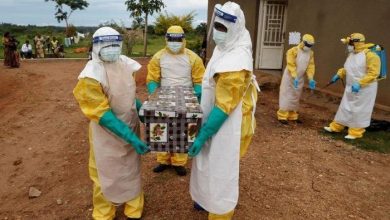
Despite assurances from the Cross River State government that there is no cause for panic, the development underscores lingering vulnerabilities in both the health and economic systems.
Health experts and policymakers continue to stress that the threat of future pandemics remains real. Speaking at a public health symposium in Abuja, Iziaq Salako, the minister of state for health and social welfare, recently warned that global health crises are inevitable.
“The next pandemic is not a matter of if but when,” he said, emphasising the need for preparedness.
The World Health Organization defines a resilient health system as one capable of preventing, detecting, and responding to public health threats while maintaining essential services during crises.
In Nigeria, however, experts say systemic weaknesses could magnify both the human and economic toll of future outbreaks.
For a country where millions depend on daily income to survive, another widespread shutdown could once again stall livelihoods, disrupt supply chains, and deepen poverty, making resilience not just a health priority but an economic imperative.
Read Also: Court delays, legal disputes undermine business climate, says legal expert
What the numbers say
With one doctor attending to nearly 10,000 patients, according to recent reports by the National Association of Resident Doctors (NARD), experts note that brain drain has placed Nigeria in a dire position when it comes to handling another pandemic.
“With an estimated population of over 240 million people and only about 11,000 resident doctors, Nigeria records a ratio of 1:9,083. This is far from global best practice,” Mohammad Suleman, NARD president, stated.
The figures are even higher in remote areas of Northern Nigeria. Evidence shows that Zamfara and Jigawa states record between 20,000 and 27,000 patients per doctor, respectively.
On the other hand, only 20 percent of the country’s 34,000 primary healthcare facilities are fully functional, with a high concentration in urban areas. In the event of a pandemic, rural and underserved communities are most at risk.
Staying prepared
More funding for research, strengthened surveillance, continuous training and retraining of healthcare professionals, enhanced incentives for frontline workers, and the development of strategic global partnerships are essential steps to effectively contain future pandemics, according to a joint report by Nigeria Health Watch and the Nigeria Centre for Disease Control.
The National Association of Resident Doctors, University College Hospital (UCH) chapter, also emphasised the need to provide basic amenities such as water and electricity in healthcare facilities nationwide.
“Without these amenities, hospitals cannot function optimally in
the face of a disease outbreak,” Uthman Adedeji, president of the NARD (UCH) chapter, noted in an interview with this reporter.