Kamusta,
Victoria from Techpoint here,
Here’s what I’ve got for you today:
- MTN is set to begin subscriber payback after NCC order
- Nigeria’s telecom struggle before the GSM revolution
- Telcos step back as the FCCPC approve new data and airtime lenders
MTN is set to begin subscriber payback after NCC order
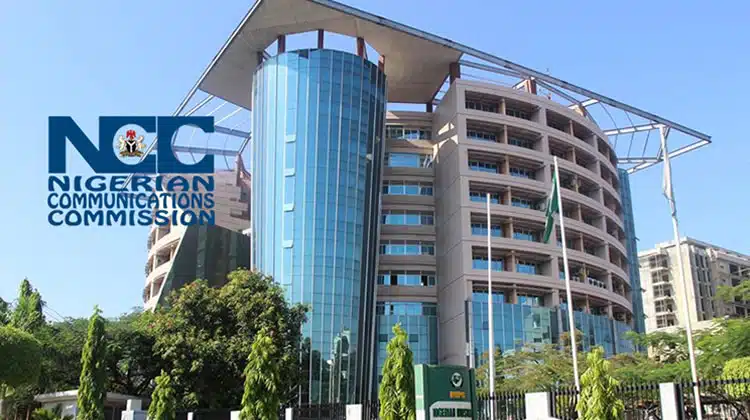
MTN Nigeria is now set to begin compensating its subscribers following a directive from the Nigerian Communications Commission (NCC), marking a major shift in how telecom consumers are treated in the country. The move comes after the regulator ordered telecom operators to refund or credit users who suffered poor network service, with implementation kicking off in April 2026. Affected customers won’t need to apply; compensation will be automatic, as operators are required to identify impacted users and credit them directly.
At its core, this means millions of subscribers, especially those who experienced dropped calls, slow data, or failed SMS, could start receiving airtime or data credits as restitution. The policy applies only when service quality falls below the NCC’s defined thresholds, and it targets failures across voice, data, and messaging services. However, not every glitch qualifies; brief or quickly resolved outages are excluded. To be eligible, users must have experienced poor service in a specific area and made at least one paid activity (like a call or data session) during that period.
This development matters because it flips the traditional regulatory model on its head. In the past, telecom operators were fined for poor service, but subscribers — the ones actually affected — got nothing. Now, the NCC is pushing a “consumer-first” approach, ensuring users are directly compensated for subpar service. The change reflects how critical telecom services have become in Nigeria’s economy, where network reliability impacts everything from business operations to financial transactions and daily communication.
The road to this point began on March 29, 2026, when the NCC issued the landmark directive mandating all mobile network operators, including MTN Nigeria, Airtel, Globacom, and 9mobile, to compensate users for Quality of Service (QoS) failures. By April 7, 2026, the Commission released detailed guidelines outlining eligibility, timelines, and how compensation would work. The directive is also tied to existing regulations like the Consumer Code of Practice and QoS standards, reinforcing stricter oversight of telecom performance.
Behind the scenes, the policy also addresses long-standing issues in Nigeria’s telecom sector. Operators have struggled with persistent infrastructure challenges, like frequent fibre cuts, sometimes running into thousands weekly, which degrade service quality despite heavy investments. With over 180 million active telecom users in the country, pressure has been mounting for years to hold operators accountable in a way that directly benefits consumers. This latest move signals that regulators are no longer satisfied with fines alone; they want real consequences that users can feel in their wallets.
Nigeria’s telecom struggle before the GSM revolution

It’s hard to imagine now, but there was a time in Nigeria when getting a phone line felt like winning a lottery. By the time Olusegun Obasanjo took office in May 1999, the country’s telecoms system was barely functional. After nearly four decades, Nigeria had just about 400,000 active telephone lines for a population of over 120 million, and getting one could take years.

Victoria Fakiya – Senior Writer
Techpoint Digest
Stop struggling to find your tech career path
Discover in-demand tech skills and build a standout portfolio in this FREE 5-day email course
At the centre of that struggle was Nigerian Telecommunications Limited (NITEL), the government-run monopoly formed in 1985. It controlled the entire space, but not very well. Lines were unreliable, infrastructure was poor, and demand far outstripped supply. At one point, more than 10 million Nigerians were reportedly waiting for a connection; some for as long as two years.
The impact went beyond inconvenience. Businesses struggled to operate without reliable communication, and something as basic as making an international call required a trip to a physical centre, like the one at NECOM House in Lagos. For a country trying to grow its economy, that kind of bottleneck was a serious drag.
By January 2001, it became clear something had to give, leading to the government’s decision to auction telecom licences and open the sector to private players, a move that would eventually reshape how Nigerians connect. For more on how that turning point unfolded, including the straw that broke the camel’s back, check out Sarah’s story here.
Telcos step back as the FCCPC approve new data and airtime lenders

Remember this? Nigeria’s airtime lifeline just got disrupted
Nigeria’s airtime lending market just got reshuffled. The Federal Competition and Consumer Protection Commission (FCCPC) has approved five companies — Total Tim Nigeria Limited, Rane Interractive Medien CLS Limited, Mode NG Applications Limited, Cloud Interractive Associate Limited, and Coverage Broadband Limited — as the new licensed airtime and data lenders in the country.
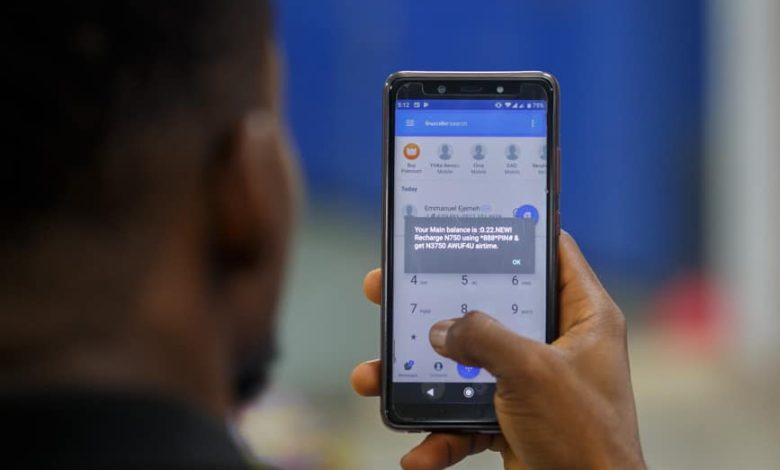
This comes as every single mobile network operator in Nigeria has pulled out of the business. While MTN and Airtel made official announcements about suspending their services last week, Nairametrics confirmed that Globacom and T2 (formerly 9mobile) have also done the same, making it an across-the-board MNO exit.
What this means, practically, is that the familiar *303# emergency airtime lifeline that millions of Nigerians have relied on is gone, at least from the telcos themselves. The five FCCPC-approved firms have met all requirements stipulated under the Digital, Electronic, Online or Non-Traditional Consumer Lending Regulations, 2025, and will now step in to fill that gap. They are expected to offer these services through apps or digital platforms, rather than the quick USSD codes people are used to.
But there’s a catch: the telcos aren’t entirely out of the picture. The licensed lenders will need to sign deals with the network operators to actually provide the airtime, which means the MNOs still get a cut through revenue-sharing arrangements. In other words, the telcos are walking away from regulation while keeping a hand in the pot.
Why it matters is because of how widely these services are used. Airtime borrowing has become an everyday fallback for millions of Nigerians, especially when cash is tight. But it’s also been messy, including complaints about hidden charges, automatic deductions, and aggressive recovery tactics that have piled up over the years. The FCCPC’s move is essentially an attempt to clean that up and bring order to a space that grew too fast without enough oversight.
Now, with licensed lenders stepping in, the market is being rebuilt in a more structured way. The bigger picture? Nigeria is treating even the smallest forms of credit, like borrowing ₦100 airtime, as part of its broader push to regulate digital lending and protect consumers.
In case you missed it
What I’m watching
Opportunities
- Qore is hiring for several roles, including Cloud Infrastructure Engineer, Lead Product Manager, Full Stack Software Engineer (.NET framework & React), and Software Engineer (.NET framework), in Nigeria and Ethiopia. Apply here.
- Rayda is recruiting People & Culture Manager, Legal & Compliance Officer, and Technical Product Manager. Apply here.
- Source Bank is looking for a Product Analyst. Apply here.
- Flutterwave is hiring for several roles in Nigeria, the UK, and the US. Apply here.
- LemFi is looking for a Head of Financial Crime Operations in the UK. Apply here.
- Cognition is hiring a Developer Community Manager. Apply here.
- Chess dot com is looking to hire a Product Designer. Apply here.
- Bujeti is currently expanding operations and hiring across several roles. Apply here.
- Prenetics is hiring a remote Email Marketing Specialist. Apply here.
- InterviewReady is looking for a Software Developer, a Product Associate, and a Marketing Associate. Apply here.
- Flutterwave is recruiting for several roles. Apply here.
- Briter is hiring a Commercial Director, a Senior Research Associate, and an Insights and Market Intelligence Associate. Apply here.
- Opay is currently recruiting for these roles: Partnership Manager (Fintech Experience), Junior Accountant, Junior Product Manager (Research), and IT Manager.
- Oyster is looking to hire a Risk Analyst. Apply here.
- Circle is looking to hire a Lead Product Designer (Remote). Apply here.
- SafetyWing (YC W18) is hiring a Product Manager Intern (fully remote). Apply here.
- Paystack is hiring a Performance Marketing Specialist. Apply here.
- VOYA (visa travel tech startup) is hiring an Operations and Admin Director (fully remote). Apply here.
- MTN MoMo TechSpark Graduate Programme is open. Apply here.
- MAX is looking for interns. Apply here.
- McKinsey is hiring for several roles, including Junior and Senior roles. Apply here.
- Paystack is hiring a Business Development Partner. Apply here.
- Zenith Bank is recruiting a Junior Software Tester Quality Control. Apply here.
- UNICEF Abuja is looking for a National Consultant (Immunization Programme Monitoring and Evaluation). Apply here.
- Standard Chartered Bank is hiring an Executive Research Partner. Apply here.
- e-Tranzact is looking to hire a product marketing officer. Apply here.
- Bumpa is hiring for several roles, including Bumpa Expert Lead (Account Management) – Customer Success; Product Designer; and Mid-level Motion/Graphic Designer, Mid-level Full-stack Engineer (Commerce), and Senior Fullstack Engineer (Commerce). Apply here.
- ABDS 2026 will take place April 29–30, 2026, in Lagos, gathering founders, investors, developers, and policymakers shaping Africa’s blockchain and Web3 ecosystem. The summit focuses on industry insights, partnerships, and investment opportunities in one of the world’s fastest-growing crypto markets. Secure your pass or sponsorship here.
- Paga is hiring a Sales Manager. Apply here.
- Paga is hiring senior sales executives. Apply here.
- Paga is looking for sales executives. Apply here.
- Paga is recruiting Senior Key Account Managers. Apply here.
- Paga is hiring Account Managers. Apply here.
- As one of Techpoint Africa’s most engaged readers, you have a direct hand in shaping what we publish next. Take our quick, 3-minute survey to tell us the stories and features you value most. Your responses are anonymous, and your feedback will help guide our editorial focus in the months ahead. Fill the survey here.
- Moniepoint is hiring for over 100 roles. Apply here.
- Building a startup can feel isolating, but with Equity Merchants CommunityConnect? You can network with fellow founders, experts, and investors, gaining valuable insights and exclusive resources to help you grow your business. Click here to join.
- To pitch your startup or product to a live audience, check out this link.
- Follow Techpoint Africa’s WhatsApp channel to stay on top of the latest trends and news in the African tech space here.
Have a fun weekend!
Victoria Fakiya for Techpoint Africa