Ukraine’s president, Volodymyr Zelensky, has strongly criticised the United States for extending a waiver that allows Russia to continue selling oil despite ongoing Western sanctions.
The extension permits countries to purchase Russian oil and petroleum products already in transit until May 16.
Washington says the decision is intended to ease global energy pressures triggered by tensions linked to the US-Israel conflict with Iran. However, Zelensky argued that the move undermines efforts to weaken Moscow’s war capabilities.
“Every dollar paid for Russian oil is money funding the war,” he said, stressing that sanctions were imposed after Vladimir Putin launched a full-scale invasion of Ukraine in February 2022.
The broader regional crisis has intensified following US and Israeli strikes on Iran, prompting retaliation targeting military and civilian sites across parts of the Middle East. Iran has also effectively disrupted traffic through the Strait of Hormuz—a key global energy route responsible for transporting about 20% of the world’s oil and liquefied natural gas.
The disruption has rattled global energy markets and raised fears of a potential economic downturn if supply routes remain blocked.
Zelensky and several European leaders had already opposed the initial waiver introduced on March 13. In defending its latest extension, the US said it aims to maintain oil supply while diplomatic efforts to end the war in Ukraine continue.
According to Zelensky, Russia operates more than 110 “shadow fleet” tankers—ships with concealed ownership used to bypass sanctions—carrying over 12 million tonnes of oil. He warned that proceeds from these shipments could generate up to $10 billion for Moscow, funds he says would be used to intensify attacks on Ukraine.
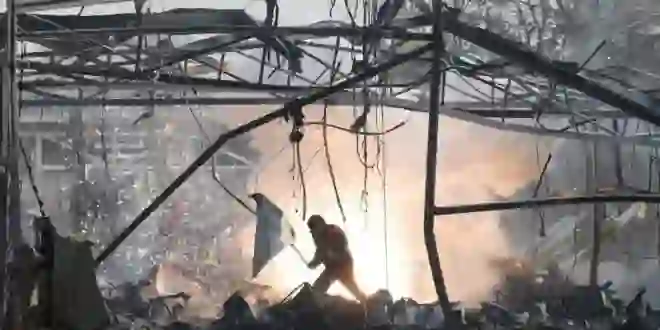
He also revealed that within the past week alone, Russian forces launched more than 2,300 drones, over 1,300 guided aerial bombs, and nearly 60 missiles targeting Ukrainian cities and communities. One of the deadliest recent assaults occurred on April 15, when over 700 drones and missiles were fired in coordinated waves, killing at least 18 people.
While Ukraine has carried out retaliatory strikes, particularly on Russian energy infrastructure, the war remains largely at a stalemate, with Russia controlling roughly 20% of Ukrainian territory.
US-led diplomatic efforts to resolve the conflict have slowed amid escalating tensions involving Iran.
READ ALSO: