Tungjatjeta,
Victoria from Techpoint here,
Here’s what I’ve got for you today:
- Jumia revenue rises 39% as Q1 2026 hits $50.6M
- Vodacom Group climbs 12.2% to R167.7 billion
- KCB drops Pesalink fee to a flat KSh 20
Jumia’s revenue rises 39% as Q1 2026 hits $50.6M

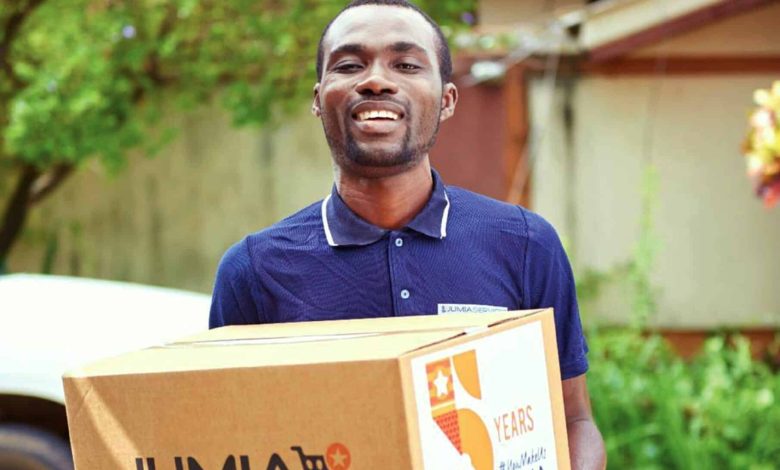
Jumia just delivered the kind of quarter investors had almost stopped believing was possible. The African eCommerce company reported Q1 2026 revenue of $50.6 million, up 39% year-over-year and comfortably ahead of analyst expectations. GMV climbed 31% to $211.2 million, gross profit jumped 48%, and the company’s adjusted EBITDA loss narrowed to $10.7 million. Wall Street reacted immediately: the stock shot up nearly 22% in pre-market trading, continuing a huge rally that has already seen Jumia shares gain more than 200% over the past year. After years of disappointing results and survival questions, investors are finally starting to believe the turnaround story.
A big part of that turnaround is coming from Nigeria, which has become Jumia’s clear growth engine. Physical goods GMV in Nigeria surged 42%, helped by stronger demand in home and living products, expansion outside major cities, and more than 80 new pickup stations opened during the quarter. Kenya physical goods GMV rose nearly 50%, driven by local suppliers in home and living and international suppliers in fashion. Ghana posted exceptional 142% growth, albeit from a smaller base. On the cost side, the numbers are equally compelling.
At the same time, Jumia appears to be getting much more disciplined on costs. Fulfillment costs per order stayed flat despite inflation, tech expenses dropped, and the company has cut its workforce dramatically over the past few years. Management also says AI is now actively being used across logistics, customer service, HR, cybersecurity, and seller operations to improve efficiency.
The number investors are watching most closely, though, is cash. Jumia ended the quarter with $62.6 million in liquidity after burning $12.5 million in operating cash during Q1. That still leaves limited room for mistakes, but the company insists it remains on track to hit adjusted EBITDA breakeven and positive cash flow by Q4 2026, with full-year profitability targeted for 2027. For the first time in a long while, that target no longer sounds unrealistic. If losses continue shrinking at the current pace, Jumia may actually avoid another emergency capital raise, something that looked almost inevitable not too long ago.
Jumia’s recent progress didn’t happen overnight; it came after years of brutal cost-cutting, layoffs, and pulling out of markets that weren’t working. Since CEO Francis Dufay took over, the company has focused on becoming leaner and more disciplined after burning cash heavily and watching its stock crash below $3 in 2022. Now, investors are starting to see signs that the strategy might actually be working, with stronger growth and smaller losses finally showing up in the numbers. But the company still has real problems to deal with, including currency swings, fuel costs, supply chain risks, and the constant challenge of getting customers to keep coming back. Even so, Q1 2026 feels like a major turning point for a company many people had already written off.
Vodacom Group climbs 12.2% to R167.7 billion

Vodacom’s latest results tell two very different stories at once. On paper, the group is flying. Revenue climbed 12.2% to R167.7 billion, headline earnings per share jumped 23.1% to 1,053 cents, and free cash flow rose 20.1% to R16.8 billion. EBITDA also increased 12.8% to R62.6 billion, helping the company raise its Vision 2030 customer target from 260 million to 275 million users. Vodacom added 26 million customers across its markets in the past year, more than double the pace it originally planned for. But while the broader African business is surging, South Africa is starting to look like the weak link in the portfolio.

Victoria Fakiya – Senior Writer
Techpoint Digest
Stop struggling to find your tech career path
Discover in-demand tech skills and build a standout portfolio in this FREE 5-day email course
The local business is struggling to grow in a market that’s becoming increasingly saturated and brutally competitive. South African service revenue rose just 2.1% to R64.4 billion, well below inflation, while EBITDA slipped 1.7% to R33 billion after an undisclosed one-off settlement cost. Strip out the R1.1 billion accounting gain from the Maziv fibre deal, and normalised operating profit actually fell 7.1%. Customer growth was barely there: Vodacom added only 28,000 contract users during the year, taking the base to seven million, while prepaid customers grew just 0.4% to 39.1 million. Even data customers declined 4.3% to 26.5 million as users consolidated spending onto primary SIM cards.
What’s becoming clear is that South Africa’s traditional mobile business is no longer the main growth engine. Data traffic surged 32.1%, and average usage per device jumped to 6.3GB a month, but converting that traffic into meaningful revenue growth is proving difficult. Prepaid mobile revenue declined 2.1%, while contract revenue growth of 3.5% was driven primarily by price hikes introduced in February 2026 rather than by strong customer demand. The real momentum is now coming from Vodacom’s “beyond mobile” businesses. Financial services revenue grew 8.1%, cloud, hosting, and security revenue jumped 27.1%, and Vodacom Business increased service revenue by 6.2%. CEO Shameel Joosub has openly acknowledged the shift, saying diversification beyond core mobile services is becoming increasingly important.
The biggest thing hanging over Vodacom right now is the Safaricom deal in Kenya. In December 2025, Vodacom announced plans to buy an additional 20% stake in Safaricom for R36 billion, which would give it majority control at 55% while keeping the company listed in Nairobi. The transaction is currently being challenged in Kenya’s High Court by activists who argue the deal undervalues Safaricom and gives too much control of a strategic national asset to a foreign-owned company. A ruling is expected later in May 2026. If the deal goes through, Vodacom will fully consolidate Safaricom into its books — pulling in Kenya’s booming M-Pesa business, Ethiopia’s fast-growing subscriber base, and a much bigger continental growth story. Joosub has already hinted that Vodacom’s Vision 2030 targets will be upgraded again if the transaction is approved.
This moment has been years in the making. Vodacom has spent the past decade transforming itself from a South African telecoms operator into a broader African tech and fintech group, a shift accelerated by its Egypt acquisition in 2023 and now the pending Safaricom consolidation. But investors still seem unconvinced. Despite the operational growth, Vodacom’s share price has risen only 16.3% over the past five years, far behind the JSE ALSI’s 75.2% gain.
Analysts say the Safaricom deal could finally force the market to reassess Vodacom’s valuation because it would fundamentally reshape the business. For now, South Africa remains essential infrastructure territory, with Vodacom planning R12 billion in local capex next year. But the company’s future growth story is increasingly about fintech, enterprise services, fibre, cloud, and expansion deeper into Africa, not traditional voice and mobile services at home.
KCB drops Pesalink fee to a flat KSh 20
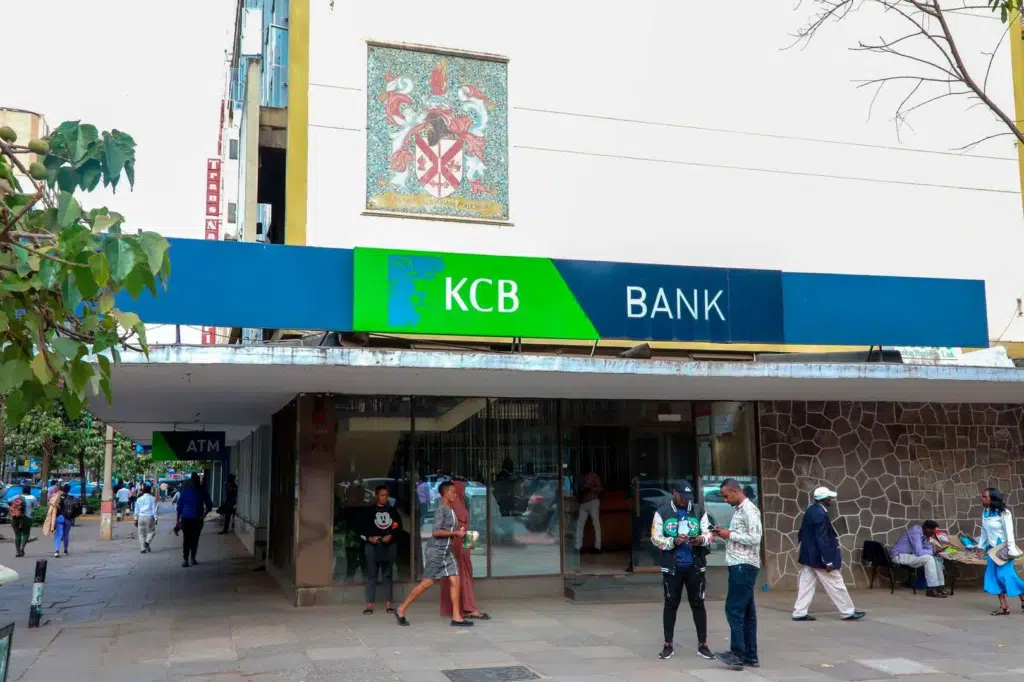
Effective May 11, 2026, KCB Bank Kenya has slashed its Pesalink transaction fee to a flat KSh 20 for any transfer between KSh 1,000 and KSh 999,999 and made transfers below KSh 1,000 entirely free. That’s a seismic shift for everyday Kenyans who’ve long grumbled about erratic, tiered fees that made bank-to-bank transfers feel like a gamble. Before this change, Pesalink fees varied depending on how much you were sending, meaning you could never quite predict what it would cost to move your money. KCB’s move essentially kills that guessing game: 20 bob, flat, done.
To put it in perspective: whether you’re sending KSh 50,000 to your parents or KSh 15,000 to a relative, your total Pesalink cost is now just KSh 20. Previously, you might have paid anywhere from KSh 200 to 300 in transfer charges for a similar set of transactions. For small business owners, the math is even more compelling. KCB MD Annastacia Kimtai was blunt about the intent: the initiative is designed to bring formal banking closer to underserved communities, with a particular impact on SMEs that rely on efficient, affordable financing to grow.
This isn’t KCB going rogue. The move aligns with an industry-wide “Tuma Direct na 20/-” campaign, a coordinated push by Kenyan banks and Integrated Payment Services Limited (IPSL) to standardise and reduce the cost of real-time interbank transfers through the Pesalink infrastructure. The unspoken target? M-Pesa and mobile money, which have long dominated person-to-person transfers in Kenya precisely because banks were too expensive and too slow.
The groundwork for this moment has been laid in stages. Historically, Pesalink transactions were priced on a tiered basis across the industry, a structure that made sense when digital transfers were novel but increasingly looked outdated as mobile money matured. The “Tuma Direct na 20/-” wave started picking up steam earlier this year: Diamond Trust Bank (DTB) announced the same flat-fee Pesalink structure in late April 2026, and SBM Bank had also already joined the campaign. Then, as far back as February 2026, Pesalink connected to the Pan-African Payment and Settlement System (PAPSS), plugging over 80 Kenyan banks, fintechs, SACCOs, and telcos into a network of 160-plus financial institutions across Africa, a move that signalled Pesalink was no longer just a domestic rail but was building continental ambitions. KCB’s KSh 20 announcement on May 11 is the latest and loudest domino to fall.
KCB is making a major push toward digital banking, with 99% of transactions now happening through digital channels and strong yearly growth in transaction volume and value. The move supports its 2024–2026 strategy, “Transforming Today Together,” and signals a broader industry shift. By using Pesalink’s real-time payment system and lowering transfer costs to Ksh 20, banks are now directly challenging mobile money operators and fintechs in person-to-person transfers. The key question is whether customers will change their habits, but banks are now far more competitive on pricing.
In case you missed it
What I’m watching
Opportunities
- Qore is hiring for several roles. Apply here.
- Didii is recruiting for several roles. Apply here,
- Clarus Technologies, in partnership with Norrsken East Africa, has launched Scale Velocity, a go-to-market accelerator aimed at helping high-potential startups across East Africa refine growth, strengthen commercial systems, and scale faster. Applications for the first cohort are now open, and founders are encouraged to apply. Apply here.
- Moniepoint is recruiting for several roles. Apply here.
- Flutterwave is hiring for several roles in Nigeria, the UK, and the US. Apply here.
- As one of Techpoint Africa’s most engaged readers, you have a direct hand in shaping what we publish next. Take our quick, 3-minute survey to tell us the stories and features you value most. Your responses are anonymous, and your feedback will help guide our editorial focus in the months ahead. Fill the survey here.
- Moniepoint is hiring for over 100 roles. Apply here.
- Building a startup can feel isolating, but with Equity Merchants CommunityConnect? You can network with fellow founders, experts, and investors, gaining valuable insights and exclusive resources to help you grow your business. Click here to join.
- To pitch your startup or product to a live audience, check out this link.
- Follow Techpoint Africa’s WhatsApp channel to stay on top of the latest trends and news in the African tech space here.
Have a lovely Tuesday!
Victoria Fakiya for Techpoint Africa