Shettima Reacts As Twelve Chibok Girls Graduate From AUN 12 Years After Abduction

Twelve Chibok schoolgirls abducted by Boko Haram in 2014 have graduated from the American University of Nigeria (AUN), Yola, Adamawa State.
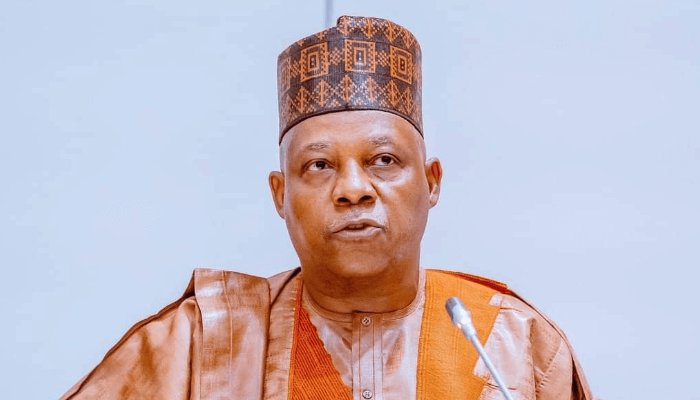
Vice President Kashim Shettima, who spoke on Saturday at the 17th graduation ceremony of the AUN, where the former abducted schoolgirls were among the graduating students, said the graduation of 12 has renewed hope for women’s education in Nigeria and beyond.
The Vice President, who was represented by the Executive Secretary of the National Universities Commission, Prof. Abdullahi Ribadu, commended the university for providing a supportive learning environment that enabled the girls to complete their university education.
He said their graduation was not only a personal achievement for the young women but also a national symbol of resilience, courage and the importance of educating girls.
Shettima said the success of the 12 Chibok girls showed that women’s education remained central to national development.
According to him, the girls’ journey from captivity to the stage of university graduation demonstrated the power of education to restore dignity, rebuild lives, and inspire other young women across the country.
He praised AUN for standing by the girls and helping them to pursue their academic dreams despite the trauma of their past experience.
The Vice President noted that the development should strengthen public commitment to protecting schools, supporting survivors of violence and ensuring that girls are not denied access to education.
AUN Says Education Can Heal Trauma
Speaking at the event, the President of AUN, Dewayne Frazier, said the graduation of the 12 Chibok girls had validated the institution’s mission as a development university.
Frazier said the university had shown that it was possible to bridge the gap between trauma and high-level educational success.
He said, “These graduates now stand as beacons of light for the Northeast and the world. Their success sends a powerful message: education is the most proven tool for healing and transformation, capable of reclaiming lives and building a brighter, more secure future for Nigeria.”
The AUN President also commended the Ministry of Women Affairs for sponsoring the girls and supporting their access to quality university education.
Also speaking at the ceremony, journalist Stephanie Busari recalled her role in keeping global attention on the abducted girls after the story had begun to fade from public discussion.
Busari said she had obtained a proof-of-life video about a year before the girls’ release, showing that some of the abducted schoolgirls were still alive.
She said, “A year before, I had obtained a vital proof-of-life video that showed these young women were still alive at a time when the world had started to forget about them.”
According to her, the video helped restart negotiations that eventually contributed to the release of some of the girls.
She added, “At the time, we did not know if the work would make any difference. We did it because the alternative was silence, and silence felt like complicity.
“After the initial coverage, the story began to fade. The news cycle moved on, the way it always does. There were moments I wondered whether continuing to push the story mattered at all.”
Over 80 Girls Still Missing
Papers News recalls that a total of 276 girls were abducted by Boko Haram insurgents from Government Girls Secondary School, Chibok, Borno State, on the night of April 14, 2014.
While some escaped immediately after the abduction and others were released in the years that followed, dozens remain missing more than a decade later.
Over 180 of the girls have either escaped or been freed since the attack, with some returning with children born while they were in captivity.
As of early 2026, reports suggest that more than 80 of the girls remain missing, with their fate still unknown.
The graduation of the 12 former abducted girls was described by speakers at the ceremony as a reminder that, despite the pain of the Chibok tragedy, education remains one of the strongest tools for recovery, empowerment and national progress.