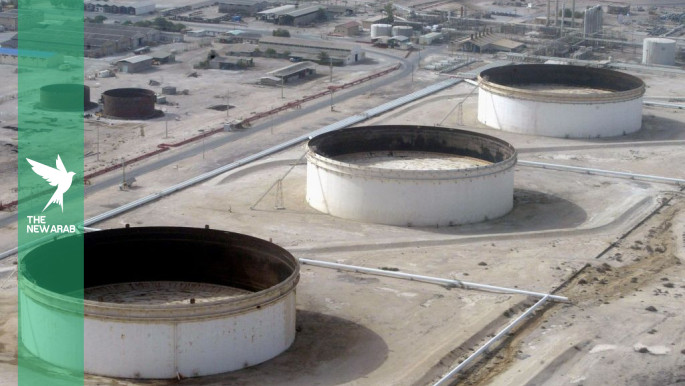
A mysterious attack on an Iranian oil refinery during the Iran war caused an oil spill that affected a nearby Gulf island that’s a protected breeding ground for wildlife, videos and satellite photos show, according to the Associated Press.
The oil-soaked waves lapping onto Shidvar Island, an uninhabited island, represent yet another sign of the ecological damage wrought by the war. Oily rain has also fallen on the Iranian capital, Tehran, after airstrikes targeted oil facilities there.
Mobile phone footage shot on 9 April by an Iranian named Ehsan Jalali shows thick black smoke rising after the strike on an oil refinery on Lavan, an island just off the mainland of Iran near Shidvar. The footage corresponds to known features of both islands and was posted by Jalali on Instagram only in the last few days, as Iran’s theocratic government has shut off access to the wider internet for weeks.
Other footage shot by Jalali shows a lifeless bird and crab covered in oil, while a man holds up a dead swordfish.
“Poor birds, look how they are stuck in oil. Look at the herd of dolphins. Poor things come to the surface to breathe, but they swallow oil,” Jalali narrates in the footage. “Look what they did to this island. Look what they have done. The corpses of fish are coming to the surface one by one.”
Photographs taken on 10 April from an Airbus DS Pléiades Neo, a high-resolution optical satellite, and analysed by AP on Tuesday, show the fire still burning at the refinery two days after the attack. An oil slick stains the waters of the Gulf, wrapping around Shidvar Island, also known locally as “Maroo Island”.
“Oh my God, the sea is full of oil, oh my God, Maroo Island,” Jalali recounts in the footage. “The sea is full of oil, the beautiful Maroo Island is ruined now.”
Shidvar Island, only some 870 hectares large, is designated as a wetland of international importance under the Ramsar Convention on Wetlands. It had been known as one of the most important breeding grounds for terns, a seabird, in Iran. Iran has considered the island a wildlife refuge since 1972.
Iranian officials have not acknowledged any environmental damage caused by the attack at the Lavan oil refinery, which came hours after the United States and Israel agreed to a ceasefire in the war with Iran. The US also had asked Israel to halt its attacks on oil infrastructure after earlier striking facilities associated with Iran’s offshore South Pars natural gas field. That attack sparked major Iranian assaults targeting oil and gas facilities across the Gulf Arab states, with Qatar being particularly hard hit.
Iranian media outlets have accused the United Arab Emirates of carrying out the attack, something not acknowledged by Emirati officials.