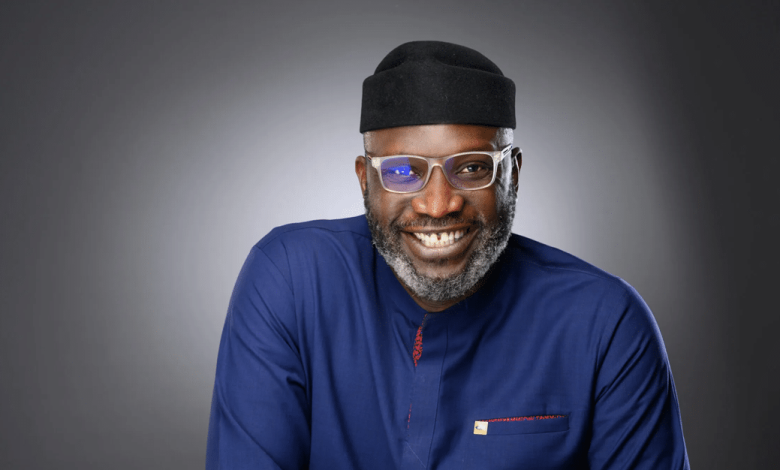
Tobe Okigbo, Chief Corporate Services and Sustainability Officer, MTN Nigeria, has explained that some of the network service disruptions Nigerians have been experiencing are due to MTN’s operations in a challenging environment.
He made this statement while fielding questions from journalists during a Ask Me Anything session in Lagos. Tobe revealed that poor service on a mobile network can be due to technical or environmental factors.
“There are a lot of things that can make the network bad,” Tobe explains, “and it gets as simple as ordinary rainfall, because it’s a mobile network. In Nigeria and most of Africa, the way our networks are designed is to substitute for everything: your network serves as your mobile phone, your landline, your internet access, and everything in communication. So the more you use it, the more bandwidth you consume, the more congestion you have.”
MTN and other mobile network operators increased tariffs by 50% in 2025. Still, many Nigerians have remained frustrated as they continue to suffer poor service quality, with one publication reporting that a class-action suit has been filed against the telecoms firm.
Network congestion occurs when multiple people simultaneously latch onto the network, and this also affects service quality. The MTN Chief explained that in this scenario, the telecoms operator would have to increase the number of radios on the cell site to expand its carrying capacity. And if the congestion continues, a new base station would have to be built.
Many Nigerians expected that, with the increase in tariffs, mobile network operators like MTN would have more money to invest in their networks to ensure quality service.
Regarding network investments, Tobe noted that there’s usually a time lag between when an investment is made and when it comes in. He detailed that the likes of ZTE and Huawei would only manufacture equipment on request.
“There is nobody that has base stations on the shelf; if you order from the manufacturer, it takes time to come in, go through customs, and then for you to find the site that you will use, considering that those sites you have to find them at a rate that makes sense.”
Tobe also clarified that poor network service is of no benefit to the operator and that, in fact, they are always working round the clock to ensure consumers enjoy premium service.

Victoria Fakiya – Senior Writer
Techpoint Digest
Stop struggling to find your tech career path
Discover in-demand tech skills and build a standout portfolio in this FREE 5-day email course
“When people complain about the quality of service, they mostly think that poor quality means the network is gaining somehow; nobody hates poor quality as much as the networks.
According to him, whether the network is poor or not, the company’s operating costs don’t drop, as it still has to keep generators running to power its base stations across the country.
“If the network is up and radiating and nobody is using it, we are losing money. If the quality is bad, we are losing money. So it’s to our benefit for the quality to be good.”
Fibre cuts and other infrastructural challenges
Tobe detailed how a fibre cut in Kogi can affect network quality in Abuja; so shutting down a base station controller in Ogun state can negatively impact network quality in Lagos.
Many landlords, after signing lease agreements, would wait to pounce once it’s time to renew the lease, then set a new, outrageous rent. He explains that this is usually an economic decision, as the company has to compare the cost with the revenue the site can generate.
He also mentioned that network providers often have to pay prices far beyond market value to acquire land to build base stations, and they have to pay outrageous rent to landlords who sometimes shut down base station controllers, oblivious to their impact on the broader quality of service.
Tobe credited Bola Tinubu’s administration for being the only one to declare telecom infrastructure as critical national infrastructure, after many unsuccessful attempts in the past. However, despite some improvements, vandalism persists across the country on practically everything, including fibre cables. MTN Nigeria experiences between 27 and 45 fibre cuts daily, which affects the network quality of service.
Whenever there is a fibre cut, the telecoms operator would have to splice it. However, if this happens multiple times, the signal strength will decrease, and they’ll be left with no choice but to replace the entire cable, which is very costly.
“What I’m saying might sound like I’m giving excuses. But just understand, no matter what, we are in Nigeria; every once in a while, Nigeria will happen to us. If I take a letter I wrote in 2006, change the date to reflect vandalism, and send it out today, it’ll still be valid.”
In 2023, without any investment in the network, MTN Nigeria spent more than 800 billion naira to keep it up and running.
“It’s a constant battle, because you will notice that what happens is you have periods of very good quality, and then quality starts to go bad, then it comes back up in between investments.”