Hallo,
Victoria from Techpoint,
- Namibia rejects Starlink appeal
- Moov Africa under fire over telecom service problems
- Lebara expands beyond telecoms with new entertainment platform
Namibia rejects Starlink appeal

Elon Musk’s Starlink has hit another roadblock in Africa after Namibia’s communications regulator dismissed the company’s appeal against the rejection of its operating licence. The decision means Starlink remains locked out of the Namibian market for now, despite growing demand for its satellite Internet service in a country where many remote communities still struggle with reliable connectivity.
The setback comes down to ownership rules. Namibia requires telecommunications operators to have majority local ownership, and regulators say Starlink failed to meet those requirements or secure an exemption. The government has made it clear that access to the market depends on compliance with local laws, regardless of a company’s global profile or popularity.
Why does this matter? Namibia is becoming a test case for how African governments balance foreign investment with local economic participation. Supporters of Starlink argue the service could dramatically improve Internet access in underserved areas, while regulators insist that strategic communications infrastructure cannot be handed over without local ownership safeguards. The debate has sparked significant public interest, with hundreds of Namibians reportedly challenging the regulator’s original decision.
The dispute has been building for some time. In November 2024, Namibian authorities ordered Starlink to stop operating in the country and warned consumers against using its equipment, saying the company lacked the necessary licences. Then, in March 2026, regulators formally rejected Starlink’s applications for a telecommunications licence and radio spectrum access. Starlink appealed, but that appeal has now been dismissed, leaving the company back at square one.
The Namibian standoff also reflects Starlink’s broader struggles in Southern Africa. The company has faced resistance in neighbouring South Africa over local ownership requirements, although Pretoria moved in late 2025 to ease some of those rules through alternative investment mechanisms. For now, however, Namibia appears determined to hold the line, sending a clear message that even one of the world’s most high-profile tech companies must play by local rules before gaining access to its telecoms market.
Moov Africa under fire over telecom service problems
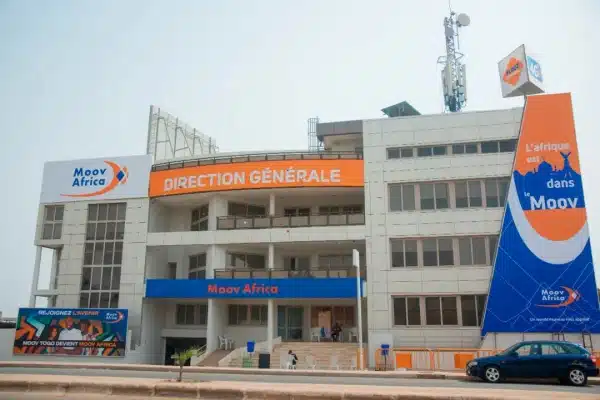
Chad’s government is turning up the heat on telecom operator Moov Africa as authorities demand urgent improvements to mobile network quality following persistent complaints from subscribers. The latest warning comes amid growing frustration over dropped calls, patchy coverage, slow Internet speeds, and recurring outages that continue to affect millions of users across the country. Officials say consumers have waited long enough and now want visible results rather than more promises.
Mobile connectivity has become a critical service in Chad, where telecom networks support everything from mobile money and digital services to everyday communication. Moov Africa, owned by Maroc Telecom, and Airtel Chad are the telcos in the country. While the former is the market leader, regulators argue that neither of the country’s two operators is delivering the quality of service consumers expect. Recent nationwide audits found widespread infrastructure problems, including faulty equipment, inadequate maintenance, power supply issues and network sites that were completely offline in some regions.

Victoria Fakiya – Senior Writer
Techpoint Digest
Stop struggling to find your tech career path
Discover in-demand tech skills and build a standout portfolio in this FREE 5-day email course
This is not the first time Chadian authorities have intervened. In August 2025, the government ordered both Moov Africa and Airtel Chad to connect to the country’s national fibre-optic backbone within a week or risk sanctions. Officials had already invested in more than 1,200 kilometres of fibre infrastructure under a national modernisation programme and argued that operators needed to make better use of the network to improve service quality.
The scrutiny intensified in late 2025 when Chad’s telecom regulator completed its 15th national quality-of-service audit. Although Moov Africa scored higher than Airtel, neither operator met acceptable standards. The regulator said consumers across the country continued to struggle to make calls or access the internet reliably. Under Chadian law, operators that fail to meet regulatory obligations can face fines worth up to 5% of annual revenue, and repeated violations can even lead to licence suspension or withdrawal.
The latest warning also reflects broader concerns about Chad’s digital future. The country still faces major connectivity challenges, including limited international Internet links, low Internet penetration, and infrastructure gaps outside major cities. As the government pushes ahead with its “Tchad Connexion 2030” digital transformation programme, it wants operators such as Moov Africa and Airtel to improve network reliability and expand coverage. For now, authorities are making it clear that continued service failures will not be tolerated, and telecom executives could face increasing regulatory pressure if conditions fail to improve.
Naspers launches free AI for South African businesses

Naspers is making a major play for South Africa’s AI market after launching a free artificial intelligence platform for local businesses powered by Anthropic’s Claude models. The service is aimed at helping companies experiment with AI without the upfront costs that often come with enterprise-grade tools, giving businesses access to capabilities such as content generation, data analysis, research and workflow automation.
The move matters because AI adoption is accelerating across South Africa, but many smaller businesses still struggle with the cost and complexity of deploying advanced tools. By offering free access, Naspers is effectively lowering the barrier to entry and hoping to get more companies comfortable using AI in their daily operations. It also places the media and technology giant in direct competition with a growing number of local and international AI providers chasing enterprise customers.
The launch is the latest step in Naspers’ broader AI-first strategy. Over the past two years, the company and its subsidiary Prosus have invested heavily in artificial intelligence, both internally and through external investments. AI is already being used across the group’s businesses for fraud detection, customer support, logistics optimisation, recommendations and content moderation, helping reduce costs and improve efficiency at scale. In its 2025 financial year alone, the group committed more than $88 million to AI-related investments.
Naspers’ growing relationship with Anthropic is also significant. Anthropic, one of the world’s leading AI companies and the developer of the Claude family of models, has emerged as a major challenger to OpenAI and Google in the race to build powerful generative AI systems. By building on Anthropic’s technology, Naspers is aligning itself with one of the most influential players in the rapidly evolving AI industry.
The bigger picture is that South Africa’s AI landscape is becoming increasingly competitive. Banks, insurers, retailers and technology firms are all investing heavily in automation and generative AI, while the government continues to debate the country’s long-term AI policy framework. Naspers appears determined to ensure it is not just an investor in the AI boom but also a company helping shape how South African businesses adopt the technology. For local firms curious about AI but reluctant to spend heavily, the new platform could offer a low-risk way to get started.
In case you missed it
What I’m watching
Opportunities
- Visa is hiring for several roles across many countries. Apply here.
- Qore is hiring for several positions. Apply here.
- Oui Capital has an exclusive AI mixer coming up on June 26. Interested founders, researchers, and engineers should apply here. Apply here.
- inDrive is hiring to fill several vacancies in different countries. Apply here.
- Are you a female-led tech or tech-enabled business preparing for sustainable growth and opportunity to access capital? Apply for the Female Founders Growth Programme and grab up to $2 million. Apply here.
- Bamboo is hiring in Ghana and Nigeria. Apply here.
- Cowrywise is recruiting some engineers. Apply here.
- PiggyVest is looking for a Product Technical Manager. Apply here.
- Paystack is hiring for a few roles. Apply here.
- Moniepoint is recruiting for several roles. Apply here.
- Flutterwave is hiring for several roles in Nigeria, the UK, and the US. Apply here.
- As one of Techpoint Africa’s most engaged readers, you have a direct hand in shaping what we publish next. Take our quick, 3-minute survey to tell us the stories and features you value most. Your responses are anonymous, and your feedback will help guide our editorial focus in the months ahead. Fill the survey here.
- Moniepoint is hiring for over 100 roles. Apply here.
- To pitch your startup or product to a live audience, check out this link.
- Follow Techpoint Africa’s WhatsApp channel to stay on top of the latest trends and news in the African tech space here.
Have a wonderful Wednesday ahead!
Victoria Fakiya for Techpoint Africa