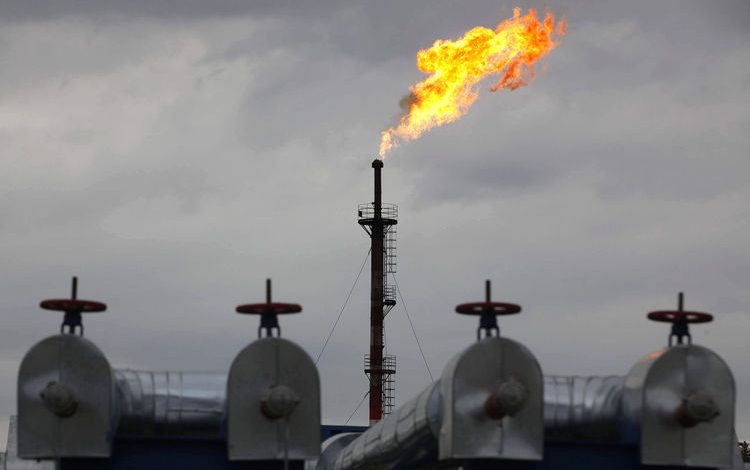
Nigeria flared approximately 76.9 billion standard cubic feet of natural gas between January and May 2026, highlighting the continued challenge of converting the nation’s vast gas resources into economic value despite ongoing efforts to expand domestic energy supply.
Data released by the Nigerian Upstream Petroleum Regulatory Commission (NUPRC) showed that oil and gas operators flared a combined 76.92 billion standard cubic feet of gas during the five-month period.
The volume represents gas that could have been utilised for electricity generation, industrial activities, compressed natural gas projects and cooking gas supply.
The figures come at a time when households and businesses are grappling with rising energy costs and growing concerns over the availability of cleaner fuel alternatives.
According to the data, 17.17 billion standard cubic feet of gas were flared in January, followed by 14.09 billion cubic feet in February.
March recorded 15.58 billion cubic feet, while April and May accounted for 14.52 billion and 15.58 billion cubic feet, respectively.
Although Nigeria possesses more than 200 trillion cubic feet of proven gas reserves, one of the largest in Africa, a substantial portion of associated gas produced alongside crude oil continues to be burnt rather than processed for commercial use.
Industry stakeholders have repeatedly argued that reducing gas flaring would significantly improve domestic energy availability and support the Federal Government’s ambition of using natural gas as a major driver of industrialisation and economic growth.
The latest figures also coincide with a period of rising cooking gas prices across the country. Market checks indicate that the cost of Liquefied Petroleum Gas (LPG) has increased sharply in recent months, placing additional pressure on households already dealing with elevated living expenses.
Energy analysts note that capturing gas currently lost through flaring could help boost supplies for power generation, manufacturing activities and domestic consumption while creating additional revenue streams for operators and government.
Nigeria has introduced several initiatives to address the challenge, including the Nigerian Gas Flare Commercialisation Programme and various provisions under the Petroleum Industry Act designed to encourage gas utilisation and discourage routine flaring.
The government has also repeatedly pledged to eliminate routine gas flaring by 2030 as part of its environmental commitments and broader energy transition agenda.
Despite these efforts, experts believe infrastructure limitations remain a major obstacle. Many producing assets lack the gathering systems, processing facilities, pipelines and transportation networks required to capture and commercialise associated gas efficiently.
The NUPRC recently disclosed that projects approved under the Nigerian Gas Flare Commercialisation Programme are expected to attract billions of dollars in investments and recover substantial volumes of gas that would otherwise be lost through flaring.
While Nigeria has recorded progress in reducing flare rates compared to previous decades, the latest data suggests that the country still faces significant hurdles in fully unlocking the economic and energy value of its gas resources.
Analysts maintain that accelerating investments in gas infrastructure, strengthening regulatory enforcement and improving project execution will be critical to reducing flaring levels and enhancing domestic energy security in the years ahead.