Dia dhuit,
Victoria from Techpoint here,
Here’s what I’ve got for you today:
- Spiro lands $215M to accelerate Africa’s EV revolution
- Your face in a viral video: What are your rights?
- Canal+ debuts on JSE following MultiChoice takeover
Spiro lands $215M to accelerate Africa’s EV revolution
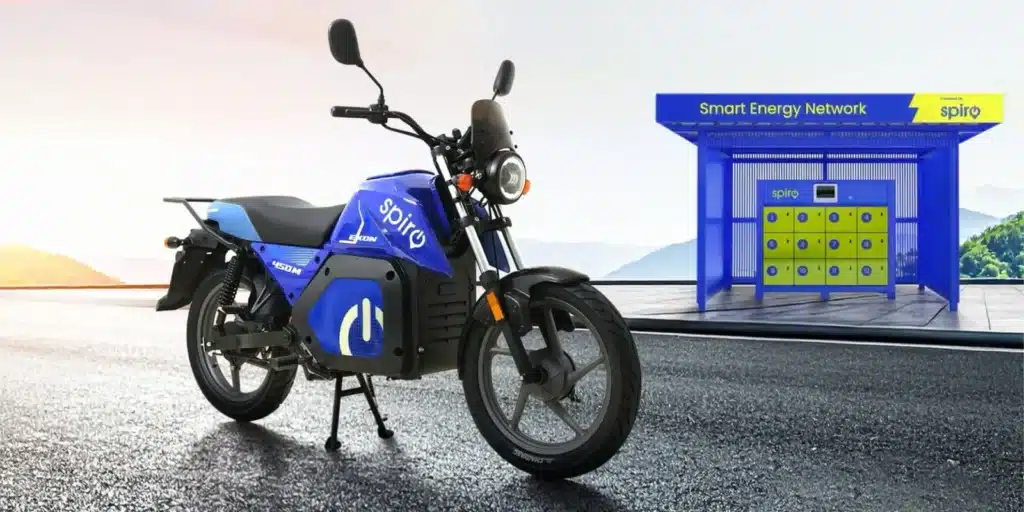
Africa’s electric vehicle race just got a major boost. On June 1, electric mobility company Spiro announced it had raised a massive $215 million in fresh funding from Impact Fund Denmark and Equitane, marking one of the largest single investments ever secured by an EV infrastructure company on the continent. The new capital will help the company expand its battery-swapping network, grow manufacturing operations, improve its technology, and enter new markets, including Ethiopia and the Democratic Republic of Congo.
The funding comes as Spiro continues an aggressive expansion streak. The company already operates in seven African countries, such as Kenya, Rwanda, Uganda, Togo, Benin, Nigeria, and Cameroon, and has deployed more than 100,000 electric motorcycles alongside over 2,500 battery-swapping stations. In less than a year, Spiro has raised over $365 million across three separate funding rounds, making it one of Africa’s most heavily funded clean mobility startups. Interestingly, the news comes a week after the company announced it had acquired UK-based engineering and design firm Coexlion.
But Spiro is building more than just electric motorcycles. The company says its solar-powered, IoT-enabled battery-swapping stations are part of a broader energy ecosystem. It also operates battery recycling facilities and is developing second-life battery storage solutions for renewable energy projects. With more than 150 engineers and dozens of patents, the company is betting that technology designed for African roads and energy challenges could eventually be exported to other emerging markets.
The business case appears to be resonating with investors. Spiro says riders can reduce transportation costs by up to 40% by switching from petrol-powered motorcycles to its electric alternatives. Beyond the savings, studies suggest the bikes can reduce carbon emissions by as much as 72% over their lifetime. The company also estimates that its operations support around 6,000 jobs across its markets, a figure expected to rise as expansion into Ethiopia and the DRC begins.
Interestingly, the announcement comes at a time when Kenya is debating tax changes that could make EV manufacturing more expensive by removing key VAT incentives. While Spiro’s growing regional footprint may help cushion any policy setbacks, the timing highlights the challenge facing Africa’s green mobility sector: attracting global investment while navigating uncertain local regulations. With hundreds of millions of dollars now in the bank, all eyes will be on whether Spiro can scale as quickly as investors expect.
Your face in a viral video: What are your rights?

Walk through any busy market, bus stop, restaurant, or park these days, and there’s a good chance you could end up in someone’s viral video without even knowing it. As content creators increasingly turn public spaces into makeshift studios for pranks, skits, and social experiments, ordinary Nigerians are finding themselves in the background, or sometimes at the centre, of content seen by thousands or even millions online.

Victoria Fakiya – Senior Writer
Techpoint Digest
Stop struggling to find your tech career path
Discover in-demand tech skills and build a standout portfolio in this FREE 5-day email course
For creators, filming in public offers something audiences love: authenticity. Real people, unscripted reactions, and everyday settings often make content more engaging than polished productions. But while these videos may feel harmless, they raise an important question: should people have a say before their faces, reactions, or personal moments are shared online?
According to Moses Faya, a lawyer and founder of Tech Policy Advisory, filming people in public is not automatically illegal under Nigerian law. In fact, no law expressly bans recording in public spaces. However, that doesn’t mean privacy rights disappear once someone leaves their home. Section 37 of Nigeria’s Constitution guarantees citizens a right to privacy, and legal experts say those protections can still apply in the digital age.
The real legal concerns often begin after the camera stops rolling. While recording someone in a public place may be lawful, publishing that footage online, especially when it is monetised or used in ways that affect a person’s dignity, reputation, or privacy, could pose problems. Courts are increasingly being asked to balance creators’ rights to free expression with individuals’ rights to control how their image and personal information are used.
As Nigeria’s creator economy continues to grow, the line between public content and personal privacy is becoming harder to define. And while the law is still catching up with social media realities, one thing is clear: being in public doesn’t necessarily mean giving up all rights to your image. Check out Delight’s latest for more information.
Canal+ debuts on JSE following MultiChoice takeover

A new stock has arrived on the Johannesburg Stock Exchange, but it comes with a familiar story. Today, June 3, 2026, Canal+ will officially begin trading on the JSE, giving South African investors access to shares in the French media giant that now owns MultiChoice. The listing was a condition of takeover approval, ensuring local investors could still participate in the pay-TV business after MultiChoice delisted from the exchange late last year.
The move effectively marks the end of one era and the start of another. MultiChoice, once one of South Africa’s most closely watched media stocks, was delisted in December 2025 after Canal+ completed its acquisition. While South Africans can now buy Canal+ shares locally, the company remains controlled by French interests, particularly the powerful Bolloré family, which holds significant influence over the group. For investors, that means exposure to Africa’s media growth story, but with little say over how the company is run.
Canal+’s interest in MultiChoice was never just about South Africa. The acquisition gives the company access to a media empire spanning more than 50 African countries and a combined subscriber base of 28 million customers. It also brings valuable sports rights, local content production capabilities, and distribution networks that would have taken years to build independently. However, Canal+ is also inheriting a business that has struggled with subscriber losses, currency pressures, and slowing growth across several markets.
The company is already working on a turnaround plan. Canal+ CEO Maxime Saada has outlined a strategy aimed at improving MultiChoice’s performance through 2027 while targeting significant cost savings across the combined business. Early signs suggest the African operations are contributing meaningfully to Canal+’s financial results, and management believes there is still considerable room for growth as demand for entertainment and streaming services continues to expand across the continent.
Still, the Canal+ story comes with its own complexities. The Bolloré family, which built one of France’s most influential business empires, has faced scrutiny over past operations in Africa, including legal investigations tied to the group’s historic expansion strategy. While no wrongdoing has been proven against the family in these matters, the history remains part of the conversation. As Canal+ settles into its new JSE home, investors will be watching closely to see whether the company can successfully transform MultiChoice while delivering on its ambitious plans for Africa’s media future.
In case you missed it
What I’m watching
Opportunities
- inDrive is hiring to fill several vacancies in different countries. Apply here.
- Are you a female-led tech or tech-enabled business preparing for sustainable growth and opportunity to access capital? Apply for the Female Founders Growth Programme and grab up to $2 million. Apply here.
- Bamboo is hiring in Ghana and Nigeria. Apply here.
- Cowrywise is recruiting some engineers. Apply here.
- PiggyVest is looking for a Product Technical Manager. Apply here.
- Paystack is hiring for a few roles. Apply here.
- Qore is hiring for several roles. Apply here.
- Moniepoint is recruiting for several roles. Apply here.
- Flutterwave is hiring for several roles in Nigeria, the UK, and the US. Apply here.
- As one of Techpoint Africa’s most engaged readers, you have a direct hand in shaping what we publish next. Take our quick, 3-minute survey to tell us the stories and features you value most. Your responses are anonymous, and your feedback will help guide our editorial focus in the months ahead. Fill the survey here.
- Moniepoint is hiring for over 100 roles. Apply here.
- To pitch your startup or product to a live audience, check out this link.
- Follow Techpoint Africa’s WhatsApp channel to stay on top of the latest trends and news in the African tech space here.
Have a wonderful Wednesday!
Victoria Fakiya for Techpoint Africa