The Pope calls for AI that centres humanity, but the AI empire will crumble without exploitation

Many of ChatGPT’s over 900 million weekly active users will never know that the reason the LLM does not occasionally and randomly spew racist, abusive content is that there are workers in Kenya filtering through huge amounts of harmful and dehumanising data for less than $2 an hour.
This is the foundation on which AI is built. While many have called it exploitative, Silicon Valley’s AI giants see it as the price to pay for the technology the world needs.
However, Pope Leo XIV, in his recent encyclical letter on Safeguarding the Human Person in the Time of Artificial Intelligence, suggested a new approach in this era of technological development. One in which the advancement of artificial intelligence (AI) is centred on humanity.
In the letter, the Pope advises that scientific research must be done in conjunction with moral and spiritual discernment. He adds that for AI to serve the common good, human dignity must be emphasised from design to use.
But the question that must be asked is: if big tech is stripped of its ability to exploit and dehumanise, what is left to build the industry?
AI and capitalism
AI is built on exploitation, and an argument can be made that it cannot thrive without it. One of the most reported examples of this is the unfair use of data labellers and annotators in countries around the world, including Kenya, India, Uganda, Nigeria, and Ghana. These workers sort through and moderate descriptive and disturbing content around child sexual abuse, bestiality, murder, suicide, torture, self-harm, and incest, in exchange for meagre wages.
Although the world has seen an explosive advancement in AI technology over the past few years, the field is still nascent, and so is the desire to make a massive amount of money in a seemingly endless race.
OpenAI reported an annualised revenue of $20 billion in 2025, Meta and Microsoft made $200.97 billion and $281.7 billion in revenue, respectively, in the same year. This holds in tandem with the fact that there are workers around the world working for these companies, albeit indirectly, protesting horrible working conditions, trauma, and unlivable wages.
It is unlikely that AI companies would be able to declare the huge figures they do if those doing the dirty foundational work were adequately compensated. Hence, if the foremost goal is to make money, and it increasingly seems like it is, humanity must take the backseat.

Victoria Fakiya – Senior Writer
Techpoint Digest
Stop struggling to find your tech career path
Discover in-demand tech skills and build a standout portfolio in this FREE 5-day email course
OpenAI’s pivot from a non-profit to a for-profit organisation puts this case in point. OpenAI’s thesis at its creation in 2015 was AI in service to humanity; however, ten years later, the company, in a bid to raise more money, has given up its non-profit goal and is now a for-profit organisation. Following its latest $122 billion funding round, the company is now valued at $852 billion.
But the exploitation does not end with labour. The physical infrastructure on which AI runs is extracted from the ground, following the same logic of exploitation and minimal cost.
AI and the environment
Critical minerals like cobalt and coltan are crucial to building the AI empire. AI requires data centres, which in turn need servers and chips to operate. These chips are manufactured using materials such as cobalt, coltan, copper, lithium, and rare earth elements, many of which are found in Africa.
Where this conflicts with humanity and the common good is not in the use of these minerals but in how they are sourced. The Democratic Republic of the Congo (DRC), a country experiencing widespread instability, produces over 70% of the world’s cobalt and 15% of its coltan. Similar to the workers in Kenya, artisanal miners in the DRC, a growing number of whom are out-of-school children, are unsafely mining minerals without any protective gear, often for $1 a day.
These mining activities fuel conflict, lead to water bankruptcy, mass deaths, and adversely affect the health of miners and surrounding communities, leading to skin diseases, respiratory issues, and reproductive health problems.
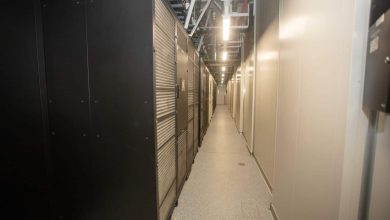
Further down the line, we are met with data centres, one of the most contested areas of modern AI development. Data centres store and process the data that gives AI its acclaimed speed and accuracy, but it does not come without costs to the environment. Every time a query is sent from an AI chatbot to a data centre, it strains water resources in communities that need it because data centres need massive amounts of water to cool. In the United States, where over 4,000 data centres are located, a Bloomberg report found that 66% of new data centres since 2022 are in areas with high levels of water stress.
More data centres are being developed globally, and with them will come an increased strain on the world’s limited water resources.
In his letter, the Pope argues that, “If a system is designed or used in a way that treats some lives as less worthy, or excludes them without the possibility of appeal, then it is not merely a tool ‘to be used well,’ since it has already introduced criteria that contradict the inalienable dignity of the human person.”
Every step of the way, the present era of AI involves a series of trade-offs to humanity and the common good, affecting not just those in the Global South, but also individuals and communities in high-income countries where these billion-dollar AI corporations reside.
Tech companies are laying off record numbers of staff in an ill-timed transition to AI systems and a bid for profit maximisation. In another instance of complete disregard for human rights and privacy, a report by Svenska Dagbladet revealed that Meta’s AI glasses have been recording the private moments of users without their knowledge.
In many cases, the adverse relationship between Silicon Valley AI companies and the workers earning $1 per day is indirect and can often seem far removed from the AI tools that scores of people and businesses use daily, making it easily ignored. Outsourcing firms like Sama and Scale AI are often in charge of recruiting workers from Africa and Asia for the grunt, often exploitative work of AI training. Additionally, the supply chain that connects data centres with the abuse in the DRC involves several companies across Asia, North America, and Europe, and by the time firms like Google, Microsoft, and xAI come into play, the interdependence is blurred.
Nevertheless, none of these invalidates the Pope’s point. AI can be a tool for great good. One that centres humanity and morality from design to use. The friction between modern AI development and the common good is a choice, and the solution will involve commitments from big tech firms. Commitments to pay fair and livable wages to workers in low-income countries and to take responsibility for the ethical and moral sourcing of materials in their supply chain.
For instance, since 2011, Taiwan Semiconductor Manufacturing Company (TSMC), the world’s most valuable semiconductor company, has required suppliers of its critical minerals to disclose information on the source of their minerals to ensure they are conflict-free and devoid of any ties to human rights violations or child abuse.
TSMC has maintained this standard for over a decade without it visibly threatening its commercial dominance; hence, the AI industry’s failure to adopt similar standards is impossible to excuse as a business necessity.
Without choosing to change, the world’s most vulnerable people will continue to shoulder the cost of its biggest machines.