The Federal Government is working to replace the 63-year-old Federal Fire Service Act with new legislation that would expand the agency’s responsibilities beyond firefighting to emergency medical response, search-and-rescue operations and hazardous materials incidents.
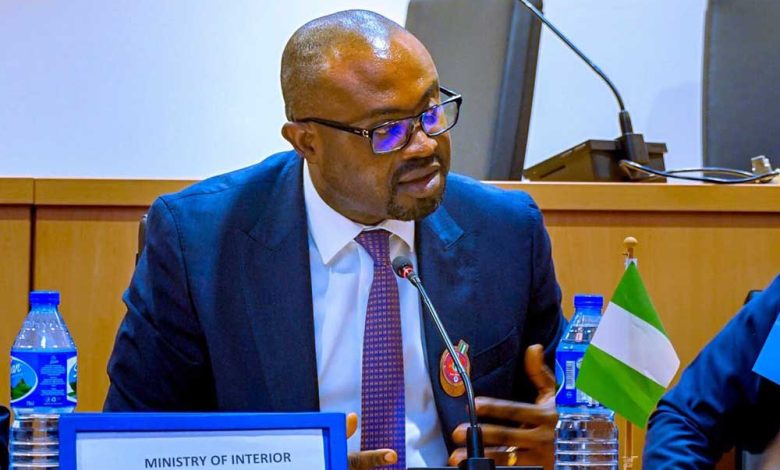
The proposed law would transform the Federal Fire Service into a Federal Fire and Rescue Service, according to the Minister of Interior, Olubunmi Tunji-Ojo.
Tunji-Ojo disclosed this on Monday in Abuja at the opening of the 2026 National Fire Safety Week.
According to him, the existing law no longer reflects the responsibilities expected of a modern emergency response agency.
“I think the Federal Fire Service Act is 1963. You cannot have a Fire Service Act of 1963 and think it will be near 2026 compliant. It doesn’t make sense.
“There is no right way of doing what is legally wrong. If the law does not give you the power to do something, no matter how good that action is, once you do it, it becomes illegal,” he said.
He said the new proposed legislation had reached an advanced stage and is expected to be presented to the Federal Executive Council on Thursday.
The minister argued that the current legal framework limited the agency’s ability to take on responsibilities beyond conventional firefighting.
He said the government wants the service to function as a first responder during road accidents, floods, medical emergencies and incidents involving toxic or hazardous materials.
“My major concern when we talk about fire in Nigeria, especially fire safety, is that what comes to our minds is not what comes to my mind. Of all the things we have spoken about today, I have not heard my dream of the Federal Fire Service.
“The dream of the Federal Fire Service is not a service that is just about fire safety, but a dream of a service that is more of a rescue service,” the minister stated.
Tunji-Ojo said the FFS should be equipped to provide first aid and rescue services, including medical emergency response.
“I want to have my dream of a fire service in Nigeria that will be able to provide that first aid, that will be able to provide that rescue service, even medical rescue services,” he said.
He added that the FFS should develop specialised capacity to respond to emergencies involving toxic gases, chemical substances, aviation incidents and other hazardous materials.
The minister cited the flooding in Maiduguri, Borno State, following the collapse of the Alau Dam, as an example of a disaster in which a properly equipped rescue service could play a wider role.
“I want to see a Federal Fire Service that specialises in rescue operations. I want to see a Federal Fire Service that deals with hazardous materials. It is not just about fire. It is about toxic materials. That is the idea of the Federal Service that I want to see,” he said.
Tunji-Ojo also called for greater attention to fire prevention, inspection and enforcement of safety regulations.
He said regular inspections and effective enforcement of fire safety codes were necessary to reduce violations and prevent disasters, proposing the establishment of fire marshals across districts, wards, towns and villages.
According to him, the arrangement would allow communities to identify fire hazards before they result in emergencies.
“Because the core responsibility of government is to protect lives and property. It means that fire service is the core responsibility of government, to protect lives and property,” he said.
The minister also called for basic rescue techniques, first aid and emergency response knowledge to be incorporated into education.
He said many Nigerians could not perform cardiopulmonary resuscitation (CPR) and other basic emergency procedures when immediate assistance was required.
“We must make sure that rescue becomes our way of life because you never can tell who is that next person you will be in a position to help. It might be your mother, it might be your son, it might be your daughter, it might even be somebody who is very important to you,” he said.
He also disclosed that the government was concluding the recruitment of about 5,000 personnel into the Federal Fire Service.
According to him, the National Fire Academy in Kwali, Federal Capital Territory, is also expected to be completed by December 2026.
He said the facility was about 85 per cent complete and was designed to accommodate more than 3,000 trainees at a time.
The academy is expected to provide specialised training for firefighters and other emergency responders.
Tunji-Ojo also said the government had procured firefighting equipment, including fire trucks, firefighting foam chemicals, fire tunics and breathing apparatuses.
“When we came on board, we realised that we were sending people to go and fight fire without protecting them. That was sending them on a suicide mission,” he said.
Earlier, the Controller-General of the Federal Fire Service, Olumode Samuel Adeyemi, said the 2026 National Fire Safety Week would include fire safety awareness campaigns across the 36 states and the Federal Capital Territory.
He said the programme would target motor parks, schools and markets with sensitisation campaigns on fire prevention and safer practices.
“We believe that effective public education must reach people in languages they understand and through channels that reflect their everyday experiences,” he said.
Adeyemi urged Nigerians to take fire prevention seriously through the safe handling of electrical appliances, proper use of cooking equipment, responsible storage of flammable materials and prompt reporting of potential fire hazards.
He said reducing fire incidents would require sustained public education and greater investment in emergency response infrastructure.