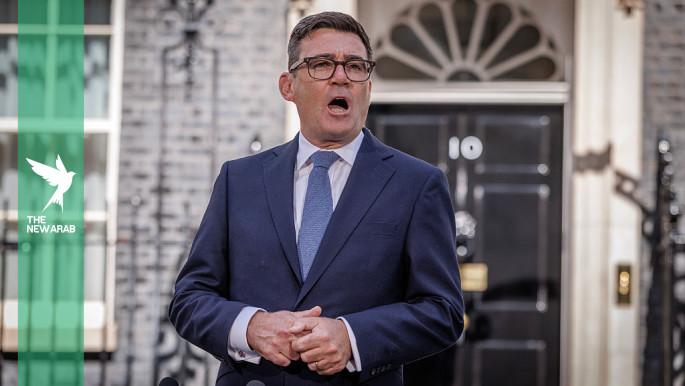
The new Prime Minister shouldn’t make the same mistake. Palestine isn’t just a question of foreign policy. It is a question of the world we want to build, writes Dan Iley-Williamson. [GETTY]
“Labour got it wrong.” So says the new Prime Minister, Andy Burnham, about the party’s complicity in Israel’s genocide in Gaza. His apology and commitment to “do better” are intended to signal a reset, the beginning of a new chapter, putting distance between himself and the disgraced legacy of Keir Starmer.
The corollary of Burnham’s admission – that others got it right – is left unsaid, but it is no less true. Despite the demonisation and smears, the movement for Palestine has remained resolute in its commitment to the liberation of the Palestinian people, challenging the British government’s complicity in Israel’s atrocities.
On the streets, in workplaces and university campuses, in town halls and in Parliament, Palestine campaigners have organised, agitated and mobilised against the horrors they have witnessed. The power of this movement is seen in the fact that Burnham felt the need to draw a line under Starmer’s tenure. In fact, Burnham might even recognise that Starmer’s departure from Downing Street is in no small part due to Palestine.
Starmer’s leadership was ended by Labour MPs, shaken by the catastrophic results in the May elections and fearful of the party’s plummeting polling. Palestine played a major part in both.
In the local elections, as part of the Vote Palestine coalition, the Palestine Solidarity Campaign (PSC) put Palestine on the ballot paper, asking council candidates to “Pledge for Palestine”. More than 2,200 candidates did so, with more than 600 subsequently getting elected. That is more than 10% of all newly elected councillors.
In Wales, PSC asked candidates for the Senedd to make a pledge too, explicitly supporting the Palestinian-led call for Boycott, Sanctions, and Divestment (BDS). The commitment was made by almost 40% of the newly elected Senedd Members, including the majority of the new Welsh government’s Cabinet.
Following the elections, PSC teamed up with Friends of the Earth England, Wales and Northern Ireland to commission polling of voters who have stopped supporting Labour under Starmer’s leadership and now back other parties of the centre and left. Respondents were asked if Labour’s policy on Palestine was a factor in them abandoning the party. The results were emphatic. More than half (53%) said Palestine was a factor, with two-thirds of voters who have switched from Labour to the Greens saying it was.
These other parties – the Greens most of all, and also Plaid Cymru and the SNP – have forcefully challenged Labour’s complicity in Israel’s genocide. This polling and the May election results suggest they were rewarded for this stance.
This is essential context for understanding Burnham’s intended Palestine-reset. But while he has diagnosed one of Starmer’s most fateful errors, he has not prescribed the necessary cure. In his recent admission, Burnham says Britain needs to “look at further sanctions”, including a “ban on trade in goods with illegal settlements”. When asked if he believes Israel has committed genocide, he reverted to Starmer’s line: That it is for international courts to decide.
This is not nearly good enough. Far from waiting years for international courts to issue rulings, the Genocide Convention is clear: Signatories – such as Britain – must take action to prevent genocide as soon as they become aware there is a serious risk of it. No one can doubt this threshold was crossed long ago. A vast array of experts and human rights organisations having concluded that Israel has committed the crime of crimes, while two and a half years ago the International Court of Justice (ICJ) ruled that there is a plausible risk of genocide, with the case ongoing.
But Burnham’s response is in fact weaker than that. Even if he were to do no more than heed the rulings of international courts, that itself would demand significantly more far-reaching measures.
This past weekend marked two years since the ICJ ruled that Israel’s occupation of Gaza and the West Bank, including East Jerusalem, to be unlawful and found that Israel was in violation of the international prohibition against racial segregation and apartheid. The ICJ demanded all states – including Britain – to cease all actions that aid or assist these grave violations of international law. Despite this, Starmer’s government failed to even issue a formal response to it, and Burnham’s vague commitments fall far short of heeding it.
In truth, Burnham doesn’t need to look far for the measures he should adopt. Last year at Labour Party conference, ordinary members and trade union affiliates overwhelmingly voted for the party to acknowledge that Israel has committed genocide and demanded the government impose comprehensive sanctions on Israel, including a full arms embargo and a ban on all trade with settlements.
Having done his best to prevent it from reaching the conference floor, Starmer ignored the policy once it passed.
The new Prime Minister shouldn’t make the same mistake. Palestine isn’t just a question of foreign policy. It is a question of the world we want to build. Starmer has sided with genocide and barbarism – and voters punished him.
Tens of thousands of people took to the streets of London on Saturday for the 36th national march against the genocide, sending a clear message to the new Prime Minister: To truly begin a new chapter, Burnham must listen to the movement for Palestine and finally end Britain’s complicity in Israel’s crimes.
Dan Iley-Williamson is the Political Organiser at the Palestine Solidarity Campaign.
Have questions or comments? Email us at: editorial-english@alaraby.co.uk
Opinions expressed in this article remain those of the author and do not necessarily represent those of The New Arab, its editorial board or staff.