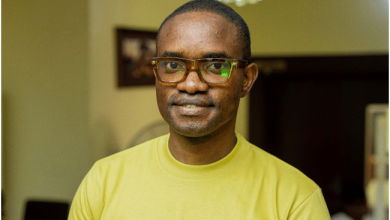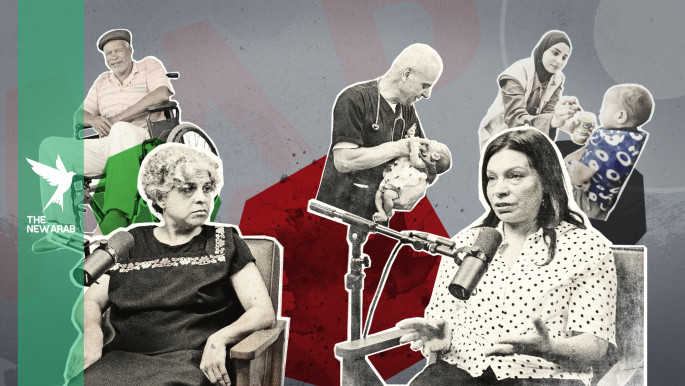
MAP’s Gaza Director Fikr Shaltoot [R] and West Bank Director Aisha Mansour [L] tell The New Arab that Israel’s destruction of Palestinian healthcare can only end with accountability and an end to the occupation [TNA]
For nearly three years, Israel has dismantled Gaza’s healthcare system piece by piece.
Hospitals have been bombed, besieged and occupied. Medical workers have been killed, detained and tortured. Cancer services have been forced to close, pharmacies have been emptied, and ambulances and humanitarian workers have come under repeated attack.
Even after the “ceasefire” agreement in October 2025, Israel has continued to control Gaza’s crossings and restrict the entry of medicines, fuel, medical equipment and emergency teams, leaving hospitals expected to treat mass casualties with destroyed infrastructure and rapidly diminishing supplies.
The crisis is not confined to Gaza. Across the occupied West Bank, Palestinians face accelerating annexation, forced displacement and state-backed settler violence, alongside an expanding network of Israeli checkpoints and military gates that can make even a short journey to hospital impossible.
Entire communities have been driven from their land. Ambulance workers have been forced to wear bulletproof helmets and vests. In one recent case, a four-month-old Palestinian baby died after Israeli forces refused to open a checkpoint and obstructed paramedics trying to reach him.
For Medical Aid for Palestinians, known as MAP, providing healthcare under these conditions has required continually adapting to a landscape reshaped by Israeli bombardment, incursions, displacement orders and movement restrictions.
In Gaza, the organisation has opened polyclinics and medical points among displacement shelters, while repeatedly relocating services as Israel seizes or renders areas inaccessible. In the West Bank, it has supported urgent care centres and trauma stabilisation points to help communities survive until patients can reach major hospitals.
Yet MAP’s Gaza Director Fikr Shaltoot and West Bank Director Aisha Mansour argue that the issue goes far beyond emergency aid.
At stake is Palestinians’ right to build and control their own healthcare system, to live free from occupation and blockade, and to be treated as a people with political rights and agency rather than a humanitarian crisis to be permanently managed.
The New Arab spoke to Shaltoot and Mansour about Israel’s destruction of Palestinian healthcare, the systematic targeting of medical workers, and why international policymakers must confront the cause of the crisis rather than merely responding to its consequences.
Below is an edited transcript of the conversation.
The New Arab (TNA): Gaza’s healthcare system has been devastated after more than two and a half years of genocide. More than 73,000 Palestinians have been killed, including over 1,100 since the ceasefire agreement began last October, while around 1.4 million people require shelter assistance. Fikr, what does that devastation look like in practice?
MAP’s Gaza director, Fikr Shaltoot (FS): Unfortunately, since the beginning of the genocide, the Israelis have targeted health facilities inside Gaza. I am talking about hospitals and primary healthcare centres. They have been directly targeted, as have the medical personnel working inside them.
Medical workers have been arrested and tortured, and some of them have unfortunately been killed. Most of the equipment in these hospitals has been destroyed.
With support from MAP and other organisations, some of the health facilities that were destroyed are now partially functioning. But they still lack the essential medical supplies needed to save lives.
Even after the ceasefire, hospitals in Gaza are receiving patients every day who need immediate care and lifesaving interventions. However, all the borders remain controlled by the Israelis. They are not allowing enough supplies to enter, and they are preventing international organisations from bringing in supplies while also restricting their entry through the private sector.
You cannot even access many of these supplies in the local market, so you can imagine how difficult the situation is inside the hospitals.
On top of that, they are not allowing emergency medical teams into Gaza. For MAP, the last medical teams allowed to enter were in June and July 2025. Since then, we have not been able to bring in any medical teams to support lifesaving interventions. Hospitals are dealing with large numbers of patients every day with limited staff and without the resources they need to provide adequate services.
MAP has therefore had to change the way we work. We have had to begin directly implementing services and establishing our own clinics and medical points to meet the needs of the population.
In the past, medical care was provided inside hospitals or primary healthcare centres. That is no longer the case in Gaza. We are now talking about medical points among displacement shelters and small clinics operating in different locations so that people can access care.
We also have to keep adapting whenever displacement occurs because Israel continues to force people from the places where they live. We therefore have to keep changing the locations of our work.
One of our key projects provided services at the Gaza European Hospital between Khan Younis and Rafah. When the Israelis expanded their invasion into that area, forced people to leave and took control of the area around the hospital, it became inaccessible.
Unfortunately, we had to suspend services for cancer patients. It took us some time to establish the project elsewhere, even though it was essential and the only service of its kind for cancer patients living through this horrific situation.
We eventually found a new location inside Nasser Hospital and resumed those services. That is one example of how we are trying to manage.
The Israelis currently control more than 70% of Gaza. People have been displaced from those areas and pushed into less than 30% of the territory.
Gaza is already only around 365 square kilometres. It is a very small area, and most people are displaced and living in tents under extremely harsh conditions.
During the summer, they suffer from the heat and a severe lack of water. They receive far less than the minimum humanitarian standard for the amount of water people should be able to access.
More than 80% of people living in shelters are water-insecure. They are also struggling with infectious diseases and skin infections.
From a health perspective, the overall situation is extremely difficult. What makes it even worse is that, nine months after the ceasefire agreement was signed, the Israelis have still not complied with its terms or allowed essential supplies into Gaza, including lifesaving medical supplies.
I am talking about emergency medical teams, fuel, batteries and solar panels. Israel cut the electricity at the beginning of the genocide, so hospitals and health facilities depend on fuel and generators to operate, including inside surgical theatres.
The situation has been extremely difficult, and it will remain so unless there is genuinely free access for supplies and emergency medical teams to enter Gaza.
TNA: One of the defining images of the genocide has been the long lines of aid trucks stranded outside Gaza while hospitals inside run out of medicines and basic equipment. How does MAP navigate Israel’s control over aid and get supplies to patients?
FS: MAP works in partnership with a number of local NGOs, UN bodies and international organisations, and we have a large team of around 150 staff on the ground, including procurement colleagues.
Through those partnerships, we have managed to obtain some supplies because some partners are able to bring certain items into Gaza.
At the same time, we search the local market for whatever is available. Sometimes we have to pay more because these items have become extremely scarce in Gaza. That is how we have been trying to manage, but it is far from ideal.
At our polyclinic in Deir al-Balah, patients often come to see doctors and are prescribed medication. When they go to our pharmacy, they cannot always find what they need.
Our colleagues then contact other facilities to find out whether they have the medication. Sometimes they succeed, and sometimes they do not.
More than 18,000 people are currently waiting to be referred outside Gaza for treatment. Not all of these people would need to leave if sufficient medical supplies were available inside Gaza and medical teams were freely allowed to enter and support local staff.
We continue trying to navigate these restrictions, but I cannot say that what we are able to provide is adequate. Everything in Gaza, whether healthcare, food, water or shelter, remains far from adequate.
TNA: Palestinians in the occupied West Bank are facing intensifying annexation, military raids and state-backed settler violence. MAP says at least 16 Palestinian children have been killed this year, more than 200 have been injured by Israeli forces or settlers, and over 1,500 have been displaced. What does this mean for families and communities?
MAP’s West Bank director, Aisha Mansour (AM): Palestinians are being displaced, and there are constant attempts to displace even more people. We know what happened more than a year ago in Jenin refugee camp and Nur Shams refugee camp in Tulkarm, where residents were displaced. More than 40,000 Palestinians have now been displaced in the northern West Bank for over a year.
But displacement is continuing elsewhere – many communities around Ramallah and in the Jordan Valley are constantly being pushed from their land. There are communities that we served in the past that no longer exist because their residents have been displaced.
One of them is Al-Mu’arrajat, on the road towards the Jordan Valley. We used to serve that community through our mobile clinic every Thursday. Now, when we pass the area, it is vacant. The shack-like homes are still there, but the residents have left because of the continuous harassment and violence they faced.
We call this state-backed settler violence. It happens continuously. Every day, communities in different villages and locations are harassed and pressured to leave. Some ultimately move elsewhere because the toll on them becomes unbearable.
In the Jordan Valley, children live in constant fear. Settlers enter the communities and take people’s goats and sheep, removing their ability to earn a living.
It is an attempt to make life so unbearable and so difficult that, from the settler and Zionist perspective, Palestinians will eventually leave. Alongside that violence, there are multiple checkpoints and military gates restricting movement.
Just a few weeks before I travelled, a four-month-old baby from Deir Ammar died at a checkpoint. The baby needed medical attention, but Israeli forces refused to open the checkpoint.
That is the situation in the West Bank, and it does not stop. Every time I travel somewhere, I see another gate that I do not remember being there before.
New gates appear every day. There are constantly new restrictions, and we are always trying to navigate them. That becomes especially difficult when communities need emergency healthcare.
TNA: In that case, paramedics were reportedly attacked with tear gas and stun grenades and forced to take a detour of around 40 kilometres. The baby was later pronounced dead. How have Israel’s checkpoints and attacks on emergency workers reshaped healthcare in the West Bank?
AM: Paramedics and emergency responders are being blocked from reaching people who need care. They are also being attacked. Most recently, we procured bulletproof vests and helmets for ambulance workers.
In what country do ambulance workers have to wear bulletproof helmets and bulletproof vests? Only in Palestine. We had to purchase them for the Palestine Red Crescent Society so that first responders could be slightly safer under these conditions.
The main hospitals are located in the major cities. You cannot provide cancer treatment and every form of specialised care in every village or town. That is simply not possible. It is too expensive and requires major human resources. But with all the closures, reaching those hospitals has become extremely difficult. It takes a long time and can be very expensive, particularly for communities without access to public transport.
We are therefore working with health authorities, communities and the healthcare system to decentralise emergency care. When gates are closed and communities are cut off from emergency centres, we have to ask how people can receive enough immediate care to keep them alive until they reach a main hospital.
Over recent years, we have supported urgent care centres in different villages. Trauma stabilisation points are now also being established. They are less structured than full urgent care centres, but they allow people to receive emergency treatment when they need it.
We have trained doctors, nurses and paramedics across the West Bank in primary trauma care so that they can provide lifesaving treatment until patients reach secondary or tertiary care in the main cities.
We have also conducted first-aid training with communities. In many of the communities served by our mobile clinics, urgent care centres and trauma stabilisation points, even healthcare workers may be unable to reach people.
We therefore equip residents with basic first-aid skills and provide them with first-aid kits so they can assist their communities until proper healthcare becomes accessible. It is about decentralising services and helping communities become more resilient in the face of these catastrophes.
TNA: The distances involved are often short. Without Israeli closures and military restrictions, people could reach the nearest hospital relatively quickly. Instead, Palestinian communities are being forced to create emergency systems simply to survive being cut off from existing healthcare.
AM: Exactly. The main city and the main hospital are often not far away. The West Bank is bigger than Gaza, but Palestine is not a very large country. Travelling from one village to another or to the nearest town should not be a major journey.
It should not take much time. But unfortunately, it can take hours or become completely impossible because everything is closed and Israeli forces refuse to open the gates. Communities are therefore forced to rely on their own resources.
TNA: More than 1,700 healthcare workers and around 600 aid workers have been killed in Gaza, while medical workers in the West Bank have been shot, detained, assaulted and obstructed. Do you believe Israel is systematically targeting healthcare and humanitarian workers?
FS: Absolutely. We noticed this from the beginning of the genocide in Gaza, when they began targeting health facilities and the medical personnel inside them.
Healthcare workers have been tortured, humiliated and arrested. Unfortunately, many have been killed. They have continued to do this. During the past two years, they have never stopped targeting humanitarian workers.
It is not only medical personnel. Many people working for international and local organisations have been targeted and killed. Their only job is to support people. They are humanitarian workers simply doing their work. We have seen workers from World Central Kitchen and many other organisations killed.
Even after the ceasefire, one of our colleagues was injured when his home in Bureij refugee camp was attacked.
An evacuation notice had been sent to people in the area before the strike, but the way Israel targets homes shows that it does not care about the wider harm caused. His home was almost totally destroyed, and he was lightly injured.
Without accountability, they will continue doing this because there is not enough pressure on them to stop. Many healthcare workers have faced pressure from their families to leave hospitals because their relatives are terrified for their safety.
They are trapped in a dilemma. They have a humanitarian duty to remain in these places, to work among their communities and to provide care. At the same time, they know they may be killed. That applies to my colleagues who continue working every day inside health facilities, among displacement shelters, at medical points and at water facilities.
Whatever security measures we put in place, we cannot guarantee their safety. The pattern of Israeli attacks in Gaza places them at enormous risk.
Unfortunately, this will continue for as long as Israel is not held accountable for the atrocities it commits on a daily basis.
TNA: Aisha, Israeli forces have attacked Palestinian medical workers for decades. Is there any realistic prospect of accountability while the occupation continues?
AM: They have been doing it for years, and they have not been held accountable. Healthcare workers and healthcare facilities should never be targeted. It is against international law, and unfortunately Israel continues to do it.
There are videos and eyewitness accounts of Palestinian healthcare workers and paramedics being targeted, shot, arrested and harassed. There are also cases of injured Palestinians being pulled from ambulances by occupation forces and arrested.
This happens repeatedly, and they are not held accountable. The Israeli occupation is the fundamental problem in Palestine. These attacks on healthcare workers began long before the current genocide in Gaza.
I have met paramedics who were shot, attacked and burned in the early 2000s. This is not a new phenomenon under the occupation.
But it has become even more severe. When an entity is not held accountable, it becomes more brazen and commits further violations.
That is what we are seeing in the West Bank and, of course, on an enormous scale in Gaza.
TNA: International attention is increasingly shifting towards Iran and other regional crises, even as Israel’s genocide in Gaza and violent expansion across the West Bank continue. How does that loss of attention affect your work, and what must policymakers do?
AM: There will always be other things happening around the world, and they are all important. But what is happening in Palestine is a long-term issue, and it requires a solution.
One source of hope amid all the trauma we have witnessed over the past few years is that public awareness has grown.
I remember when I was a child and many people had never heard about Palestine or understood what the issue was. Education, knowledge and awareness have grown tremendously, and that keeps me optimistic. Policymakers will eventually have to follow the public. They will have to follow the people.
A major part of our work is educating people about what is happening in Palestine, why it is happening and what the fundamental issues are. This growing public awareness is the key to mobilising policymakers and pushing them to act courageously. I think people already know what the solution is and what must be done. It is a matter of having the courage to take that first step. I believe it is only a matter of time.
FS: I agree with Aisha. Policymakers know what they need to do. The fundamental issue is that Palestine is under occupation. The permanent solution is to end the occupation and lift the blockade imposed on Gaza since 2007.
This did not begin in October 2023. We have discussed measures that could improve people’s lives, but we are talking about an entire Palestinian nation.
Palestinians have been deprived, oppressed, struggling and suffering for a very long time. They deserve to live. That is all. Policymakers know the solution. As Aisha said, if they have the courage and the political will, they know what they should do.
AM: I would add that MAP’s mission is to support the Palestinian healthcare system.
We support the local health system and Palestinian civil society. We are locally led, and our offices employ Palestinians who lead this work alongside our local partners.
Our vision is to support an independent Palestinian healthcare system and uphold Palestinians’ dignity and right to health. I always tell people that we are trying to work ourselves out of a job.
We do not want this occupation to continue. We want to help build a healthcare system that no longer requires international humanitarian organisations to keep it functioning. If there were no occupation, organisations like ours would not be needed. That is our ultimate goal.