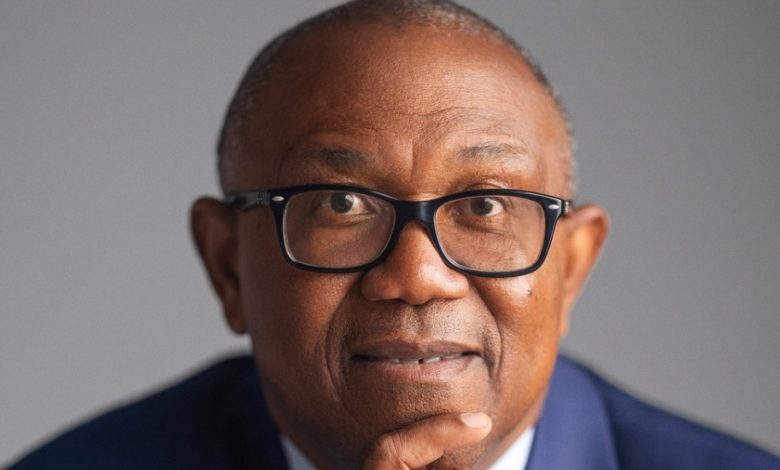
The 2027 presidential candidate of the Nigeria Democratic Congress (NDC), Peter Obi, has insisted that his service as Anambra’s governor concluded with the state debt-free and with foreign investments worth over $150 million, capable of generating annual income for the state.
Obi disclosed this on Arise News’ Prime Time programme on Thursday, breaking days of silence following the debt dispute between the Anambra government and Obi’s camp, which has not only dominated public discourse but also been subjected to diverse scrutiny.
A document released by Anambra State itemised eight external financing facilities associated with the Obi administration, with a combined original value of $123.77m and an outstanding balance of $92.35m as of June 30, 2026 (N127.37bn).
Obi reacted to the document during the programme, describing it as “wrong public accounting” and saying it failed to provide context on the nature of the loans and the specific drawdowns by his government before the end of his administration.
He said, “The way it is presented is wrong public accounting. First is that, those are concessionary development support obtained by the Federal Government of Nigeria, and on-lend to the state governments that were qualified or that they want to support with certain projects.”
Obi said the concessional facilities from the World Bank and the International Fund for Agricultural Development, in which the Federal Government was the actual borrower, are payable over 25 to 35 years, with either no interest or low interest.
He said some of the listed facilities were spread across multi-year programs, with each administration’s drawdowns or disbursements programmed in the same order.
Obi Unpacks External Debt
The former governor reiterated that he had neither approached the Federal Government for loans nor any commercial banking institution. Rather, the state, Obi claimed, was considered qualified alongside a few other states for the facilities to support specific projects.
Obi explained that when he resumed office in March 2007, “on its foreign desk, recorded is about $18m,” adding that “as at the time I left office in March 2014, our foreign debt position was about $30m.”
The Debt Management Office (DMO) recorded Anambra’s external-debt stock at $30.32m as of December 2013, three months before Obi left office.
Despite inheriting about $18m in external debt from his predecessor, the former governor argued that he had only drawn down about $12m of the difference as of December 2013.
“In fact, in December of 2014, nine months after I had left office, our total external debt in Anambra State was $45m. So, how is it now bundled that as at the time I left office, I left ‘over $123m.’ It is wrong, very, very wrong public accounting,” he said.
Recall that the Anambra government had said it was not informed about Obi’s exact drawdown from the external debt he had contracted, stating plans to reconcile the date with the DMO, which they are yet to update the public on.
‘What they should have said was that, this is what Peter Obi met; this is his own drawdown which you could say is debt that he owed, or even if you go to December 2014, you can say there was a $25m drawdown.
“As at the time I left office, I left the dollar component of my savings invested in various bonds, which is over $150m, which gives Anambra State guaranteed income of about $10m yearly,” he stated.
The NDC presidential candidate argued that, should the Anambra government be “assumed” correct in its contracted external debt — “but they are wrong, I did not leave $123m,” he said — the sum of over $150m was left in foreign investments with an annual interest earning of $10m.
“If they just kept the money that I left, and were using the income to pay the loan, they would have finished paying it now, with the capital remaining and still giving Anambra State $10m annually.
“In June 2026, when the outstanding loan in Anambra State according to their claim was $92.3m, if the money I left, no adding more, no removing any, the compound earnings: the capital plus interest accrued would have been about $335m, of which, as at that June, if they decide to clear the debt, just minus $92m, they will be left with $242m.
“The day I left Anambra State as governor, I left it in a very strong financial standing that no other state in Nigeria can state so. If you find any other governor who said he left over $150m, go and show me,” he added.
Obi further argued that the foreign investment he left behind, if left since 2014, would have become about “$240m,” which is almost N350-N400bn today, and that it would be earning a minimum of $20m for the state every year.
He spoke briefly on the defunct Water Corporation, whose staff members the Anambra State Government has accused the Obi administration of neglecting their salaries, pensions and gratuities.
“Water Corporation is not under the schedule of the payment by the state government. They are an agency established by the government which, yes, the government can support them…” he said, after an interruption from the interview.
THE WHISTLER reported details of a summarised financial handover document signed by Obi upon the completion of his eight-year tenure.
The 10-page document showed substantial investment assets, including $156m in foreign-currency investments and N27bn in local investments.
The document also revealed certified State and MDAs account balances of N28.166bn, recorded across 14 components, including the contested N2.140bn ecological fund, which the Soludo administration disputed.
With a FGN-approved refund of N10bn, Obi’s financial statement claimed to have handed over N91.666bn. It, however, highlighted a N5bn estimated liability, which was deducted to arrive at the net balance.
The N5bn, Obi stated, was for his successor, Willie Obiano, to settle salaries, pensions and gratuities, as well as approved certificates for already executed projects, leaving a net balance of N86.666bn.
Eight External Loans Explained
The Anambra Government, in an itemised breakdown of the external financing facilities attributed to the Obi administration between 2007 and 2013, did not provide specific details of the concessional terms of the facilities for further context.
However, the Malaria Control Booster Project, in which $9.468m was attributed to Anambra State’s debt schedule, was part of a $180m World Bank-assisted national project, which became effective in 2007, with an additional US$100m financing approved in 2009.
The Third National Fadama Development Project, with $7.179m in the Anambra schedule, was approved by the World Bank in 2008 as part of a national project covering all 36 states and the Federal Capital Territory (FCT). The programme had total financing of about $450m, comprising $250m from the World Bank and $200m from the Federal, State and local governments.
Also, the Health System Development Project II Additional Financing, with $4.125m attributed to Anambra, was a World Bank-assisted project structured through the Federal Government and participating states for the health sector.
Similarly, the Malaria Control Booster Additional Financing of $4.429m was separate from the original malaria financing. According to World Bank documents, the additional financing was approved in 2009 for the programme.
This means the state’s schedule has two malaria-related entries: the original financing of $9.468m and the additional financing of $4.429m, totalling about $13.9m.
An important facility in the programme is the State Education Programme Investment Project (SEPIP), contracted at $48.333m, making it the largest item on the list, with $37.344m still outstanding in June 2026.
The project, according to World Bank documentation, involved participating states including Anambra, Bauchi, Edo and Ekiti, with the $150m Federal credit to be disbursed to the participating states through subsidiary financing agreements.
The second-largest item was the Nigeria Erosion and Watershed Management Project (NEWMAP), contracted at $37.894m. It was a Federal Government and World Bank-supported project established to tackle erosion and watershed degradation.
Meanwhile, according to the Anambra NEWMAP website, the programme was launched in the state on June 26, 2014, after Obi had left office in March 2014.
The Anambra Government’s debt schedule, however, gives the financing agreement date as July 30, 2013, during Obi’s tenure, with $34.863m outstanding as of June 2026.
The Community and Social Development Project, with external financing of $4.843m, was also a development programme aimed at community-level development.
The programme was part of a Federal development-financing architecture rather than an ordinary bank loan negotiated personally by the governor, with $3.702m outstanding according to the state’s schedule.
The eighth external financing is the Value Chain Development Project (VCDP), at $7.5m. It was not a World Bank programme but was supported by the International Fund for Agricultural Development (IFAD), with the programme focused on improving agricultural value chains, particularly rice and cassava, as well as incomes and food security.