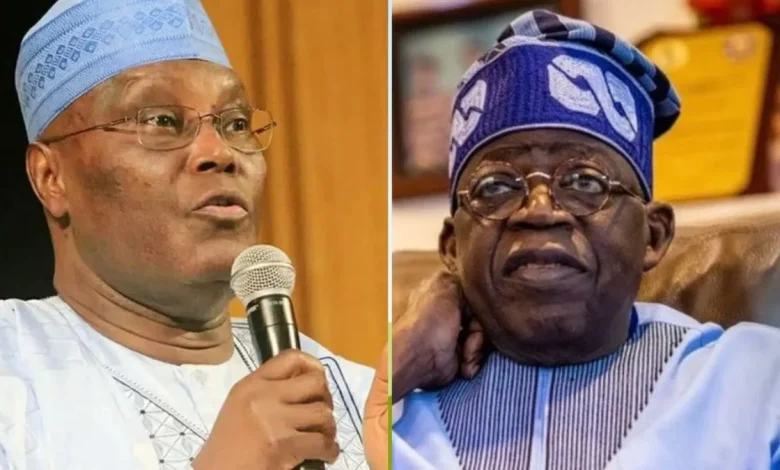
Former Vice President and presidential candidate of the African Democratic Congress (ADC), Atiku Abubakar, has called on President Bola Tinubu’s administration to make public the full details of Nigeria’s $5.1 billion health agreement with the United States.
Atiku made the demand after Ghanaian President John Mahama disclosed that his government rejected a proposed US health compact because of concerns over medical records, pathogen information, counterpart funding and the powers of the country’s Food and Drugs Authority (FDA).
The development has renewed attention on Nigeria’s own health agreement with Washington, which was signed in December 2025 and is scheduled to run from April 2026 to December 2030.
In a statement issued by his Director of Strategic Communication, Phrank Shaibu, Atiku questioned whether provisions similar to those rejected by Ghana are contained in the agreement signed by the Nigerian government.
“At this point, Nigerians do not know whether the provisions Ghana rejected are in the agreement Tinubu signed,” Atiku said. “That is precisely why the government must publish the full text. Nigerians should not have to guess what has been agreed in their name.”
Nigeria and the United States signed the five-year bilateral health Memorandum of Understanding (MoU) on December 19, 2025.
Under the agreement, the United States is expected to provide nearly $2.1 billion in health assistance, while Nigeria is expected to increase domestic health spending by about $3 billion during the same period.
The combined commitment has been described by the Nigerian government as a $5.1 billion health cooperation agreement.
The Federal Ministry of Health said the agreement covers disease surveillance, outbreak response, laboratory systems, pathogen sample collection and handling, health data systems, essential health commodities and support for frontline healthcare workers.
Nigeria also committed to allocating at least six per cent of executed annual federal and state budgets to health under the arrangement.
The Federal Government said the domestic spending commitment was intended to gradually reduce dependence on external assistance and strengthen Nigeria’s health system.
However, Atiku said the financial obligations attached to the agreement should be examined alongside the condition of Nigeria’s healthcare system.
He particularly raised concerns over maternal mortality in the country, citing estimates that put Nigeria’s maternal deaths at about 75,000 in 2023.
“Every one of those deaths represents a woman whose family expected her to come home,” he said. “This crisis did not begin under Tinubu, but he has had more than three years to show Nigerians how his government is making childbirth safer. Where are the results?”
The ADC presidential candidate also questioned how Nigeria would meet its domestic financial obligations under the agreement.
He referred to comments attributed to Health Minister Muhammad Ali Pate during a budget defence, where only N36 million had reportedly been released from the N218 billion appropriated for capital projects and programmes at the Ministry of Health headquarters in 2025.
“A government that cannot release funds for approved health projects must explain how it intends to honour a multibillion-dollar commitment,” Atiku said. “A signed partnership cannot staff a maternity ward, supply a hospital or save a woman in labour. Nigerians need to see the funding and the care.”
Atiku’s demand followed fresh controversy over Ghana’s decision to reject a similar US health arrangement.
Mahama disclosed that Ghana’s Ministry of Health examined the proposed agreement before it was presented to the country’s Cabinet. Several provisions were subsequently flagged.
According to the Ghanaian president, the proposed compact required Ghana to provide the United States with its pathogen profile and medical records.
He also said the country would have been required to provide counterpart funding and that its Food and Drugs Authority would have no inspection powers over certain medicines and medical products supplied under the programme.
“It states that we shall give the United States our pathogen profile. It also says we should give our medical records. I mean, who takes another country’s medical records?” Mahama said.
Mahama said the concerns led Ghana’s Cabinet to reject the proposal.
“It was the compact that was thrown out in record time in our cabinet. I’ve never seen anything thrown out as fast as that. And so, of course, we rejected it,” he said.
The proposed Ghana agreement was part of a wider change in US health assistance arrangements following the restructuring of USAID programmes.
It was reported in April that Ghana had declined a proposed five-year health agreement involving about $109 million in US funding, with concerns over sensitive health data among the issues surrounding the negotiations.
Hence, Atiku wants the Nigerian government to clarify whether the Nigerian agreement contains similar provisions.
He asked the government to release not only the main MoU but also any protocols, annexes, data-sharing arrangements, specimen-sharing agreements and financial commitments connected to it.
“Can Nigerians’ medical information or pathogen samples leave the country? Who may access them? What safeguards protect patients? Does NAFDAC retain full authority to inspect medicines and medical products? What exactly have the federal government and the states promised to spend? Tinubu should put the documents before Nigerians and answer these questions plainly,” he said.
The demand also comes amid earlier questions about the contents of the Nigeria-US agreement.
In a related development, Politics Nigeria earlier reported that the media aide to Atiku Abubakar, Paul Ibe, has challenged the Federal Government to disclose the full details of its recently signed mining framework with the United States.
Ibe, in a statement posted on his X account on Tuesday, said the $700 billion figure being associated with the agreement was not the amount of investment being provided by the United States, but the estimated value of Nigeria’s mineral resources.