Dangote, Oil Producers Urge FG To Boost Crude Output As Refineries Face Supply Gap

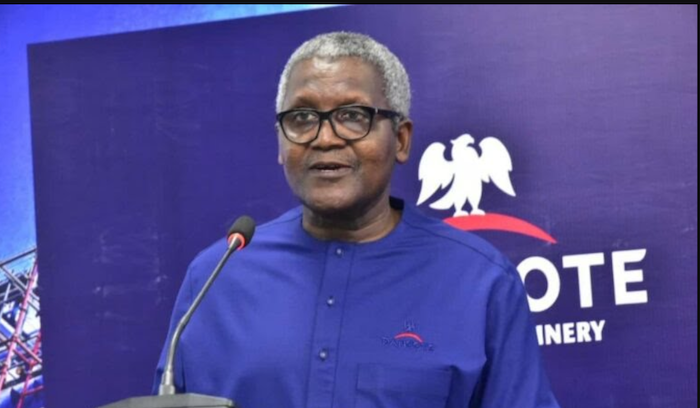
The stakeholders made the call on Monday in Lagos at the opening of the third Nigeria Oil Refining Summit (NORS) 2026, organisedby Crude Oil Refinery Owners Association of Nigeria (CORAN), with the theme, “Refining for Value: Linking Upstream Supply to Downstream Demand.”
The summit brought together the country’s largest refiner, indigenous and international producers, regulators, and financiers at a time when Nigeria had reversed a decades-long dependence on imported fuel but was now confronting a new constraint: finding enough crude to feed the refineries it had built.
Speaking at the event, Dangote, who was represented by the group’s Chief Economist, Dr. Hassan Mahmud, said the group’s total refining capacity will reach 2.1 million barrels per day (bpd) across Africa with the upcoming 650,000bpd refinery (scalable to 700,000bpd) in Lamu, Kenya, and the existing 700 bpd in Nigeria, being expanded to 1.4 million bpd.
He stated, “We are going to Lamu in Kenya tomorrow to do the ground-breaking for the new refinery, which is also 650,000 barrels to be scaled to 700,000 barrels. So if you combine the existing 650,000 bpd refinery… with the extension, another 700,000 making it 1.4 and another 700,000 in the East African refinery, Dangote alone is doing 2.1 million barrels a day.”
Dangote warned that the scale of that ambition had exposed a fundamental supply gap.
He said at the current production, Nigeria’s crude supply alone could not feed the Dangote refinery alone.
“So the need for expanding the exploration of upstream side of the industry is extremely critical,” he said.
“The market is there and so we should explore the opportunities,” he added.
Dangote said building a competitive refining industry was not just about building plants. He said it required a full value chain from crude production to transportation, storage, refining, distribution and export.
He warned that weakness in any link affected the competitiveness of the whole.
Dangote identified five fundamentals, including reliable and competitive access to crude, a truly competitive downstream market, stable and predictable policy, shared logistics infrastructure, and an export-oriented vision.
On crude access, Dangote acknowledged progress under the Domestic Crude Supply Obligation (DCSO) provided for in the Petroleum Industry Act (PIA).
Referencing the Nigerian Upstream Petroleum Regulatory Commission (NUPRC) data, he said about 53.7 million barrels were supplied to domestic refineries in Q2 2026, representing 97.4 percent compliance, while total crude and condensate production reached about 1.7 million bpd as of June 2026, its highest in several years.
He added that domestic refinery receipts rose to about 683,000 bpd in August 2026.
Dangote said, “We must consolidate this progress. Nigeria should reach a point where a refinery located in Nigeria and ready to purchase crude on competitive commercial terms can reliably obtain appropriate crude without unnecessary uncertainties.
“This is not a call for subsidised crude. It is a call for predictability, transparency, and commercially workable arrangement between producers and refiners.”
He added that competition must be on a level playing field where imported and locally refined products compete under equivalent regulatory, quality, tax, and commercial regimes.
According to him, “No refinery should survive simply because government protects it. Equally, no domestic refinery should be disadvantaged by a market structure that inadvertently makes import more attractive than local production.”