Dangote Says Tinubu Reforms Strengthening Refinery Growth, Investor Confidence

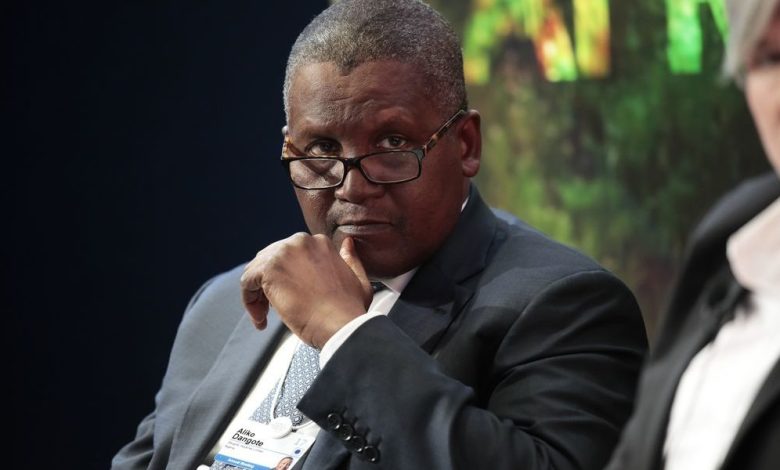
President Bola Tinubu’s economic reforms are strengthening investor confidence and creating conditions for large-scale industrial investments in Nigeria, according to Aliko Dangote, President of Dangote Industries Limited.
Dangote said the policy direction of the Tinubu administration has improved the investment environment and provided greater support for businesses undertaking major projects in the country.
He made the remarks while discussing the growth of the Dangote Petroleum Refinery and the broader outlook for industrial investment in Nigeria.
The billionaire industrialist said the refinery’s development and ongoing expansion demonstrate the scale of investment that can be undertaken when businesses have sufficient confidence in the direction of government policy.
The Dangote Petroleum Refinery, located in the Lekki Free Zone in Lagos, has emerged as one of Nigeria’s most significant industrial projects with the facility increasingly reshaping the country’s petroleum products market and reducing its longstanding dependence on imported refined fuel.
Dangote is now pursuing an ambitious expansion of the refinery that would substantially increase its processing capacity and strengthen Nigeria’s position in the global refining industry.
The company plans to expand capacity from the current 650,000 barrels per day to 1.4 million barrels per day, a development that would make the facility one of the largest refineries in the world.
The expansion is expected to strengthen domestic fuel supply while creating additional capacity for exports to African and international markets.
Dangote said the government’s reforms have helped create the confidence required to pursue investments of this magnitude, arguing that sustained policy implementation could attract further capital into manufacturing, infrastructure and other productive sectors of the Nigerian economy.
Since taking office in May 2023, Tinubu has introduced a series of economic reforms, including the removal of the petrol subsidy, changes to the foreign-exchange system and measures aimed at attracting private investment.
The reforms initially contributed to significant adjustments across the economy, including higher inflation, increased transportation and production costs and sharp movements in the value of the naira.
However, the government has maintained that the measures are necessary to correct longstanding economic distortions, improve public finances and create a more sustainable environment for private-sector investment.
Recent improvements in Nigeria’s foreign-exchange position have strengthened that argument.
Foreign reserves have risen while the naira has recorded periods of greater stability and improved liquidity in the official foreign-exchange market, developments that are particularly important to companies requiring imported machinery, equipment and other production inputs.
For large industrial projects such as the Dangote refinery, greater foreign-exchange stability could improve planning and reduce some of the uncertainty associated with capital expenditure.
The refinery itself has already altered the structure of Nigeria’s downstream petroleum industry.
Nigeria, despite being Africa’s largest crude oil producer, depended heavily on imported petrol, diesel, aviation fuel and other refined petroleum products for years because of inadequate domestic refining capacity.
The commencement of production at the Dangote facility has begun reversing that relationship.
The refinery currently produces petrol, diesel, aviation fuel and other petroleum products for Nigeria while also exporting products to regional and international markets.
Its growing output has intensified competition in the downstream sector and changed the country’s petroleum import requirements.
An expansion to 1.4 million barrels per day would have broader implications.
At that scale, the refinery would process significantly more crude than Nigeria’s domestic petroleum products market requires, positioning the facility as a major export-oriented refining hub serving Africa and other markets.
That would also increase demand for reliable crude oil supply.
Dangote has previously highlighted the importance of securing sufficient crude from Nigerian producers to sustain refinery operations, while the Nigerian government has introduced measures designed to improve domestic crude supply to local refinineries.
The refinery’s expansion therefore represents more than an increase in processing capacity.
It will test Nigeria’s ability to provide the policy stability, crude supply, infrastructure and investment environment required to support one of the world’s largest privately owned refining operations.
Dangote said continued reforms and policy consistency would be critical to sustaining investor confidence and encouraging businesses to commit long-term capital to Nigeria.
For the Tinubu administration, the refinery provides a high-profile example of the type of private-sector investment it wants to attract as Nigeria attempts to shift from dependence on commodity exports towards greater domestic production and value addition.
The next phase will depend on whether recent improvements in the macroeconomic environment can be sustained and translated into broader private investment across the economy.