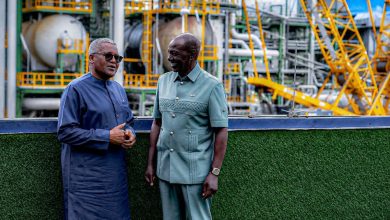
The Malindi Environment and Land Court issued the order following a suit by 133 residents of Chandavai in Lamu County, who claim that the land earmarked for the refinery forms part of their ancestral heritage and that their families have lived and farmed there for generations.
The court directed that the prevailing status quo be maintained on the disputed land until October 14, when the matter comes up for hearing. The order temporarily bars activities including clearing, excavation, fencing, demolition and construction on the affected portions.
However, the court declined the residents’ request to stop the planned September 30 groundbreaking ceremony.
Dangote Group said on Tuesday that the ruling had not halted the ceremony, although activities at the project site could be affected by the order.
“The court has not halted the groundbreaking ceremony of the refinery at this stage. However, activities at the site may be affected by the ruling as both parties are required not to carry activities until the case is heard on 14th October,” the company said.
Speaking at an investor event in Nairobi, Dangote also expressed confidence that the refinery project would proceed despite the legal challenge.
“I’m sure some of you must have seen one court (has) given an order that we shouldn’t do any construction? I said no, no. This is normal for us in Africa. … In fact, this is even small,” he said.
“Anyone who wants to cause trouble, we are ready for them,” he added. Dangote subsequently told the investors: “If you want to go to court to stop the Lamu Refinery, go ahead; we are ready for you.”
The proposed refinery, estimated to cost of about$16 billion, is expected to have a processing capacity of 700,000 barrels per day and is targeted for completion by 2030.
The facility is planned to process crude from Kenya’s Turkana oilfields as well as supplies from other parts of Africa and is expected to reduce the region’s dependence on imported petroleum products.
The residents challenging the project are seeking recognition of their rights over the land and compensation, while also raising concerns about the potential impact of the refinery on their property and livelihoods.
The legal challenge has consequently introduced uncertainty over activities at the project site, even as the planned groundbreaking remains intact.
Meanwhile, the African Energy Chamber (AEC), yesterday condemned the court order and urged the parties to resolve the land dispute swiftly without allowing prolonged litigation to derail the project.
AEC Executive Chairman, NJ Ayuk, said legitimate questions around land rights, compensation and environmental compliance should be addressed in accordance with Kenyan law, but argued that they should not indefinitely delay the refinery.
“Africa cannot continue exporting its energy security and then acting surprised when conflicts thousands of kilometres away determine what our people pay for fuel. The communities of Lamu must have their rights respected, and legitimate questions around land and compensation should be resolved quickly and fairly,” he said.
“But those issues cannot become an excuse to indefinitely delay one of the most important downstream investments East Africa has seen in decades,” Ayuk added.
The chamber said the refinery could strengthen East Africa’s fuel security, noting that the region had been without an operating refinery since Kenya Petroleum Refineries shut down in 2013 and relies heavily on imported petroleum products.
It cited the Dangote refinery in Nigeria as an example of the potential impact of increased African refining capacity, saying the facility had helped reduce petroleum imports and increase refined-product exports.