dLocal secures Enhanced PSP licence in Ghana, enabling direct payments operations

Shalom,
Victoria from Techpoint here,
Here’s what I’ve got for you today:
- dLocal can now operate directly in Ghana
- How Mushin shaped this founder
- CreditChek enters Uganda with acquisition
- Disney+ brings R49 streaming to TVs
dLocal can now operate directly in Ghana

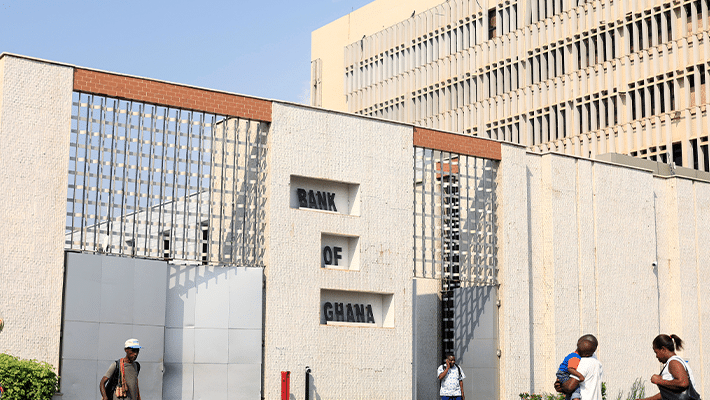
dLocal has taken a more direct route into Ghana’s payments market after its Ghanaian subsidiary, dLocal Ghana Limited, secured an Enhanced Payment Service Provider (EPSP) licence from the Bank of Ghana. The approval, announced on September 9, 2026, means dLocal can now operate directly in the country instead of relying on local intermediaries for its Ghana-related transactions. The company can connect directly to banks and mobile money networks, onboard merchants, collect local payments, make payouts and process inbound remittances.
In practical terms, this gives dLocal more control over the money moving through its Ghana business. Rather than sending transactions through third-party partners, it can connect directly to local financial rails and settle with banks and mobile money providers itself. For businesses using dLocal to accept payments or send money across borders, that could mean fewer middlemen and potentially faster, more predictable settlements. It also gives dLocal room to build more localised payment products for Ghanaian businesses and consumers.
Why should we care? Ghana’s digital payments market is getting difficult for global payment companies to ignore. Bank of Ghana data cited by Condia shows mobile money transactions reached GH¢4.54 trillion in 2025, more than 50% higher than the previous year. dLocal is also not entering an empty market: Flutterwave, Paystack and several other payment companies already hold enhanced PSP licences, while Fincra secured its own licence in May 2026. So, while the licence gives dLocal more control, it also puts the company in a market where competition and local payment adoption are already moving quickly.
This move is also part of a much longer African expansion story for dLocal. The Uruguay-based payments company expanded into Africa in 2018, building infrastructure that allows international businesses to accept and send payments across emerging markets. In June 2025, it announced plans to acquire Kenya-based cross-border payments company AZA Finance to deepen its African footprint, improve treasury and FX capabilities, and strengthen remittance services. That deal eventually changed shape, with dLocal acquiring selected AZA assets for about $23.7 million in February 2026 rather than completing the much larger transaction initially envisioned.
Now Ghana gives dLocal another piece of the local infrastructure it needs to compete across Africa. The company already supports Ghanaian payment methods through its broader platform, but holding the country’s enhanced licence moves it closer to being a local payments operator rather than simply an international platform connecting into Ghana. And as African businesses increasingly sell across borders and consumers receive more money from abroad, having direct access to local payment rails is becoming less of a nice-to-have and more of a competitive advantage.
How Mushin shaped this founder
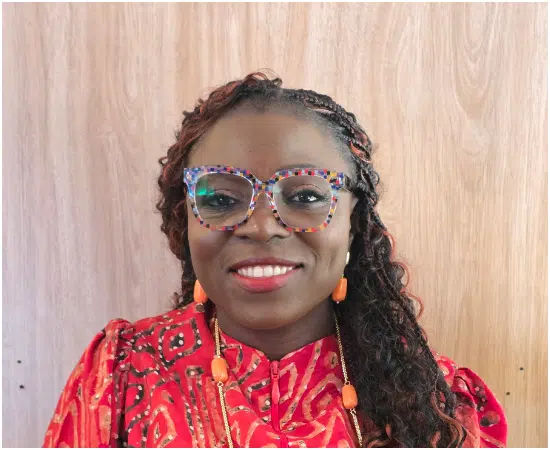
The struggles of growing up in Mushin did not just shape Kemi Bolatito’s childhood; they helped shape the entrepreneur she would become. Born and raised in the densely populated Lagos suburb in a family that often had to hustle to get by, Bolatito saw her parents work hard to meet the family’s daily needs. Those experiences made her realise early that the traditional 9-to-5 path was not for her. She wanted to build something of her own.
As a child, Bolatito learnt the basics of business by selling things and turning ₦100 into ₦200. The thrill of making her own money stayed with her and eventually pushed her to start a business while she was an undergraduate. But alongside the lessons from hustling, she was also growing up in a home where values mattered. Her father, who owned the family home despite their financial struggles, constantly reminded his children that their family name and integrity were important. Even when there was barely enough food, he expected them to hold on to those principles.
Her father’s political history also shaped how Bolatito viewed life. He was active in grassroots politics and part of the generation that fought for Nigeria’s return to democracy. During the military era, he was arrested several times, forcing the family to visit him in jail. After democracy returned in 1999, however, much of the work he had done was seemingly forgotten. Still, he remained content and refused to see politics as a route to personal wealth. For Bolatito and her siblings, the experience was enough to make them want nothing to do with politics.
Years later, that combination of hustle, independence and strong values would follow Bolatito beyond Lagos. After starting businesses as a student, she eventually moved to Canada, where she founded Rolla Pay, a fintech company focused on cross-border payments. Her journey from growing up in Mushin to building a startup in Canada is a story about how early experiences can quietly shape the choices we make years later. Find out more in Asukwo’s latest for Techpoint Africa.
CreditChek enters Uganda with acquisition
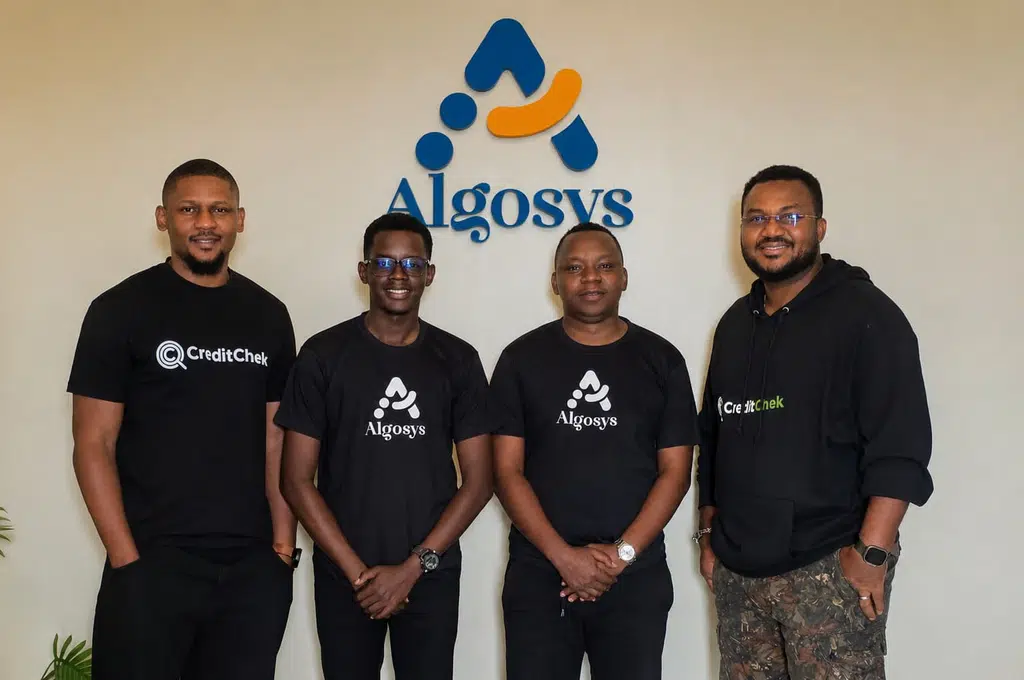
CreditChek is making its first move into East Africa by acquiring Uganda-based Algosys, a core banking and lending software startup. The Nigerian fintech announced the deal on September 9, 2026, adding a company that already serves 22 financial institutions in Uganda, including lenders, microfinance institutions and SACCOs. Algosys has also powered more than 10,000 SACCO loans, giving CreditChek an immediate foothold in Uganda rather than having to build one from scratch.
The deal is bigger than simply entering another country. CreditChek has traditionally focused on helping lenders assess borrowers by pulling together credit data from different sources. With Algosys, it is adding the technology lenders use to actually originate and manage loans. In other words, it wants to move from helping lenders decide who should get a loan to providing more of the infrastructure needed to create, manage and track that loan.
That matters because African lenders still have to piece together several technology providers for things like identity checks, credit scoring, loan origination and loan management. CreditChek’s bet is that bringing more of these tools together could make life easier for lenders while giving it a bigger share of their technology spend. It also gives the company access to Algosys’ existing customer base, which could eventually become a channel for CreditChek’s credit and lending products.
The acquisition comes just three months after CreditChek raised $600,000 in June 2026 to expand its credit-data infrastructure across East Africa. That round, led by Janngo Capital with participation from Vastly Valuable Ventures, Unipeg Capital and existing investor Assembly Investors, took its total funding to $935,000. At the time, CreditChek said it had processed more than $60 million in credit applications across 1 million individual profiles and had reached profitability in Nigeria.
Now, Algosys will remain a subsidiary of CreditChek and continue serving its existing Ugandan customers, while the two companies look for ways to combine their products. CreditChek says it does not want to simply copy its Nigerian operation into Uganda; instead, it plans to adapt to the local market while giving financial institutions a common technology platform. If that works, this acquisition could be the beginning of a broader East African push and a sign that African fintechs are increasingly using acquisitions to build regional infrastructure faster than they could on their own.
Disney+ brings R49 streaming to TVs

Yesterday, Disney+ rolled out a new app in South Africa, and there’s a big change for anyone who has been paying R49 for its mobile-only plan. The streaming service is replacing that plan with a new Basic package that can now be used on TVs, laptops, and computer monitors, not just smartphones and tablets. Disney has also added smarter recommendations, improved parental controls, a refreshed Junior Mode and the option to use a subscription while travelling abroad.
For subscribers, the biggest attraction is the price. The new Basic plan still costs R49 a month but now supports up to 720p and one concurrent stream on larger screens. That puts it well below Netflix Basic at R99 and Amazon Prime Video at R59. The catch is that Basic loses offline downloads, while Disney+ Premium remains R179 a month for four concurrent streams and up to 4K quality. Existing Premium subscribers also can’t simply downgrade to Basic, and Disney has not made it clear whether the R49 option will be open to everyone or is mainly a migration path for existing Mobile subscribers.
That makes the change more interesting than just a new app launch. Streaming has become increasingly price-sensitive in South Africa, and a R49 plan that actually works on a TV gives Disney+ a much stronger low-cost pitch. It also comes at a time when consumers have more services to choose from and are increasingly weighing what they get for every rand spent. Disney+ is now cheaper than Netflix’s entry-level TV plan and only R10 below Amazon Prime Video, although Amazon’s R59 subscription offers 4K and three simultaneous streams.
Disney+ has also changed quite a bit since it arrived in South Africa on 18 May 2022. It launched at R119 per month, or R1,190 annually, with Disney, Pixar, Marvel, Star Wars, National Geographic, and Star content. The monthly price later rose to R139 in 2023, R159 in September 2024, and R179 in 2026 — roughly a 50% increase from its launch price. Interestingly, the R49 Mobile plan arrived in August 2023 through a partnership with MTN, but it was originally restricted to smartphones and tablets, with 480p video and a single stream.
The app change is part of Disney’s wider effort to streamline its streaming products globally. In South Africa, the Star section is being rebranded as Hulu, bringing the local experience closer to Disney’s newer global setup. But there is a small headache for existing users: watch histories, recommendations and watchlists will not automatically move to the new app, so subscribers may have to recreate some of that themselves. The old app will remain usable until 12 October 2026, after which it will be retired. Disney has also confirmed that the new app will not be supported on DStv Stream or the Explora Ultra, while new Disney+ subscriptions can no longer be added to a DStv bill.
In case you missed them
What I’m watching
Opportunities
- Flutterwave is hiring for several roles. Apply here.
- Moniepoint is hiring for over 100 roles. Apply here.
- Follow Techpoint Africa’s WhatsApp channel to stay on top of the latest trends and news in the African tech space here.
Have a superb Thursday!
Victoria Fakiya for Techpoint Africa