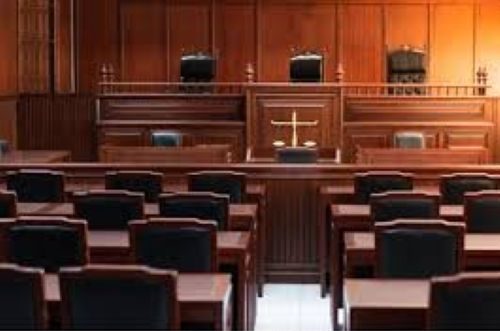
The Federal Government has commenced moves to transform the Code of Conduct Tribunal (CCT) into a full-fledged National Anti-Corruption Court with seven judicial divisions across the country.
The proposed reform is being driven by the leadership of the tribunal in collaboration with the National Assembly, through the Attorney-General of the Federation and the Secretary to the Government of the Federation, under an Executive Bill seeking to change the name and status of the institution.
The CCT currently operates as a quasi-judicial body responsible for trying public officers accused of violating the code of conduct, particularly offences involving failure to declare assets and abuse of office for personal gain.
It handles cases investigated and referred to it by the Code of Conduct Bureau and has over the years dealt with high-profile cases involving President Bola Tinubu, former Chief Justice of Nigeria Walter Onnoghen and former Senate President Bukola Saraki.
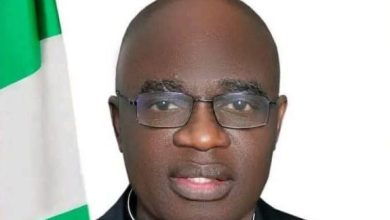
President Tinubu appointed Dr Mainasara Kogo as Chairman of the tribunal on January 20, 2025.
In a statement made available to newsmen through its Acting Director of Litigation, Yahaya Laraski, the CCT said the proposed National Anti-Corruption Court would have jurisdiction over corruption-related cases and operate as a full-fledged court.
According to Laraski, “The new leadership has repositioned the status of the Chairman to that of the Chief Judge of the Federal High Court, and that of members to judges of the Federal High Court.”
He also disclosed that the Kogo-led panel inherited more than 1,037 pending cases from the previous administration, with some of the matters unresolved for between five and 10 years due to lack of adjudication.
Laraski said the new leadership had directed that all the pending matters be returned to the Code of Conduct Bureau for scrutiny.
“The honourable Chairman directed that all pending cases be referred to the CCB for thorough scrutiny. The CCB is currently reviewing the files and will determine which cases should proceed. The Tribunal is awaiting the Bureau’s response,” he said.
He added that the tribunal had also drafted fresh Practice Directions to modernise its proceedings.
“To modernise case procedures, the Tribunal has drafted new Practice Directions. The existing Practice Direction is outdated and does not incorporate key provisions of the Administration of Criminal Justice Act, 2015 (ACJA) and the Proceeds of Crime (Recovery and Management) Act (POCA),” Laraski added.
The proposed Practice Directions have since been submitted to the Chief Justice of Nigeria, the Supreme Court, the Chairman of the CCB, the AGF and the Director of Public Prosecutions of the Federation for consideration.
Laraski said the CCB filed only six cases before the tribunal between December 2025 and May 2026, but maintained that the current panel had introduced a series of measures aimed at making the tribunal more effective.
“Since the assumption of office by the current Chairman, the tribunal has remained active in handling high-profile cases filed by the Code of Conduct Bureau.”
He said the tribunal had, during proceedings, granted orders freezing accounts belonging to individuals and companies and approved temporary forfeiture of assets.
“In the course of these proceedings, the tribunal has granted orders for the freezing of accounts belonging to various individuals and companies, as well as the temporary forfeiture of assets.”
Laraski said the leadership had also adopted a faster approach to newly filed cases.
“A new spirit of dispensing with cases has been introduced by the new Chairman, whereby, within a week of any case being filed by the Code of Conduct Bureau, the Chairman directs the tribunal to sit and dispense with it immediately.”
He added, “Therefore, as of July 10, 2026, when the tribunal embarked on its annual vacation, there was no unattended case pending from the Bureau (CCB) in the records of the tribunal (CCT).”
Despite the reforms, Laraski identified funding and the tribunal’s dependence on the CCB for cases as major challenges.
He said one of the problems “is that the inflow of cases to our tribunal is determined only by the discretion of the Code of Conduct Bureau. Any case they bring is the one we can adjudicate upon.”
Laraski also complained about inadequate funding and insufficient logistics.
“There is gross inadequacy of funding because we hardly get our N2 billion budget funded by the government.
“We do not have even housing and a motor vehicle for our Chairman, let alone many directors who do not have official vehicles.
“Government should assist in the provision of furniture, ICT equipment, and capacity building for the staff.”
He disclosed that two of three landed properties belonging to the CCT that had been illegally sold had been recovered.
“One is the official residence of the Chairman, and the second is the North Eastern states zonal office, located in Bauchi.”
Laraski said the tribunal had also created seven new departments in addition to the existing three as part of its internal reforms.
“Another achievement is the creation of seven new departments, in addition to the existing three.”