Nigeria Cannot Have Security Without A Strong Economy, Otunba Senator Gbenga Daniel Declares

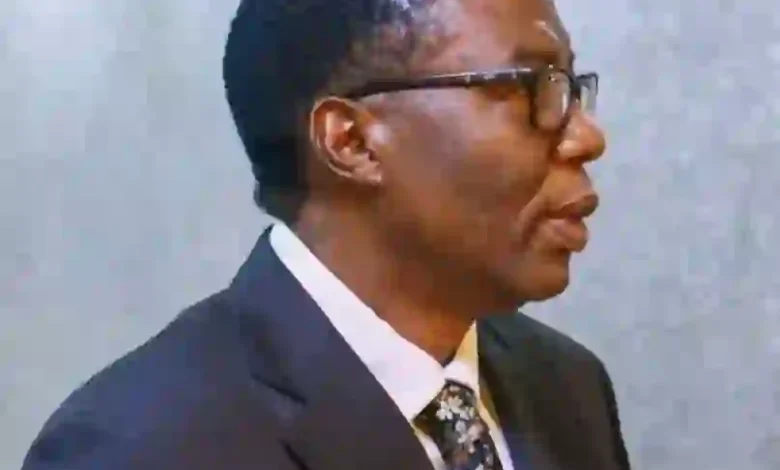
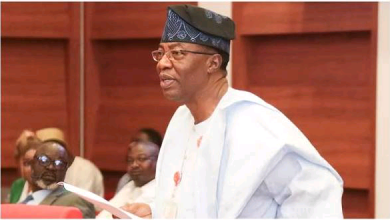
Otunba Senator Gbenga Daniel, FNSE, FAEng, drew a direct line between Nigeria’s economic fortunes and its security architecture on Wednesday, telling a gathering at the Sheraton Hotel, Lagos, that the two cannot be pursued as separate national projects.
Speaking as Special Guest of Honour at a forum themed “Economy and Security: The Future of Nigeria,” the former Ogun State Governor set the tone early with a warning dressed as a statement of fact: a nation cannot build lasting security on a weak economy, and it cannot sustain economic growth without security. Everything that followed in his brief but pointed remarks flowed from that premise.
He acknowledged the recent numbers that have given Nigeria’s economic managers cause for cautious pride — 4.43 per cent growth in the second quarter of 2026, with agriculture and services leading the recovery, and the non-oil sector now accounting for roughly 95.8 per cent of real GDP. But Otunba Senator Daniel was quick to strip away the comfort such figures can offer policymakers distant from the realities on ground. The real measure of progress, he insisted, is not what shows up in a quarterly bulletin but what an ordinary Nigerian experiences: whether a young graduate can find work, whether a farmer can reach his field without fear, whether a small trader can survive the weight of power costs, transport and financing.
It was security, however, that carried the sharper edge of his address. He reframed it away from the narrow lens of soldiers and checkpoints, describing it instead as a piece of economic infrastructure as fundamental as roads or electricity. Farmers who fear their own farmland produce less. Businesses that must budget for private protection lose their competitive edge. Investors who cannot trust the road ahead simply take their capital elsewhere. To underline the point, he cited a sobering figure: more than 7,800 people reportedly abducted between July 2025 and June 2026 — a statistic he framed not merely as a security failure but as an economic one.
Yet the tone of the address was not one of despair. Otunba Senator Daniel pointed to Lagos, and by extension Ogun State, as proof of what happens when population, enterprise and infrastructure are allowed to work together — imperfect environments, in his words, but ones that show Nigerians can build when given room to do so. His challenge to the room was to imagine that same confidence extended to a young entrepreneur in Aba, Kano, Ibadan, Jos, Port Harcourt or Maiduguri.
He closed by handing the floor to the Executive Governor of Lagos State, who was billed to deliver the main lecture, but not before leaving the audience with a line clearly built for repetition: the Nigeria of tomorrow will be shaped by the decisions made today. Secure the farms, he said, and food security follows. Secure the roads, and commerce follows. Secure the communities, and investment follows.
READ ALSO: