The emerging cultural diplomacy push took centre stage in Abuja on Thursday as Hunan Province brought its performing arts and cultural heritage to Nigeria, with officials calling for sustained exchanges that could produce collaborations, tourism opportunities and jobs in the creative sector.
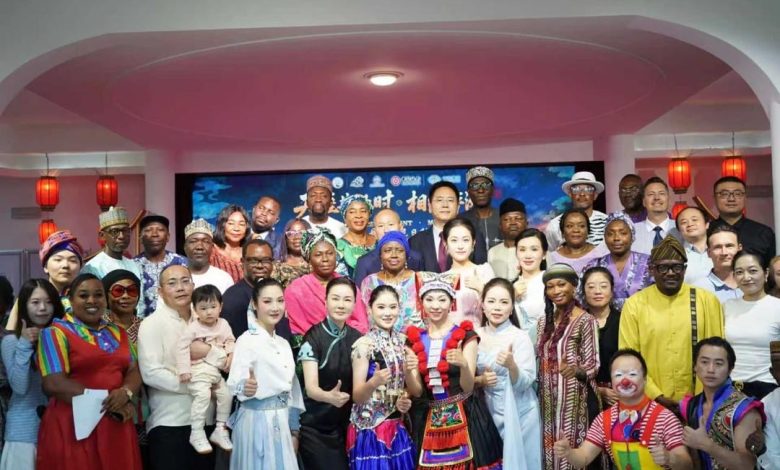
The showcase, titled “Shared Moon, Shared Moment, Meet in Africa – Hunan Culture and Tourism in Nigeria,” was held at the China Cultural Centre in Abuja, where the Hunan Song and Dance Theater Troupe presented a mix of songs, dances, acrobatics and other artistic performances.
But beyond the colourful performances, the event exposed an emerging dimension of Nigeria-China relations: the use of cultural engagement to build connections between citizens after years of predominantly government and economic-focused interaction.
Speaking at the programme, Cultural Counsellor of the Chinese Embassy and Director of the China Cultural Centre in Nigeria, Yang Jianxin, said cultural exchanges could provide a bridge for Nigerians and Chinese to understand one another beyond official diplomatic channels.
Yang said the Hunan delegation was in Nigeria not simply to display Chinese culture but to create an avenue for mutual learning and people-to-people friendship.
He drew parallels between China’s Mid-Autumn Festival and Nigerian traditions, particularly the emphasis on family, reunion, harmony and peace.
“Although China and Nigeria are thousands of miles apart, our shared appreciation of family, friendship and a better life brings our hearts closer together,” Yang said.
The Chinese cultural official also invoked President Xi Jinping’s Global Civilization Initiative, which advocates respect for civilisational diversity and increased exchanges and mutual learning among cultures.
He used the occasion to showcase Hunan as a potential destination for Nigerian tourists and cultural enthusiasts, noting that the province has three World Heritage sites and nine elements on UNESCO’s Representative List of the Intangible Cultural Heritage of Humanity.
Yang expressed the hope that the exchange would encourage more Nigerians to visit Hunan and experience its heritage and hospitality firsthand.
For Nigeria, however, the cultural engagement also presents an opportunity to turn cultural diplomacy into an economic instrument.
The Permanent Secretary of the Federal Ministry of Arts, Culture and the Creative Economy, Abdulkarim Ozi Ibrahim, represented at the event by Musa Alhamdu, said stronger cultural engagement could generate opportunities for Nigerian creatives while strengthening international relations.
He argued that culture could overcome barriers of language and geography and provide countries with an avenue to discover their shared humanity.
According to him, Nigeria’s cultural diplomacy agenda could promote tourism, creative collaboration, skills development and greater participation of young Nigerians in the global creative economy.
He said Nigeria and China both possessed diverse and deeply rooted cultural traditions spanning music, dance, theatre, visual arts, festivals, crafts, fashion, film and literature.
The emphasis on young people could become particularly significant as Nigeria seeks to expand its creative economy and develop alternative pathways for employment and skills development.
Chairman of the Society of Nigerian Artists, Muhammad Sulaiman, said cultural diplomacy could help convert agreements between governments into relationships between ordinary citizens.
Sulaiman called for more cultural festivals, youth exchanges and joint productions in film, music and the arts, arguing that sustained interaction could generate jobs and opportunities for young people while encouraging mutual respect.