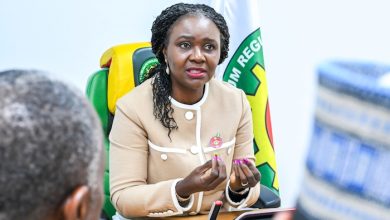
Kyari spoke at the presentation of the 2026 Wet Season Agricultural Performance Report by the National Agricultural Extension and Research Liaison Services (NAERLS), Ahmadu Bello University, Zaria.
He said cereal production grew by 1.84 per cent in 2026, below the country’s estimated population growth rate of 2.01 per cent.
He said the gap underscored the need to accelerate agricultural productivity, improve access to quality inputs and address persistent weaknesses in the country’s farming system.
The minister, however, questioned the credibility of recurring food insecurity projections supported by the Food and Agriculture Organisation (FAO), insisting that such assessments must be subjected to monitoring and evaluation to establish whether their predictions corresponded with actual conditions.
Kyari, who had previously faulted the 2026 food security report, said it was unacceptable for organisations to repeatedly publish alarming forecasts without returning to verify their accuracy after the periods covered by the projections had elapsed.
His comments followed the latest FAO-backed Cadre Harmonisé assessment, which projected that 33.5 million Nigerians could face acute food insecurity during the June-August 2027 lean season, up by 6.7 million from the 26.8 million projected for October-December 2026.
He had earlier cautioned against politicising the projections, stating that they should serve as early-warning instruments rather than be presented as an indictment of the federal government.
At on Wednesday ’s event, he challenged the methodology and accountability behind assessments that repeatedly forecast worsening food insecurity without subsequent verification.
The minister said, “We’ve been here that we see these reports coming out every year that do not speak to what is happening on the ground, and numbers are peddled, and periods were also mentioned. It’s like a prediction, it’s like a forecast of what they see.”
Kyari said the absence of follow-up assessments made it difficult to establish the reliability of such reports, adding that he would discredit projections that could not demonstrate evidence of monitoring and evaluation.
He commended NAERLS for presenting a transparent assessment methodology that compared the 2026 farming season with the preceding year.
He also expressed concern over declining output in ginger, cocoyam, millet and soybean, particularly the performance of soybean, where increased cultivated land failed to translate into higher production.
He attributed the development partly to poor-quality seeds and urged the National Agricultural Seeds Council to address the problem.
Kyari challenged NAERLS to expand its data coverage beyond the 10 leading producing states and provide comprehensive figures on the total land area cultivated nationwide to give a more accurate picture of Nigeria’s agricultural capacity.
He called for the inclusion of both wet and dry-season production in future assessments, directing the agency to commence preparations for the dry-season report to establish the country’s overall agricultural output.
According to him, a comprehensive assessment covering production between January and June, alongside the remaining months of 2026, would enable the government to better measure the impact of its agricultural interventions.
The minister maintained that agricultural production had improved over the past two years, attributing the gains to federal government interventions in fertiliser distribution, mechanisation, agricultural financing and guaranteed minimum price arrangements.
He said the 2025 farming season recorded the highest production in three years, while the 2026 wet season delivered a marginal improvement over the previous year.