The project, located in Oil Mining Lease (OML) 112 and 117, is expected to produce about 350 million standard cubic feet of gas per day, adding significantly to the country’s gas supply while creating a new stream of investment, jobs, and export opportunities.
The development marked the latest major commitment by international and indigenous energy companies to Nigeria’s upstream sector. This followed a series of regulatory and fiscal reforms introduced by the federal government to improve the investment environment in the last three years.
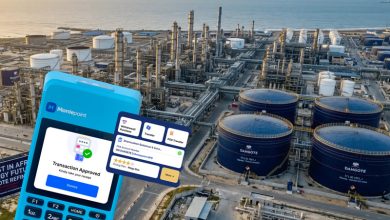
The Ima project is about eight kilometres off Bonny Island in Rivers State, and is expected to supply feedgas to Nigeria LNG Limited (NLNG). Discovered in 1973, it had remained undeveloped for more than five decades, despite its significant reserves and potential as a source of feedgas for Nigeria LNG Limited.
In a statement, President Bola Tinubu welcomed the FID by the French oil giant and the Nigerian independent producer, describing it as another milestone in efforts to unlock stranded gas resources and turn them into investment, jobs, industrial activity, and economic opportunities.
Tinubu stated, “For more than 50 years, the gas beneath Ima remained a resource with enormous potential, but potential alone does not create jobs, finance businesses or improve the lives of our people.
“Our responsibility has been to create the conditions that turn Nigeria’s natural resources into productive investments and economic opportunities.
“The Final Investment Decision on Ima demonstrates what is possible when we provide investors with a competitive, predictable and enabling environment. We are determined to unlock more of Nigeria’s gas resources to power our industries, expand our exports, create jobs, and build lasting prosperity for our people.”
Since assuming office on May 29, 2023, the president said he had prioritisedreforms to reverse years of underinvestment in Nigeria’s oil and gas industry, as several undeveloped projects lacked the fiscal and commercial conditions needed to become viable.
In 2024, Tinubu recalled that he issued a series of presidential directives, developed by the team led by Special Adviser to the President on Energy, Olu Verheijen, which sought to improve fiscal competitiveness, shorten contracting timelines, and reduce costs.
Regarding the Ima project, THISDAY learnt that Nigerian financial institutions arranged 77 per cent of the project’s financing, with around 60 per cent of the project workforce expected to come from host communities, including Bonny, Finima, and Andoni, all in Rivers State.
“Natural resources have value only when they are converted into opportunities for our people. Our goal is to ensure that Nigeria’s gas powers Nigerian prosperity,” the president emphasised.
Delivering his welcome remarks at the FID signing ceremony, Managing Director of TotalEnergies EP Nigeria, Mathieu Bouyer, described the investment as a major vote of confidence in Nigeria’s oil and gas industry and the country’s investment environment.
Bouyer said, “The FID confirms that technically, commercially, legally and (in terms of) regulatory, we are all set and all geared to invest in a new adventure, a new project in full trust and full confidence…it’s a clear vote of confidence in Nigeria and its oil and gas industry and also in the potential of the oil and gas people of this country.”
He said the project was designed to support the additional capacity being created through Nigeria LNG’s Train 7, adding that TotalEnergies is targeting first gas by the end of 2028.
The financial partners include Zenith Bank, Access Bank, United Bank for Africa, Guaranty Trust Bank, Standard Bank, Standard Chartered Bank, and First Abu Dhabi Bank.
According to Bouyer, the project is expected to generate between $2 billion and $4 billion in value over its lifetime, depending on international oil and gas prices.
He said Nigerian content would remain central to its execution, with the four major project packages to be handled by Nigerian contractors.
He added that more than 60 per cent of work done locally would be undertaken by members of the host communities, while the project would create opportunities in employment, local contracting, and technical skills development.