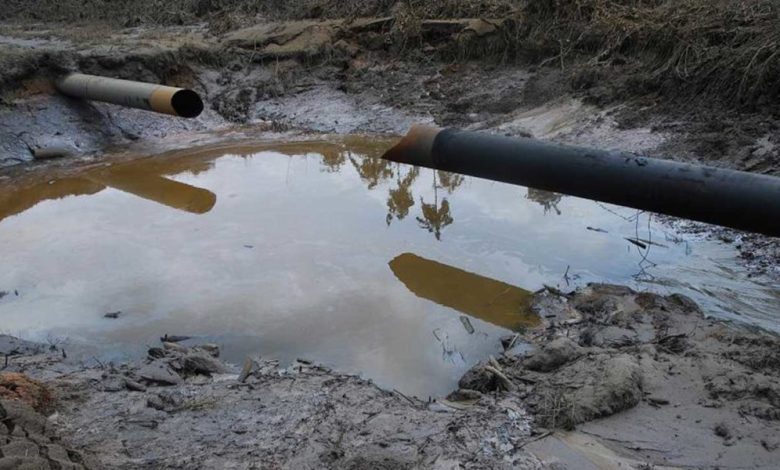
Nigeria’s persistent battle against oil theft and pipeline vandalism has returned to focus following a deadly incident in Rivers State that reportedly killed dozens of people attempting to siphon petroleum products from an illegally tapped facility.
The incident occurred around midnight on September 3 at Okari Jetty in Okrika Local Government Area, where suspected oil thieves were reportedly loading petroleum products into boats from an illegal tapping point while a vessel was simultaneously being loaded for export.
The Youths and Environmental Advocacy Centre (YEAC-Nigeria) said at least 37 people died after inhaling toxic fumes during the operation, while several others were reported missing.
Rivers State Police confirmed that deaths occurred and said the victims were allegedly attempting to steal crude oil, but authorities have yet to establish an official casualty figure.
The Nigeria Security and Civil Defence Corps (NSCDC) also cautioned that casualty figures circulating after the incident remained unverified and said investigations were continuing to determine the number of people killed, injured or missing.
The agency said investigators would also examine possible negligence, collusion or criminal facilitation surrounding the incident.
Beyond the immediate loss of life, the incident has again highlighted the persistent problem of illegal oil tapping and pipeline vandalism across the Niger Delta, where criminal activity around petroleum infrastructure has historically cost Nigeria billions of dollars in lost production and revenue.
Nigeria depends heavily on crude oil exports for foreign-exchange earnings and a significant portion of government revenue, making the security of production and transportation infrastructure critical to the country’s fiscal and external positions.
For years, theft and vandalism contributed to declining crude production as pipelines were repeatedly damaged and some operators reduced output because they could not reliably transport production to export terminals.
The consequences extended beyond lost barrels.
Oil companies incurred additional expenses repairing damaged infrastructure, strengthening security and cleaning up spills, while environmental damage affected communities across the Niger Delta.
The government has intensified its campaign against crude theft in recent years, combining military operations with private pipeline-surveillance contracts and increased monitoring of production infrastructure.
Those efforts have contributed to improvements in production and the restoration of some previously disrupted facilities.
However, the Rivers incident shows that illegal access to petroleum infrastructure remains a significant problem.
The challenge has become particularly important as Nigeria seeks to nearly double crude production to 3 million barrels per day by 2030.
Reaching that target will require billions of dollars in new investment in exploration, field development, pipelines and export infrastructure.
It will also depend on the government’s ability to convince domestic and international oil companies that additional production can be transported safely to terminals without substantial losses to theft or repeated disruptions caused by vandalism.
Nigeria has recently attracted renewed interest from international energy investors following reforms in the petroleum industry and improvements in production security.
International Energy Agency Executive Director Fatih Birol said last week that energy investment flowing into Nigeria could at least double over the next five years as geopolitical disruptions increase the importance of reliable energy suppliers.
Birol said Nigeria’s substantial oil and gas resources could give the country an opportunity to attract more international capital as global buyers diversify their sources of energy.
But reliability will be critical to capturing that investment.
Nigeria may possess substantial reserves, but increasing production requires infrastructure capable of moving crude consistently from producing fields to export terminals and domestic refineries.
Persistent illegal tapping creates risks across that chain.
The Rivers tragedy also highlights the human and environmental consequences of the illegal oil economy that has developed across parts of the Niger Delta.
Illegal tapping exposes participants and surrounding communities to highly flammable and toxic petroleum products, while damaged pipelines can contaminate waterways, farmland and other sources of livelihood.
The September 3 incident is believed to be one of the deadliest events linked to suspected oil theft in the region since at least October 2023.
Authorities are continuing investigations into exactly what happened at the jetty, including the substance involved and the final number of casualties.
The NSCDC has warned residents against vandalising petroleum infrastructure, illegally accessing oil facilities or attempting to collect petroleum products, describing the activities as both criminal and potentially fatal.
For Nigeria, however, the broader challenge extends beyond preventing individual incidents.
The government must dismantle the organised networks that finance, transport and profit from stolen petroleum while strengthening surveillance across thousands of kilometres of pipelines and other oil infrastructure.
Success would have significant economic implications.
Reducing theft would allow more produced crude to reach export terminals, strengthen foreign-exchange earnings, improve government revenue and make investment in additional production more attractive.
Failure to contain the problem could undermine Nigeria’s ambition to raise production toward 3 million barrels per day at precisely the time when global supply disruptions are creating an opportunity for the country to strengthen its position as a dependable international energy supplier.