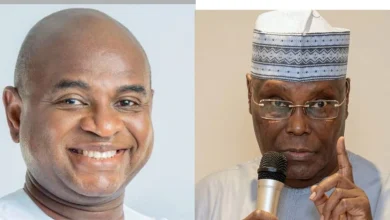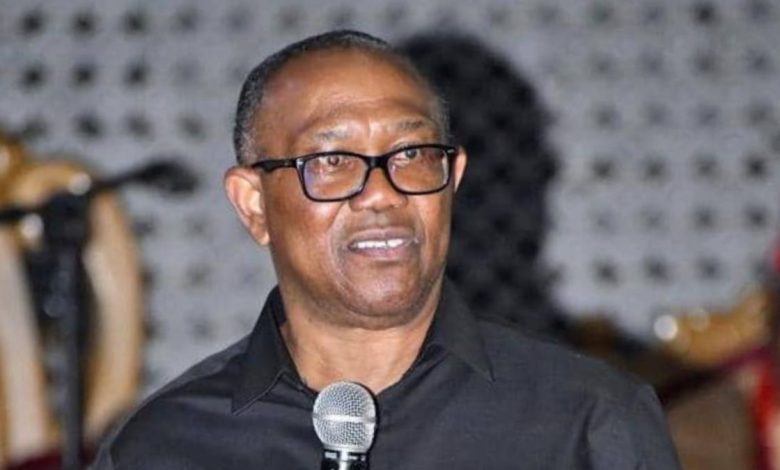
Former Anambra State Governor, Peter Obi has given a fresh explanation of the N127.4 billion debt figure linked to his tenure, insisting that he did not personally obtain loans or issue bonds for the state during his eight years in office.
The presidential candidate of the Nigeria Democratic Congress made the clarification while appearing on Arise TV’s Prime Time programme on Thursday.
Obi said the controversy was partly caused by the way government borrowing and undrawn funds were being interpreted.
He maintained that his administration left office in March 2014 without owing salaries, pensions, gratuities or contractors whose work had been completed, certified and verified.
The former governor was reacting to renewed claims by the Anambra State Government that eight external borrowing facilities associated with his administration remained outstanding and were still being repaid by the state.
Recall that Politics Nigeria had earlier reported that the Anambra Government said deductions were still being made from the state’s monthly FAAC allocation to service loans linked to Obi’s tenure.
The state had also said the current administration had focused on settling inherited obligations rather than taking fresh commercial bank loans.
The state government had put the outstanding balance of the facilities at about $92.35 million, which it valued at approximately N127.4 billion as of June 30, 2026.
According to the state, the original external borrowing linked to the projects amounted to $123.77 million.
It said the facilities covered projects in areas including education, healthcare, malaria control, erosion management, community development and agricultural development.
But Obi rejected the interpretation that he borrowed the money in the manner being portrayed.
“Let me categorically state again: I, Mr Peter Obi, did not approach any financial institution to borrow money or issue bonds on behalf of Anambra State in the eight years I was in government.
“On the day I left office, the government of Anambra State, which I headed, was not owing any salary, gratuity, or pension to those scheduled to be paid by the state government.
“We were not owing any contractor or supplier who executed his job, certified and verified—not one,” he said.
Obi explains World Bank funding
Obi said some of the financial arrangements being attributed to his administration came through Federal Government-backed support rather than loans directly obtained by the Anambra State Government from commercial banks.
He cited the State Education Programme Investment Project, SEPIP, as an example.
According to him, Anambra, Ekiti and Bauchi were selected for concessionary multilateral support because of their performance in education.
“There’s a difference between I went to the bank to borrow money, then the Federal Government sees, ‘Oh, this state is doing well in education.’ They selected Anambra, Ekiti, and Bauchi and said, ‘These three states are doing well. Why don’t we give them a concessionary multilateral support to help them?’”
When asked whether the support came through the World Bank, Obi replied:
“Yes, and the World Bank,” Obi said.
He explained that the arrangement was meant to support the states and was not a situation where his administration approached a commercial bank for a loan.
“To support us. Not that we go to the World Bank and say give me this, not that we go to any commercial bank. And to even make it more… when it came, if you look at State Education Programme Investment Project (SEPIP), you will see that the drawdown was well after I left office.”
Obi further argued that the existence of a financing facility did not automatically mean that the entire amount had been borrowed or spent.
He said funds that were approved but not drawn down should not be treated as money that a government had already taken and spent.
“I’ve assumed the whole and said even if that was the case, there was enough left to pay it, and the state will still be at the best financial standing,” he said.
The former governor gave an illustration to explain his position.
“Even if I had gone to a bank and borrowed money—even if I had gone to a bank and borrowed money, but I did not spend the money, you cannot call it debt I left.
“Assuming I have gone to the bank and said, ‘Bank A, borrow me loan, Give me a loan of N10 billion. And they gave me a loan of 10 billion Naira, and I only drew down 500 million; you cannot now say I’m owing 10 billion because you know the amount. That’s why I said it is not proper public sector accounting.”
Obi cites former DMO boss
Obi also referred to Abraham Nwankwo, a former Director-General of the Debt Management Office, in defending his record on borrowing.
He said Nwankwo served as DMO Director-General for 10 years and invited him to chair his send-off ceremony after leaving office.
According to Obi, Nwankwo publicly acknowledged that he was the only governor who never visited his office to seek approval for borrowing.
“To even confirm this: the then DG… Abraham Nwankwo, who was DG of Debt Management Office, served for 10 years. The day he left office, at his send-off party, he invited me as the chairman, and he announced to everybody at that party that the reason why he made me chairman is that I was the only governor in Nigeria who never came to his office for approval to borrow money,” he said.
The fresh explanation comes less than two weeks after Obi challenged the Anambra Government to identify any person or organisation he owed when he left office.
He had also said he was prepared to stop his 2027 presidential campaign if it could be established that he left behind unpaid salaries, pensions, gratuities or obligations to contractors whose jobs had been completed and certified.
Anambra Government maintains its position
The Soludo administration has continued to dispute Obi’s account of the state’s finances at the end of his tenure.
Commissioner for Information and Value Reorientation, Law Mefor, said the state was still servicing the external facilities attributed to the former governor’s administration.
Mefor said the eight facilities had an original value of $123.77 million and that the outstanding balance was about $92.35 million as of June 30, 2026.
At the exchange rate used by the state, this amounted to about N127.4 billion.
The state government has also maintained that the loans were not transformed into grants simply because some of them carried Federal Government guarantees.
Mefor said deductions were still being made from the state’s Federation Account Allocation Committee revenue to service the obligations.
The commissioner has also disputed Obi’s separate claim that his administration left more than N2.13 billion in an ecological fund account.
According to the state government, records from First Bank did not support Obi’s description of the account or the amount he said was left behind.
The disagreement has also extended to salary and gratuity arrears.
The Anambra Government recently released documents relating to liabilities involving the former state Water Corporation and other public workers.
It said the Soludo administration had paid billions of naira in inherited gratuity obligations while some disputes over older liabilities remained unresolved.
Obi, however, has maintained that his administration inherited historical arrears and systematically cleared more than N35 billion in gratuities and other outstanding obligations.