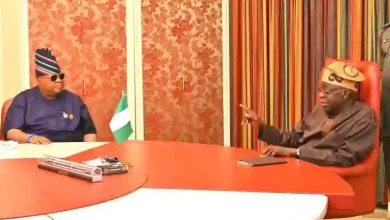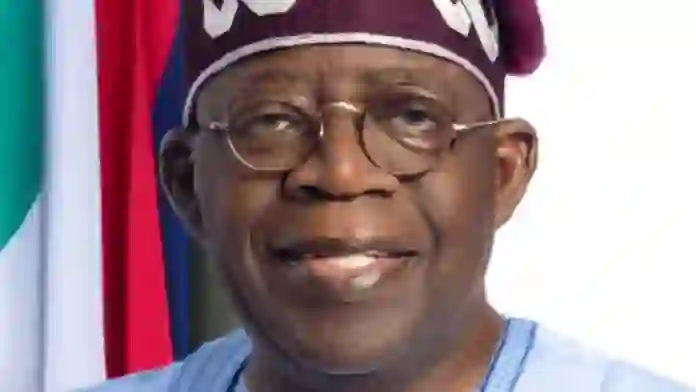
President Bola Tinubu has said Northern Nigeria stands to benefit more than any other part of the country from the economic reforms introduced by his administration.
Tinubu said the reforms, including the removal of fuel subsidy, were necessary to redirect government resources towards infrastructure, investment and other productive sectors.
The President’s position, however, has triggered contrasting reactions from major Northern groups, with the Arewa Consultative Forum (ACF) and Middle Belt Forum (MBF) rejecting his claim, while Northern Christian leaders said the region had recorded notable improvements under his administration.
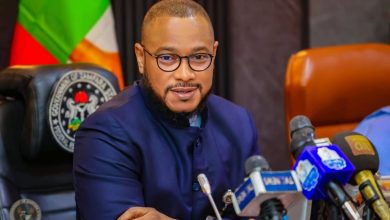
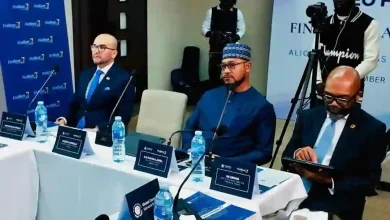
Represented by the National Chairman of the All Progressives Congress (APC), Prof. Nentawe Yilwatda, at a policy roundtable organised by the APC Professionals Forum, Tinubu said his administration inherited several economic challenges when it assumed office in May 2023.
According to him, these included fuel subsidy distortions, multiple exchange-rate windows, weak revenue mobilisation, foreign exchange shortages, rising debt-servicing pressures and years of inadequate investment in critical infrastructure.
Tinubu said Nigeria’s gross external reserves had increased to about $52.7 billion by August 2026, while consolidated non-oil revenue rose from about ₦13.63 trillion in 2023 to ₦16.4 trillion in the first two quarters of 2026.
He also said the country’s merchandise trade position improved significantly, while real GDP growth reached 4.43 per cent in the second quarter of 2026 and inflation declined to about 15.4 per cent.
The President linked the economic gains to his administration’s ambition of building a $1 trillion economy by 2030.
He also highlighted proposed infrastructure projects, including a five-port maritime and logistics corridor and major road and rail projects connecting different parts of the country.
Tinubu said the North would particularly benefit from increased trade with neighbouring countries, including Niger, Chad, Burkina Faso, Cameroon, South Sudan and the Central African Republic.
He described Northern Nigeria as the country’s next major business destination and pointed to projects such as the Ajaokuta-Kaduna-Kano gas pipeline, the Nigerian Education Loan Fund (NELFUND), technical and vocational training programmes and CREDICORP as initiatives designed to translate economic reforms into improved living standards.
The President urged Nigerians to decide ahead of the 2027 elections whether to consolidate the reforms or reverse them.
APC Defends Subsidy Removal
Chairman of the APC Professionals Forum Board of Trustees, Dr Isa Yuguda, defended the removal of fuel subsidy, saying the subsidy regime had been associated with irregularities, fraudulent claims and significant financial leakages.
Yuguda, who chaired the Fuel Subsidy Task Force in 2009, said the system consumed public resources that could have been invested in education, healthcare, security, agriculture and infrastructure.
He said more than ₦15 trillion had reportedly been saved following the removal of the subsidy.
Yuguda also cautioned against proposals to restore the subsidy, arguing that while such a policy might offer immediate relief, returning to the previous system without addressing its weaknesses could undermine the country’s finances.
ADC Insists On Subsidy Restoration
Meanwhile, the African Democratic Congress (ADC) maintained that restoring fuel subsidy remains a non-negotiable part of its economic agenda.
The party’s National Publicity Secretary, Bolaji Abdullahi, said the policy was intended to help ease the rising cost of living.
Abdullahi said the disagreement over subsidy could also create difficulties for efforts to form a broad opposition coalition ahead of the 2027 elections.
He noted that some opposition figures support the return of subsidy, suggesting that the shared position could form the basis for cooperation among them.
ACF Rejects Tinubu’s Claim
The Arewa Consultative Forum strongly disagreed with Tinubu’s assessment, describing the claim that the North is the biggest beneficiary of the reforms as difficult to reconcile with the region’s socio-economic realities.
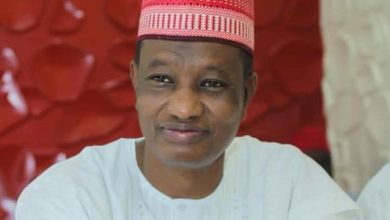
ACF spokesman Prof. Tukur Muhammad Baba pointed to persistent challenges involving agriculture, insecurity, infrastructure, education and poverty across Northern Nigeria.
He questioned how the North could be described as the biggest beneficiary when many communities in the region continue to face economic hardship and insecurity.
Baba also criticised what he described as an imbalance in federal appointments, infrastructure development and allocation of resources between Northern states and parts of the South.
He urged the President to obtain information from alternative sources if the assessment of the North’s situation was based on reports from government officials.
MBF Also Faults President
The Middle Belt Forum also rejected the President’s claim.
Its National President, Dr Bitrus Pogu, argued that policies such as fuel subsidy removal and the introduction of compressed natural gas affect Nigerians across the country and should not be presented as benefiting one region specifically.
Pogu said it was unfair to use the reforms for political advantage, insisting that their impact should be assessed based on how they have affected Nigerians nationwide.
He also questioned whether the removal of fuel subsidy had produced positive results for Nigerians, including those in the North.
Northern Christians Defend Tinubu
In contrast, Chairman of the Northern Christian Association, Rev. John Hayab, said Northern Nigeria could not honestly deny benefiting from Tinubu’s administration.
Hayab cited major road projects, including the Akwanga-Maiduguri, Jos-Jalingo and Kaduna-Birnin Gwari-Mokwa-Lagos corridors, as evidence of increased infrastructure investment in the region.
He also compared Tinubu’s performance favourably with that of former President Muhammadu Buhari, saying the current administration had made progress on several projects in the North.
Hayab acknowledged that insecurity, poverty and hunger remained serious problems, but maintained that Northerners should recognise the projects and investments already being implemented while continuing to demand more from government.
He also cited Northern representation in Tinubu’s government and projects in Southern Kaduna, including a Federal University and Federal Medical Centre, as examples of developments under the administration.
READ ALSO: