UK Home Office Ends Rule Trapping Modern Slavery Victims With Abusive Sponsors, Opening New Freedom for Nigerian Care Workers

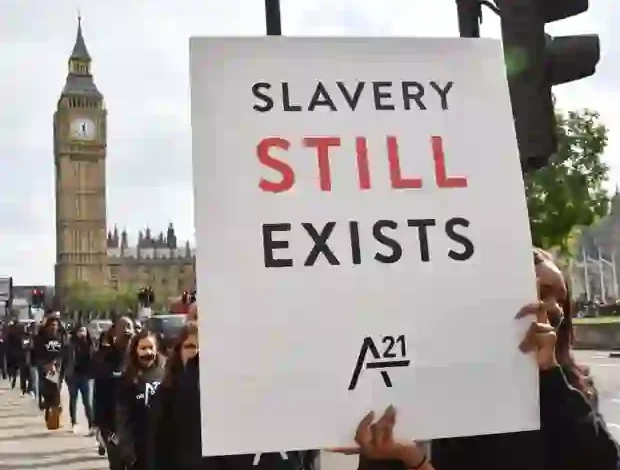
Thousands of migrant workers trapped in abusive employment arrangements across the United Kingdom, a disproportionate number of them Nigerians who travelled abroad on the post-Brexit skilled worker visa route, have won a significant reprieve after the Home Office conceded that victims of modern slavery will no longer be bound to the very employers who exploited them.
The policy shift, announced Thursday and reported by the Guardian, addresses a defect in the sponsorship system that has, for nearly five years, tethered a worker’s legal right to remain in Britain to a single employer. Introduced in 2021 under Boris Johnson’s Conservative government as part of a broader effort to plug post-Brexit labour shortages in care homes, hospitals and hospitality venues, the scheme left workers with no recourse to public funds and, crucially, no easy exit from a sponsor turned abuser. Losing one’s job meant risking removal from the country altogether, a threat that campaigners say rogue employers wielded with chilling effectiveness to underpay staff, impose punishing hours and enforce zero-hour conditions on people already far from home and short on options.
For the Nigerian diaspora, whose numbers swelled the UK’s care sector in the years following the pandemic as thousands sought a path out of a domestic economy battered by inflation and naira devaluation, this was never an abstract policy debate. Care work became one of the most reliable visa routes into Britain for Nigerian nurses, aides and support staff, many of whom arrived carrying debts owed to recruitment agencies and family expectations they could ill afford to disappoint. That desperation, in the account of anti-trafficking campaigners, is precisely what unscrupulous sponsors exploited, confident that the fear of deportation would keep victims silent.
Under the new arrangement, taking effect from Thursday, any worker who receives a positive “conclusive grounds” decision under the National Referral Mechanism, the UK’s official framework for identifying and supporting trafficking and slavery victims, will be freed to work for any employer for the remainder of their visa term, rather than being forced to scramble for a new sponsor within a narrow window or face removal.
Major Heather Grinsted of the Salvation Army’s anti-trafficking division described the change as a vital step toward helping survivors rebuild their lives with dignity, while Dr Dora-Olivia Vicol of the Work Rights Centre struck a more cautious note, warning that the policy’s real-world impact would hinge entirely on how accessible the modern slavery recognition process proves to be in practice. Her organisation has spent close to three years pressing the Home Office to sever the link between a migrant’s immigration status and their employer’s goodwill, arguing the sponsorship model was, by design, a recipe for exploitation.
The numbers lend weight to that warning. More than 6,600 employers have had their sponsor licences stripped since Labour returned to power, with over 4,400 of those revocations occurring in the year to June 2026 alone, a 140 percent jump on the previous year. Migration minister Jo White framed the reform as a dual mandate, protecting victims while pursuing rogue sponsors with what she called the full force of the law, and confirmed that cases involving criminal conduct would be referred directly to police.
The reprieve arrives even as the broader skilled worker visa pipeline has narrowed sharply. Only 111,000 such visas were granted last year, a fall of 76 percent from the peak recorded in the year ending December 2023, after the Home Office halted new overseas applications for care worker visas in July 2025. For the Nigerian workers who made it through before that door closed, this week’s announcement offers something the old system never did: the ability to walk away from an abuser without walking away from Britain.
READ ALSO: