Why conflict, displacement and poor sanitation are making Ebola harder to contain in DRC

Ongoing armed conflict, mass displacement and poor water and sanitation access are making it harder for health authorities to contain an Ebola outbreak spreading across the Democratic Republic of Congo, the World Health Organization has warned.
As of September 7, the country had recorded 6,757 confirmed cases and 3,267 deaths linked to the Bundibugyo strain of the virus, spread across 61 health zones in six provinces. Ituri province bears the heaviest burden, with 5,406 confirmed cases, followed by North Kivu with 1,066.
WHO said the outbreak’s continued spread is being worsened by insecurity and population movement, which are cutting people off from healthcare and other essential services. Roughly one million people are internally displaced in Ituri alone, while more than 26 million across the DRC are grappling with acute food insecurity, conditions that make outbreaks harder to control, particularly in crowded settlements with limited clean water and sanitation.
Read also: 13 years of waiting: Inside Nigerian couples’ painful journey to parenthood
Displacement itself is complicating the response, as people fleeing conflict often move between communities where surveillance and healthcare access are weak, making it tougher for health workers to trace who’s been exposed and keep them under watch. As of September 7, authorities were monitoring 24,719 contacts linked to confirmed cases, with 21,359 tracked in the preceding 24 hours alone.
WHO also flagged the risk of the virus crossing into neighbouring countries through informal border routes that are far harder to monitor than official airports, ports and land crossings, and called for tighter cross-border surveillance and coordination.
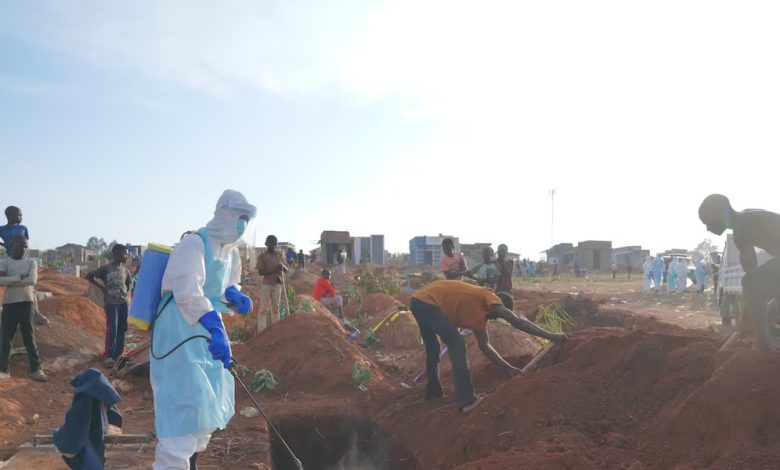
Poor sanitation in mining communities, informal settlements and displacement camps is adding further strain, the agency said. Ebola spreads through contact with the bodily fluids of infected people and contaminated surfaces, meaning hygiene practices and safe handling of patients and the deceased are central to bringing an outbreak under control. Healthcare facilities themselves can become transmission sites where infection control is weak, and unsafe burial practices remain a known driver of community spread.
Since WHO’s last update on August 28, the outbreak has spread to a new health zone, Kayna, in North Kivu, bringing the total to 61 affected zones across six provinces. Of these, 51 reported at least one new case in the 21 days leading up to September 7, indicating transmission is still active. WHO said part of the rise in case numbers reflects improved surveillance and lab testing rather than fresh spread alone, though it acknowledged ongoing community transmission is also a factor. The outbreak’s case fatality rate currently stands at 48.3%.
Complicating matters further, there is no vaccine specifically approved for the Bundibugyo strain, nor an approved treatment. Health workers are being given the licensed Ebola vaccine Ervebo under a research protocol, since its effectiveness against this particular strain in humans isn’t yet known. As of September 6, over 2,000 healthcare and frontline workers had been vaccinated across six health zones. Separately, a clinical trial testing potential treatments, the PARTNERS trial, began enrolling patients in July across five sites in Ituri, with more than 300 confirmed cases enrolled so far.
WHO currently rates the risk within the DRC as very high, and high for countries sharing its borders, but assesses the risk to the rest of Africa and the world as low. The agency is not recommending any travel or trade restrictions at this time.
The latest outbreak is the second documented Bundibugyo virus disease outbreak in the DRC after the country recorded an outbreak in 2012.