85% Of Tested Nigerian Water Sources Fail WHO Arsenic Safety Limit, Study Raises Alarm

….Abia, Anambra, Kano, Nasarawa Among States With Elevated Contamination Levels
…Experts Warn Clear-Looking Water May Conceal Dangerous Pollutants Consumed For Years
…More Than One-Third Of States, FCT Lack Published Contamination Data
Daud Olatunji
A new scientific study has raised fresh concerns over the safety of drinking water in Nigeria, revealing that about 85 per cent of the water sampling sites examined recorded arsenic concentrations above the World Health Organisation’s recommended limit.
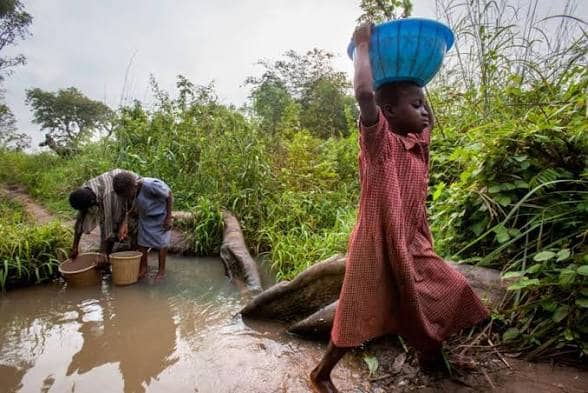
The findings have heightened concerns about the potential health risks facing millions of Nigerians who depend on boreholes, wells, rivers and lakes for their daily water needs, often without access to reliable information about the quality of the water they consume.
The study, published in the Journal of Applied Sciences and Environmental Management on September 21, 2026, also exposed significant gaps in the country’s water quality surveillance system, with more than one-third of Nigeria’s states and the Federal Capital Territory having no published data on arsenic contamination.
Researchers warned that the absence of comprehensive testing and publicly accessible water quality records makes it difficult to establish the true scale of the problem or determine the number of Nigerians potentially exposed to contaminated drinking water.
One of the most alarming findings was recorded in Ebonyi State, where borehole water reportedly contained arsenic at a concentration of 4.645 milligrams per litre, approximately 465 times higher than the WHO’s recommended limit of 0.01 milligrams per litre.
Other states where elevated arsenic concentrations were reported included Abia, Anambra, Kano and Nasarawa.
The findings have renewed calls for urgent government intervention, comprehensive water testing and stronger environmental health monitoring to protect residents who may unknowingly consume contaminated water for years.
However, the researchers cautioned that their findings should not be interpreted as proof that 85 per cent of all water sources across Nigeria are contaminated, explaining that the review was based on available scientific studies rather than a nationwide sampling exercise.
According to a statement jointly released by the researchers on Thursday, the team reviewed 40 studies conducted across Nigeria, with 35 studies involving 945 water samples included in the final analysis.
The researchers said some of the studies examined locations already suspected of pollution, meaning the findings could not be used to establish the national prevalence of arsenic contamination.
Despite the limitation, they warned that the lack of reliable data across several parts of the country means Nigeria cannot confidently determine whether its drinking water is safe from the toxic substance.
The study’s corresponding author, Excel Obumneme Amaefule, said the findings highlighted a serious gap in the country’s ability to identify and respond to potential water contamination.
He stressed that the researchers were not declaring a nationwide water contamination crisis but warning that the country lacked sufficient evidence to rule one out.
“We’re not claiming a national crisis. We’re saying Nigeria can’t rule one out, because across much of the country nobody has tested, and nowhere is anyone comparing water results with health data,” Amaefule said.
The absence of systematic testing, he explained, makes it difficult to identify communities at risk, establish the extent of exposure and determine whether contaminated water is contributing to health problems among residents.
The researchers also expressed concern that environmental monitoring results were not being adequately linked to health records, limiting the ability of public health authorities to investigate possible connections between long-term arsenic exposure and disease.