Toyyibat Qasim
The Federal Medical Centre, Abeokuta, has urged Nigerians to make regular physical exercise part of their daily routine, warning that sedentary lifestyles could expose people to a range of health problems, including cardiovascular diseases.
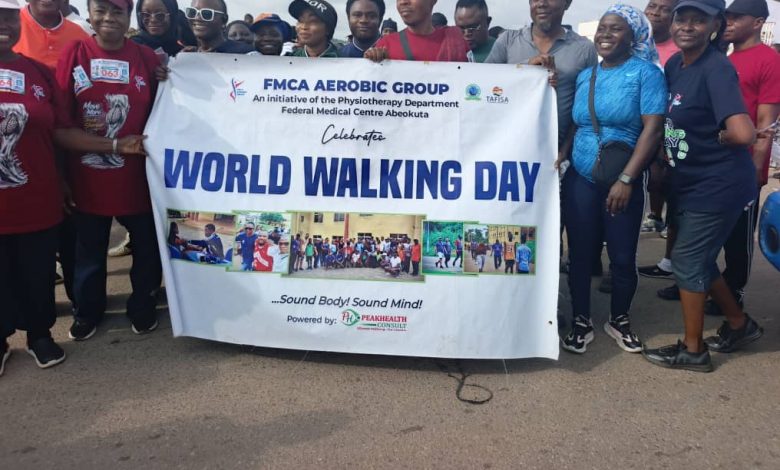
The hospital gave the advice during a health walk organised as part of its campaign to promote physical fitness and healthy living.
The walk, which began at the Ake Palace and terminated at the FMC Abeokuta premises, attracted medical personnel, members of the public and other participants.
Speaking during the exercise, the Director of Physiotherapy Services at the hospital, Rahmon Olayinka Lateef, said the initiative was designed to encourage Nigerians to embrace physical activity rather than wait until they developed health complications.
Lateef said the World Health Organisation recommends at least 150 minutes of physical activity weekly for adults, urging Nigerians to incorporate walking and other forms of exercise into their lifestyles.
He said the hospital had been encouraging patients and other visitors to meet the recommended exercise duration but decided to take the campaign to the wider public to reach more people.
“Walking is not really meant for people that want to suffer; it is meant for people that want to live better,” Lateef said.
He explained that regular physical activity could improve mental alertness, general wellbeing and overall quality of life, while reducing the health problems associated with inactivity.
According to him, FMC Abeokuta organises aerobic exercise sessions twice a week, on Wednesdays and Saturdays, which collectively provide the recommended 150 minutes of weekly physical activity.
Lateef said the annual public walk was deliberately scheduled for Saturday because of Nigeria’s multi-religious nature, adding that the timing would enable people who attend church services on Sundays to participate.
Also speaking, a Consultant Endocrinologist in the Department of Internal Medicine, Dr Alalade Boladale, who represented the Head of Clinical Services, said regular exercise remained one of the practical ways of reducing cardiovascular health risks.
Boladale said physical activity strengthened the heart, bones and muscles and played an important role in managing conditions such as hypertension, diabetes and disorders associated with cholesterol and other lipids.
He also highlighted the social benefits of exercise, saying group physical activities could help people build relationships and strengthen community ties.
“Beyond exercising our body, it encourages us to meet one another. We are building social networks by this; we are meeting our community neighbours and we are able to foster a good relationship going forward,” he said.
The consultant added that exercise could help reduce stress and improve mood, noting that participants appeared happier and more relaxed during the walk.
The Deputy Director of Physiotherapy at FMC Abeokuta and one of the coordinators of the hospital’s aerobic group, Alimi Talayo, said the theme of the exercise, “Move More, Think Sharper and Stay Longer,” underscored the connection between physical activity and the proper functioning of the body.
Talayo explained that exercise improves blood circulation and helps vital organs, including the brain, heart and lungs, receive adequate blood and oxygen.
He said regular physical activity also improves physical fitness and endurance, enabling individuals to carry out their daily activities more effectively.