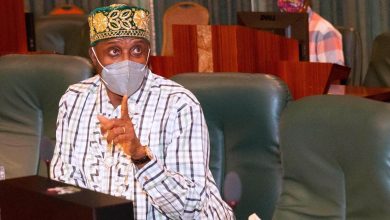
Governor Dauda Lawal Announces Nationwide Nutrition Emergency, National Intervention Fund at Addis Ababa Summit


The 36 state governors have declared a nationwide nutrition emergency and resolved to establish a National Nutrition Intervention Fund to drive the implementation of the Nutrition 774 Initiative across all local government areas in the country.
Zamfara State Governor, Dr Dauda Lawal, announced the commitment on Friday in Addis Ababa, Ethiopia, while reading the Nigeria Governors’ Forum (NGF) Addis Ababa Commitment on Nutrition at the Nigeria Country Session.
The commitment followed a three-day Nigeria-Ethiopia Nutrition Leadership Exchange, where the Nigerian delegation led by Vice President Senator Kashim Shettima studied Ethiopia’s experience in nutrition delivery, particularly through its Seqota Declaration.
While reading the NGF commitment at the session themed “From Lessons to Commitment: Accelerating Implementation of the Nutrition 774 Initiative,” the governors also pledged to strengthen domestic financing, deepen accountability at the grassroots and institutionalise a unified framework for nutrition planning and budgeting, drawing lessons from Ethiopia’s experience in tackling malnutrition.
Speaking on behalf of the NGF, Lawal said the exchange had reinforced the importance of sustained political leadership, effective multisectoral coordination, ownership at all levels of government, predictable financing and the systematic use of data to drive decisions and accountability.
He noted that Nigeria’s Nutrition 774 Initiative already embodied many of Ethiopia’s principles, adding that the exchange provided practical lessons to strengthen the programme and deliver measurable results.
According to him, the key lessons included the need for a unified approach to planning and budgeting, stronger coordination across sectors, bottom-up planning, predictable financing and the use of data and scorecards to measure performance.
“We are encouraged that Nigeria’s N774 Initiative already embodies many of the principles we have seen here in Ethiopia. This leadership exchange has, however, provided important practical lessons on how these principles can be further strengthened and translated into results,” he stated.
The NGF also identified matching financing between the Federal Government and states as an important mechanism for aligning priorities, encouraging subnational investment and reinforcing shared accountability for nutrition outcomes.
Lawal recalled that, in the presence of Vice President Shettima, the three tiers of government signed the Nutrition Compact on February 20, 2025, to establish a common commitment to tackling malnutrition.
He said the compact was signed by the Chairman of the NGF on behalf of the 36 states, the President of the Association of Local Governments of Nigeria (ALGON) on behalf of the 774 local governments, and the Minister of Budget and Economic Planning on behalf of the Federal Government.
He explained that the latest commitment would reinforce the existing compact by adapting lessons from Ethiopia to Nigeria’s circumstances and translating them into concrete actions across the three tiers of government.
Under the commitments, the governors resolved to declare nutrition a national emergency, establish a National Nutrition Intervention Fund to catalyse implementation of the compact and institutionalise “One Goal, One Plan and One Budget” for nutrition.
The proposed fund is expected to incentivise state-level leadership, encourage increased domestic investment, reward effective implementation and support measurable improvements in nutrition outcomes.
The governors also pledged to strengthen bottom-up planning by ensuring that nutrition priorities reflect needs at community and ward levels before being incorporated into local government, state and national plans.
They further committed to extending the National Nutrition Scorecard beyond the state level to include local government and ward-level performance indicators, strengthening accountability throughout the delivery chain.
The NGF also resolved to institutionalise the use of data for decision-making and performance management, including state-specific surveys and assessments to provide timely evidence for planning, resource allocation and corrective action.
READ ALSO: